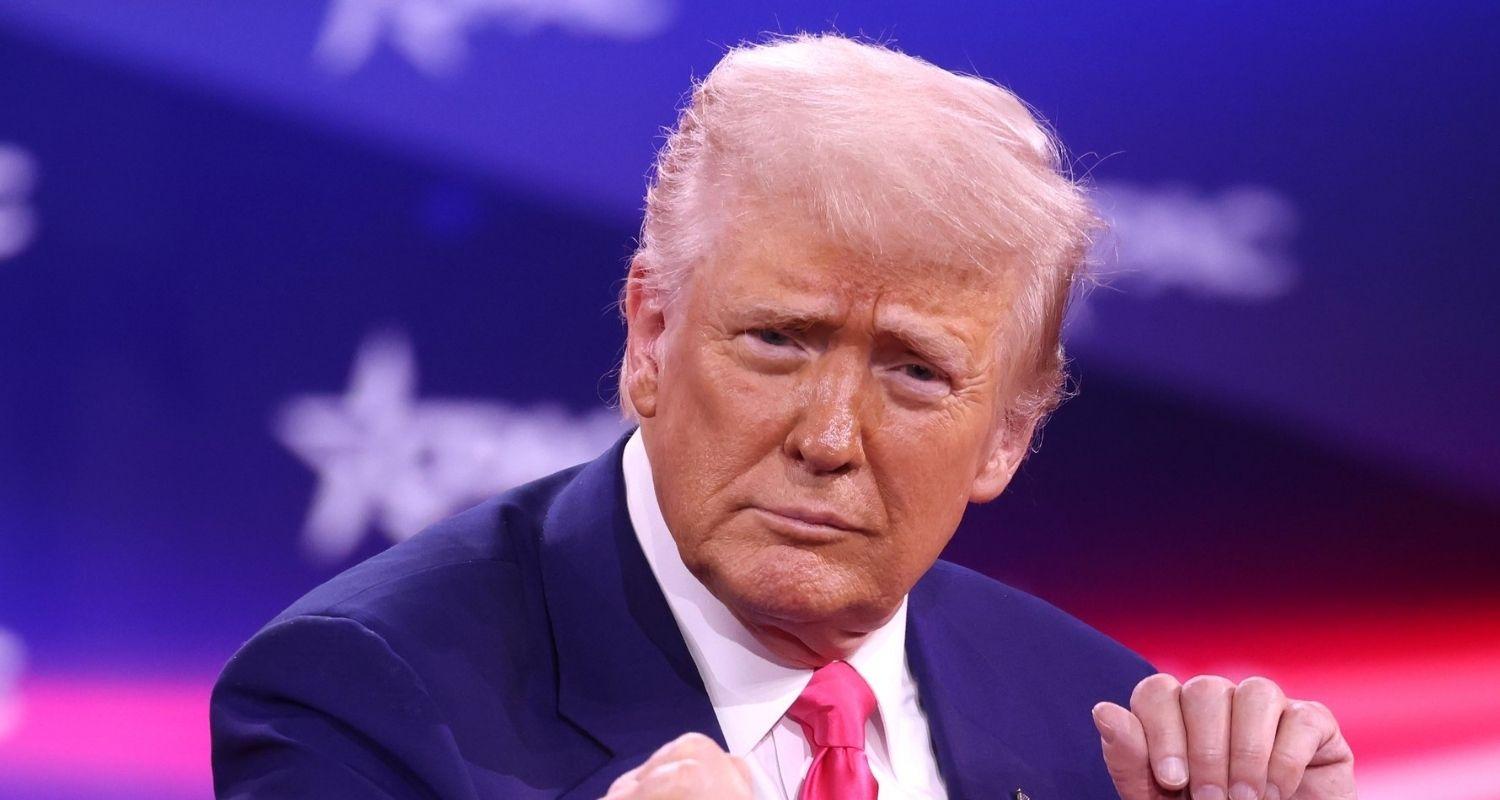
As Donald Trump embarks on a two-day official visit to China—the first by a sitting US President in almost nine years—the international community will be closely watching when the leaders of the world’s two biggest economies come face-to-face for crucial bilateral talks.
The visit has already generated massive attention from the global community since both economies have maintained a hostile stance towards one another over the past one-and-a-half years, when Trump imposed tariffs on Chinese imports shortly after assuming office in January 2025.
Trade war and diplomatic tensions, along with US actions in Venezuela, Cuba, and Iran, have further widened the gap and brought the two superpowers to the brink of confrontation. Yet the two sides seem to have developed an understanding, knowing that they are too big to confront each other militarily.
Economic encirclement
Though indirect cornering has been going on, with the US trying to inflict economic losses on China through export and import control measures and also attempting to disrupt China’s free flow of oil necessary for its economic movement.
China is also using its leverage by imposing its own restrictions on minerals, rare earths and raw materials necessary for the manufacturing of semiconductor chips that the United States needs so desperately to remain on top of the tech race, especially the AI race.
Trump and Xi: Ideological opponents, similar ambitions
In the 2024 presidential elections, Trump ran on two important slogans: “Make America Great Again” and “No More Foreign Wars”. Upon taking office in January last year, he began an aggressive overhaul of the US economy through a series of punitive measures that included the imposition of tariffs on major trading partners, including China, India, Japan, South Korea, the European Union, Brazil and Cuba.
The move seemed to pay off well for Washington in the early days until it got involved in Venezuela and carried out air strikes on Iran in the middle of negotiations. Trump’s legacy as a “no war president” and his inconsistent stance have left his image downgraded even among European allies.
On the other hand, is Xi Jinping, a leader focused on extending China’s economic footprint across the globe. It remains the primary trading partner of more than 110 nations, including ideological adversary the United States and military adversary India.
Jinping is not going to let Trump dictate terms of engagement. A proof of which can be inferred from the fact that he forced the EU and other allies to raise defence spending to 5 per cent if they wished to remain under US protection.
The two leaders are expected to meet in Beijing with a focus mainly on trade, economy, bilateral relations, and pressing global issues like the war in Ukraine, the Iran war, rare earth minerals, AI and nuclear issues.
Deadlock on Strait of Hormuz
Trump, with all of his military might, has been unable to break the Strait of Hormuz deadlock and will press China to use its leverage on Iran for reopening the critical waterway that handles over 20 per cent of global trade.
The Strait of Hormuz has remained blocked since the resumption of hostilities between Iran and the US which began on February 28. The closure of Hormuz has put the global economy at greater risk, as major oil-importing nations depend on this supply route.
Trade and economy
Both sides might agree on extensions of the tariff truce, securing new purchase deals including Boeing planes that China refused to take delivery of after the tariff war began. The two sides are also expected to secure deals on agriculture import/ export, forums for trade, and rare earths/ critical minerals cooperation.
Also read: Trump to begin two-day China visit from May 13
China, according to estimates, controls 80 per cent of the global supply of rare earths while it is trying to bring one of the leading semiconductor chip makers, Taiwan, under its control to maintain absolute dominance in the critical semiconductor industry.
Geostrategic ambitions
Meanwhile, China will be looking to press the United States over Taiwan. Beijing might seek cancellation of the arms trade deal worth $11 billion that Washington gave to the island nation. Xi may also try to press Trump on broader security issues, especially around the South China Sea, where the two sides have been staring at each other for decades.
Tech and nuclear weapons tensions
Recent reports suggested that China was aggressively expanding and modernising its nuclear arsenal through a series of measures. A visual of that was showcased by China during its annual parade in Beijing held earlier this year.
What China unveiled in that parade sent shockwaves across the international community, particularly in the Pentagon.
The United States has been trying to bring China under the nuclear arms control treaty after it ended the New START treaty with Russia earlier this year. Though it seems quite unlikely that Beijing would agree.
Besides, the two nations are also leading the tech race, particularly in the AI domain. Both China and the United States might try to ink an accord to work together to develop or further modernise AI technology through joint cooperation.
Expected outcome
The best outcome of these talks could come if the two sides somehow convince Iran to lift restrictions on the Strait of Hormuz and give away its enriched uranium, allowing restoration of the critical waterway for safe passage of global shipping.
Second, the global community would benefit immensely if the two sides manage to end hostilities in Ukraine and somehow bring the two conflicting parties to agree to a ceasefire.
Even with positive expectations, nothing concrete can be said when inconsistent Trump meets steady and focused Jinping on Wednesday. Since the two leaders have sparsely contrasting personalities.
While much hype has been created around the upcoming talks, they might achieve only symbolic photo-ops with modest wins for both sides, particularly on agriculture, mineral and energy deals.
The Chinese, as generous hosts, may give Trump the best-ever protocol and grandiose welcome but the high pageantry would likely see limited breakthrough due to deep mistrust, structural rivalries and a deadlock still in place between the two arch rivals.
By Waseem Ahmad Ganie

 Follow us