


Trending:
Uphill task for container train operators
The latest data indicates a sluggish growth trend in container volumes. In February 2025, Indian Railways handled 7.11 million tonnes (MnT) of container cargo which remained flat year-on-year but fell 12 per cent month-on-month. Follow us
News Arena Network - Chandigarh - UPDATED: March 29, 2025, 08:50 PM - 2 min read
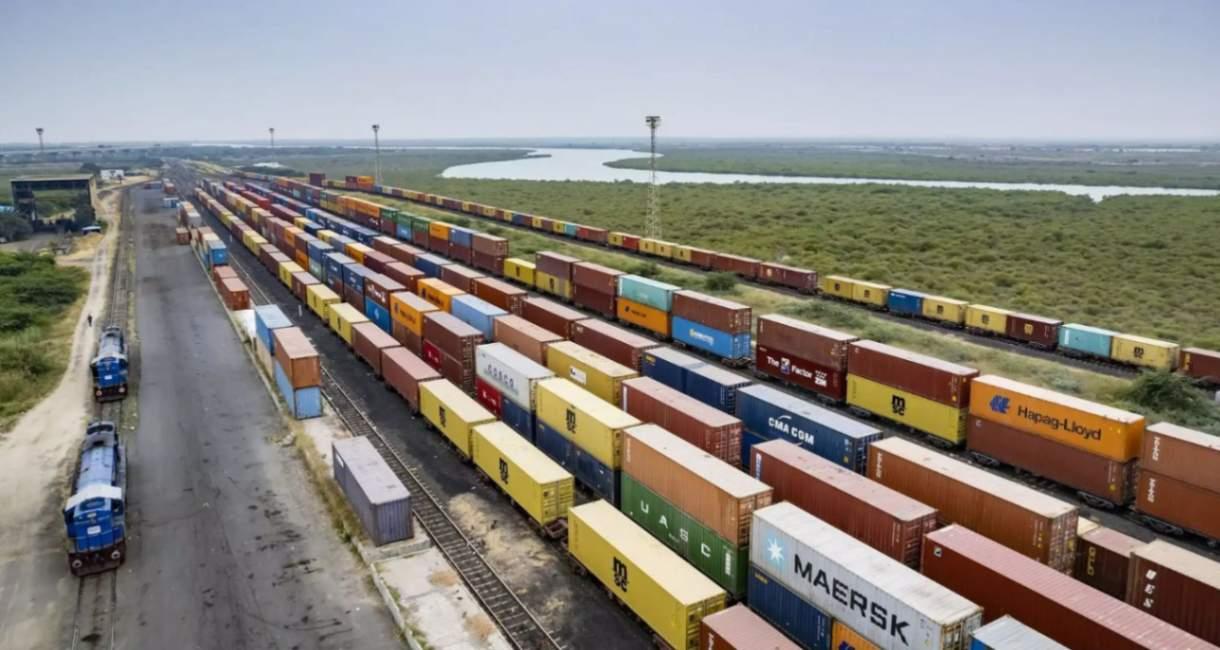
Lack of policy stability and unpredictable pricing mechanisms have created a suffocating environment for the CTOs which are already burdened by high capital investments and operational costs.
Nearly two decades after the central government unveiled a policy allowing private operators to run container trains on the Railway network, the sector is still grappling with a plethora of challenges while its growth remains largely sluggish.
Regulatory hurdles, infrastructure limitations, high costs, stifling rules set by the Railways and unreliable service on railway networks are among the stumbling blocks that are preventing the container train operators (CTOs) from realising their full potential.
The latest data indicates a sluggish growth trend in container volumes. In February 2025, Indian Railways handled 7.11 million tonnes (MnT) of container cargo which remained flat year-on-year but fell 12 per cent month-on-month. The container volumes have seen only 4.1 per cent year-on-year growth for FY25-to-date, with EXIM (Export-Import) container volume growth barely at 0-2 per cent.
Also read: T'gana CM reassures 42 pc reservation for Backward Classes
Lack of policy stability and unpredictable pricing mechanisms have created a suffocating environment for the CTOs which are already burdened by high capital investments and operational costs. The Railways need to ease the restrictions and controls, create a more stable policy framework, rationalise haulage and other charges and treat the CTOs as its partners rather than competitors to facilitate more private investments into the sector.
Litany of woes
The inordinate delays in the maintenance of rakes, lack of guarantee on timelines and inflexible approach in dealing with market conditions are adding to the woes of the industry.
Establishing terminals with rail connectivity for loading and unloading goods and acquiring land for these terminals pose significant challenges for the CTOs. A majority of the domestic container terminals have small-scale operations, which makes the terminal services expensive for the consignors.
Lack of assured transit time has been hampering container movement, particularly in the tier two sectors. Moreover, the Railways does not guarantee a timely supply of locomotive power, resulting in delays in container trains’ movement.
The absence of basic terminal infrastructure, poor maintenance of good sheds and warehouses, and unavailability of wagons as the rolling stock are the other hindering factors. This results in high congestion, lower service levels, and delay in transit time. The CTOs, other than CONCOR, struggle to attract traffic in the absence of assurance of timely delivery of goods.
Haulage structure
The industry leaders have been requesting for a transparent, fair, and predictable haulage charge regime so that the industry does not have to face sudden shocks and loss of business.
For long, the CTOs have been rooting for a rationalisation in the haulage structure to attract more light cargo, and in general address the issue of price competition with the road transport sector more effectively .
The Railway Ministry sets the haulage rates for using railway infrastructure that acts as the base rate for all the operators on which they will add their capital and operating costs to arrive at the cost to be levied from the trade. Typically, haulage charges account for nearly 80 percent of the cost of operating a container train.
At present, the pricing mechanism is biased in favour of heavy cargo. For light cargo, which forms the major chunk of the containerised cargo, it becomes more expensive than the road transport option.
Renewal of concession agreements
The year 2006 was truly a landmark for the industry when the Ministry of Railways introduced a policy to issue licenses to private operators for transportation of containerised cargo. Based on the policy, licences were issued to 17 companies.
However, a burst of activity witnessed in the initial years stagnated later on. Over years, the private operators started feeling sceptical about the viability of their business due to lack of clarity or consistency in matters pertaining to haulage charges, maintenance of wagons, transit guarantees from the Railways and terminal access charges.
More importantly, the Railway’s ecosystem is not designed to allow private CTOs to increase business. Due to these issues, the positive impact of privatisation in the container segment is not visible in the national transporter’s efficiency. There is now a strong case for the Railways to dilute its ownership in the state-run Container Corporation of India (CONCOR) to provide a true level playing field to CTOs.
The concession agreements signed with train operators were valid for 20 years. As the agreements are set for renewal next year, the Railways need to adopt a more pragmatic and flexible approach in the interest of the sector’s growth. It should desist from going ahead with the idea of levying a license fee to extend the concession agreement as such a move would cripple the industry.
Since the CTO operators have already made huge investments in terms of license fee and building terminals, it is only fair that they be given an automatic extension of the agreement for another ten year period, without imposing another round of license fee.
The Railways must review its strategies towards the implementation of the policy which was conceived with the objective to increase the rail share and introduce competition. Experts have warned that the objective got diluted over years due to what is largely perceived as territorial incursion and increased focus on protecting revenues of the Railways. This has resulted in creation of a non-conducive policy environment for CTOs.
International experience shows that a balanced and fair regulation, instead of excessive regulation, non-discriminatory access rights for rail infrastructure to all operators, and competitive access to private operators is essential for the growth of the freight transport sector.
Considering the hardships being faced by the industry due to restrictive policies in the last two decades, the Railways should now create a conducive policy environment so that the CTOs explore new markets more confidently and target road volumes.
At present, only a handful of big players have recorded marginal profits while the smaller companies continue to struggle.
Long way to go
Even two decades after allowing the private players, the container sector still accounts for only about 6 per cent of the total rail traffic. Of this, the EXIM traffic constitutes a major chunk, leaving a small pie for the domestic sector. This illustrates, more than anything else, the stranglehold of state control, marked by regulatory bottlenecks, lack of a transparent, stable and predictable pricing regime.
It also highlights the fact that there is a substantial room for growth in the market share of the Railways in both domestic and EXIM container movements. The government has set a target of increasing the share of railways in freight transportation to 45 per cent by 2030.
Despite privatisation in the container segment, the domestic container movement has hardly witnessed an excruciatingly slow growth, hovering around 2 per cent of the total traffic carried by rail. Due to limited services by rail for the non-bulk cargo, the majority of the domestic container freight share is taken over by roadways. More shippers move their cargo by road since it is cheaper.
The freight movement share is skewed towards roads mainly because of the flexibility of door-to-door service provided by road transportation.
Uncertainty in rake supply and unplanned allocation discourage customers from using rail. Erratic supply of rakes during peak season, even to customers with high loading volume, increases dependency on road transport. Delay in providing adequate infrastructure and sharing of lines by passenger and freight trains is one of the reasons that leads to significant traffic shifts from rail to road.
The challenge for the Railways is to reduce the costs, similar to how the road transport sector has been able to achieve. The movement of non-bulk commodities over rail requires a well-developed intermodal container ecosystem, including freight aggregators, intermodal container terminals, suitable wagons, scheduled rail services, and first and last mile connectivity options. However, lack of these rail services makes the road option more attractive in shipping costs and services.
