
Trending:
US-Iran conflict threatens nuclear chain reaction
Iran is a “threshold state”—a country with the technical capacity to produce nuclear weapons but that has not crossed the final line of production. A destabilised threshold state poses three risks: loss of centralised command over nuclear material and scientists, incentives for factions to monetise or export expertise, and acceleration logic—actors racing to secure deterrence before collapse. Follow us
News Arena Network - New York - UPDATED: January 30, 2026, 03:46 PM - 2 min read
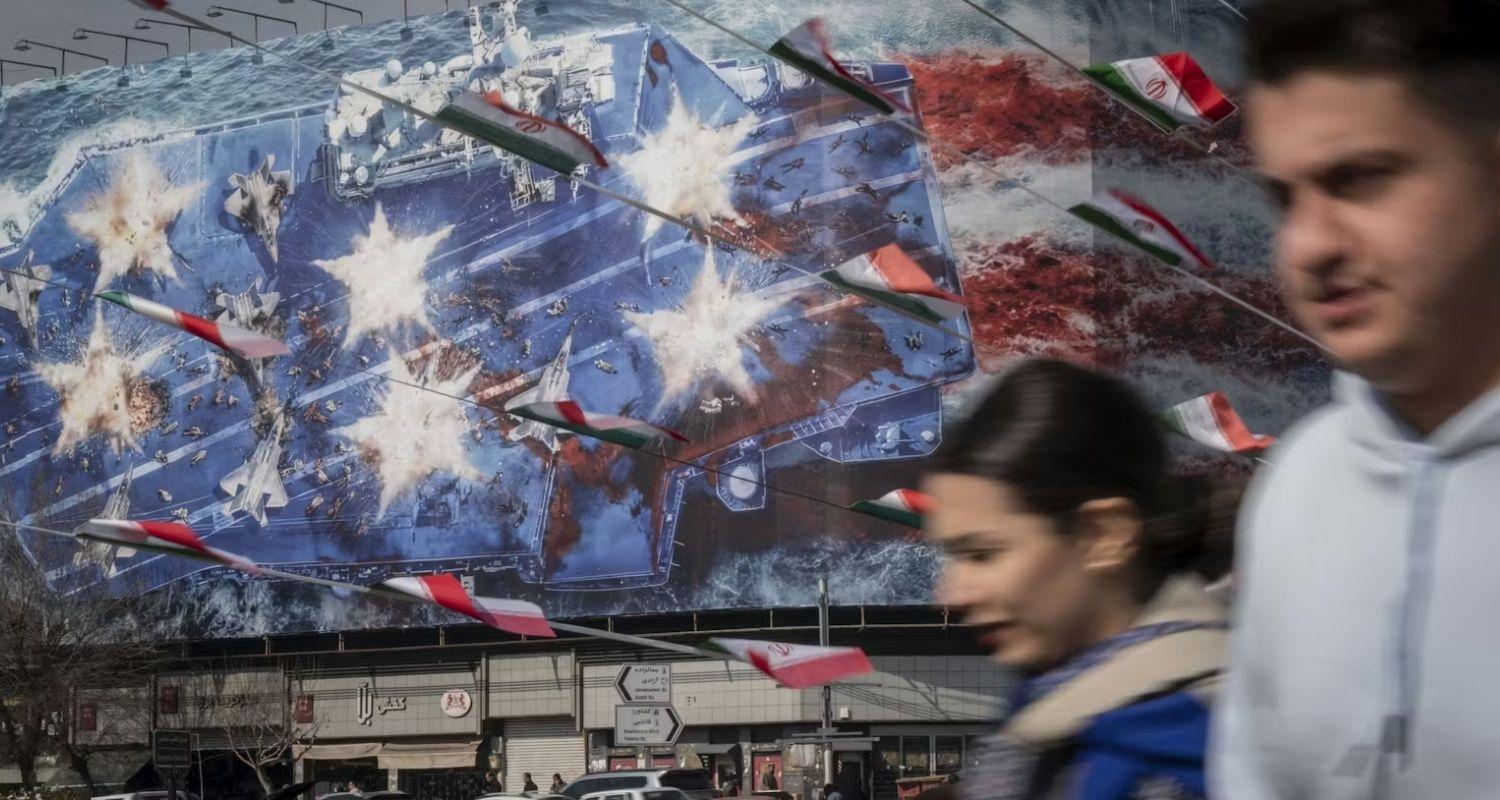
Most alarming of all, the Trump administration’s threats and potential strikes against Iran could teach every aspiring nuclear state that security is attainable only through the possession of the bomb.
The United States is seemingly moving toward a potential strike on Iran.
On January 28, 2026, President Donald Trump sharply intensified his threats to the Islamic Republic, suggesting that if Tehran did not agree to a set of demands, he could mount an attack “with speed and violence.” To underline the threat, the Pentagon moved aircraft carrier USS Abraham Lincoln—along with destroyers, bombers and fighter jets—to positions within striking distance of the country.
Foremost among various demands the US administration has put before Iran’s leader is a permanent end to the country’s uranium enrichment programme. It has also called for limits to the development of ballistic missiles and a cutting off of Tehran’s support for proxy groups in the Middle East, including Hamas, Hezbollah and the Houthis.
Trump apparently sees in this moment an opportunity to squeeze an Iran weakened by a poor economy and massive protests that swept through the country in early January.
Scholars of Middle Eastern security politics have concerns. Any US military action now could have widespread unintended consequences later. And that includes the potential for accelerated global nuclear proliferation—regardless of whether the Iranian government is able to survive its current moment of crisis.
Iran’s threshold lesson
The fall of the Islamic Republic is far from certain, even if the US uses military force. Iran is not a fragile state susceptible to quick collapse. With a population of 93 million and substantial state capacity, it has a layered coercive apparatus and security institutions built to survive crises. The Islamic Revolutionary Guard Corps, the regime’s military wing, is commonly estimated in the low-to-high hundreds of thousands, and it commands or can mobilise auxiliary forces.
After 47 years of rule, the Islamic Republic’s institutions are deeply embedded in Iranian society. Moreover, any change in leadership would not likely produce a clean slate. Secretary of State Marco Rubio acknowledged as much, telling lawmakers on January 28 that there was “no simple answer” to what would happen if the government fell. “No one knows who would take over,” he said. The exiled opposition is fragmented, disconnected from domestic realities and lacks the organisational capacity to govern such a large and divided country.
And in this uncertainty lies the danger. Iran is a “threshold state”—a country with the technical capacity to produce nuclear weapons but that has not crossed the final line of production.
A destabilised threshold state poses three risks: loss of centralised command over nuclear material and scientists, incentives for factions to monetise or export expertise, and acceleration logic—actors racing to secure deterrence before collapse.
Also read: Iran’s uprising: The war of narratives
History offers warnings. The collapse of the Soviet Union in the early 1990s produced near-misses and concern over the whereabouts of missing nuclear material. Meanwhile, the activities of the A.Q. Khan network, centred around the so-called father of Pakistan’s atomic programme, proved that expertise travels—in Khan’s case to North Korea, Libya and Iran.
What strikes teach
Whether or not regime change might follow, any US military action carries profound implications for global proliferation.
Iran’s status as a threshold state has been a choice of strategic restraint. But when, in June 2025, Israel and the US struck Iran’s nuclear facilities, that attack—and the latest Trump threats—sent a clear message that threshold status provides no reliable security.
The message to other nations with nuclear aspirations is stark and builds on a number of hard non-proliferation lessons over the past three decades. Libya abandoned its nuclear programme in 2003 in exchange for normalised relations with the West. Yet just eight years later, NATO airstrikes in support of Libyan rebels led to the capture and killing of long-time strongman Moammar Gaddafi.
Ukraine relinquished its nuclear arsenal in 1994 for security assurances from Russia, the US and Britain. Yet 20 years later, in 2014, Russia annexed Crimea, before launching an outright invasion in 2022.
Now we can add Iran to the list: The country exercised restraint at the threshold level, and yet it was attacked by US bombs in 2025 and now faces a potential follow-up strike.
The lesson is not lost on Mehdi Mohammadi, a senior Iranian adviser. Speaking on state TV on January 27, he said Washington’s demands “translate into disarming yourself so we could strike you when we want.”
If abandoning a nuclear programme leads to regime change, relinquishing weapons results in invasion, and remaining at the threshold invites military strikes, the logic goes, then security is only truly achieved through the possession of nuclear weapons—and not by negotiating them away or halting development before completion.
If Iranian leadership survives any US attack, they will almost certainly double down on Iran’s weapons programme.
IAEA credibility
US military threats or strikes in the pursuit of destroying a nation’s nuclear programme also undermine the international architecture designed to prevent proliferation.
The International Atomic Energy Agency was, until the earlier Israel and US strikes, functioning as designed—detecting, flagging and verifying. Its monitoring of Iran was proof that the inspection regime worked.
Military strikes—or the credible threat of them—remove inspectors, disrupt monitoring continuity and signal that compliance does not guarantee safety.
If following the rules offers no protection, why follow the rules?
At stake is the credibility of the IAEA and faith in the whole system of international diplomacy and monitoring to tamp down nuclear concerns.
The domino effect
Every nation weighing its nuclear options is watching to see how this latest standoff between the US and Iran plays out.
Iran’s regional rival, Saudi Arabia, has made no secret of its own nuclear ambitions, with Crown Prince Mohammed bin Salman publicly declaring that the kingdom would pursue nuclear weapons if Iran did.
Yet a US strike on Iran would not reassure Washington’s Gulf allies. Rather, it could unsettle them. The June 2025 US strikes on Iran were conducted to protect Israel, not Saudi Arabia or Iran. Gulf leaders may conclude that American military action flows to preferred partners, not necessarily to them. And if US protection is selective rather than universal, a rational response could be to hedge independently.
Saudi Arabia’s deepening defence cooperation with nuclear power Pakistan, for example, represents a hedge against American unreliability and regional instability. The Gulf kingdom has invested heavily in Pakistani military capabilities and maintains what many analysts believe are understandings regarding Pakistan’s nuclear arsenal.
Turkey, meanwhile, has chafed under NATO’s nuclear arrangements and has periodically signalled interest in an independent capability. President Recep Tayyip Erdoğan questioned in 2019 why Turkey should not possess nuclear weapons when others in the region do. An attack on Iran, particularly one that Turkey opposes, could well accelerate Turkish hedging and potentially trigger a serious indigenous weapons programme.
And the nuclear cascade would not likely stop at the Middle East. South Korea and Japan have remained non-nuclear largely because of confidence in American extended deterrence. Regional proliferation and the risk of a destabilised Iran exporting its know-how, scientists and technology would raise questions in Seoul and Tokyo about whether American guarantees can be trusted.
An emerging counter-order?
Arab Gulf monarchies certainly understand these risks, which goes some way toward explaining why they have lobbied the Trump administration against military action against Iran—despite Tehran being a major antagonism in Gulf states’ desire to “de-risk” the region.
The American-led regional security architecture is already under strain. It risks fraying further if Gulf partners diversify their security ties and hedge against US unpredictability.
As a result, the Trump administration’s threats and potential strikes against Iran may, conversely, result not in increased American influence, but in diminished relevance as the region divides into competing spheres of influence.
And perhaps most alarming of all, it could teach every aspiring nuclear state that security is attainable only through the possession of the bomb.
Via The Conversation
