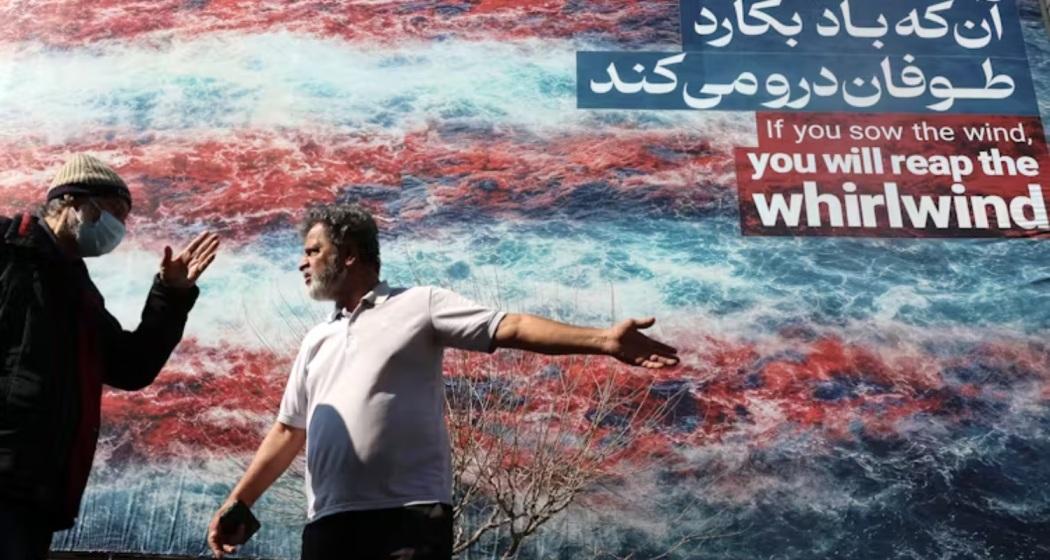
The United States and Israel have launched extensive, coordinated attacks on numerous targets across Iran, prompting retaliatory strikes across the region. President Donald Trump neither sought Congressional approval nor pursued a United Nations Security Council resolution before initiating the action. The attacks also come in the midst of diplomatic talks between Tehran and Washington.
Critics argue that the operation amounts to an illegal war under both US constitutional requirements and international law.
The US president has repeatedly insisted that Iran must not be allowed to develop a nuclear weapon. However, the United Nations’ nuclear watchdog has reported that because Iran denied access to key sites struck during last year’s conflict, it cannot verify whether Tehran has suspended uranium enrichment or determine the current size and composition of its enriched uranium stockpile.
Following the latest round of talks, Iran’s foreign minister, Abbas Araghchi, stated that “good progress” was being made towards an agreement that would limit Iran’s nuclear programme in exchange for sanctions relief.
Recent statements from Washington, however, suggest that the objective may have shifted beyond nuclear restrictions towards possible regime change.
Airstrikes have reportedly hit several Iranian cities, with civilians seeking shelter amid fears of further escalation. Analysts warn that such action continues a long pattern of foreign intervention in Iran, including the Anglo-Soviet invasion of 1941 that forced Reza Shah Pahlavi to abdicate, and the 1953 coup orchestrated by the CIA and MI6 against Prime Minister Mohammad Mossadegh.
Also Read: US, Israel launch joint strikes on Iran
The regional consequences are already unfolding. Iran has reportedly targeted US bases in Kuwait, Qatar, the United Arab Emirates and Bahrain, with early reports indicating casualties. Tehran appears to regard the confrontation as an existential threat.
Iran may also seek support from regional allies, including the Houthis in Yemen, the Popular Mobilisation Forces in Iraq and Hezbollah in Lebanon. Although some of these groups have been weakened in recent years, they retain the capacity to expand the conflict.
In recent naval drills conducted with Russia, Iran demonstrated its ability to potentially disrupt shipping through the Strait of Hormuz, a crucial chokepoint through which roughly one-quarter of the world’s oil and one-third of global liquefied natural gas supplies transit. Any closure or disruption could cause oil prices to surge and destabilise the global economy.
The timing of the conflict during Ramadan adds a sensitive cultural dimension. For Muslims worldwide, the month symbolises spirituality and solidarity. Images of civilian casualties risk deepening perceptions of a broader civilisational divide.
International reactions are likely to be sharp. Leaders in Moscow and Beijing are expected to condemn the strikes, while reassessing their own strategic calculations. The crisis may also carry implications for ongoing tensions in Ukraine and Taiwan.
The risk now is of a wider spiral: refugee flows, economic shocks, mounting casualties and prolonged instability. Whether diplomatic channels can still prevent deeper escalation remains uncertain. For now, global stability hangs in the balance.
Via The Conversation

 Follow us