By VIMAL SUMBLY
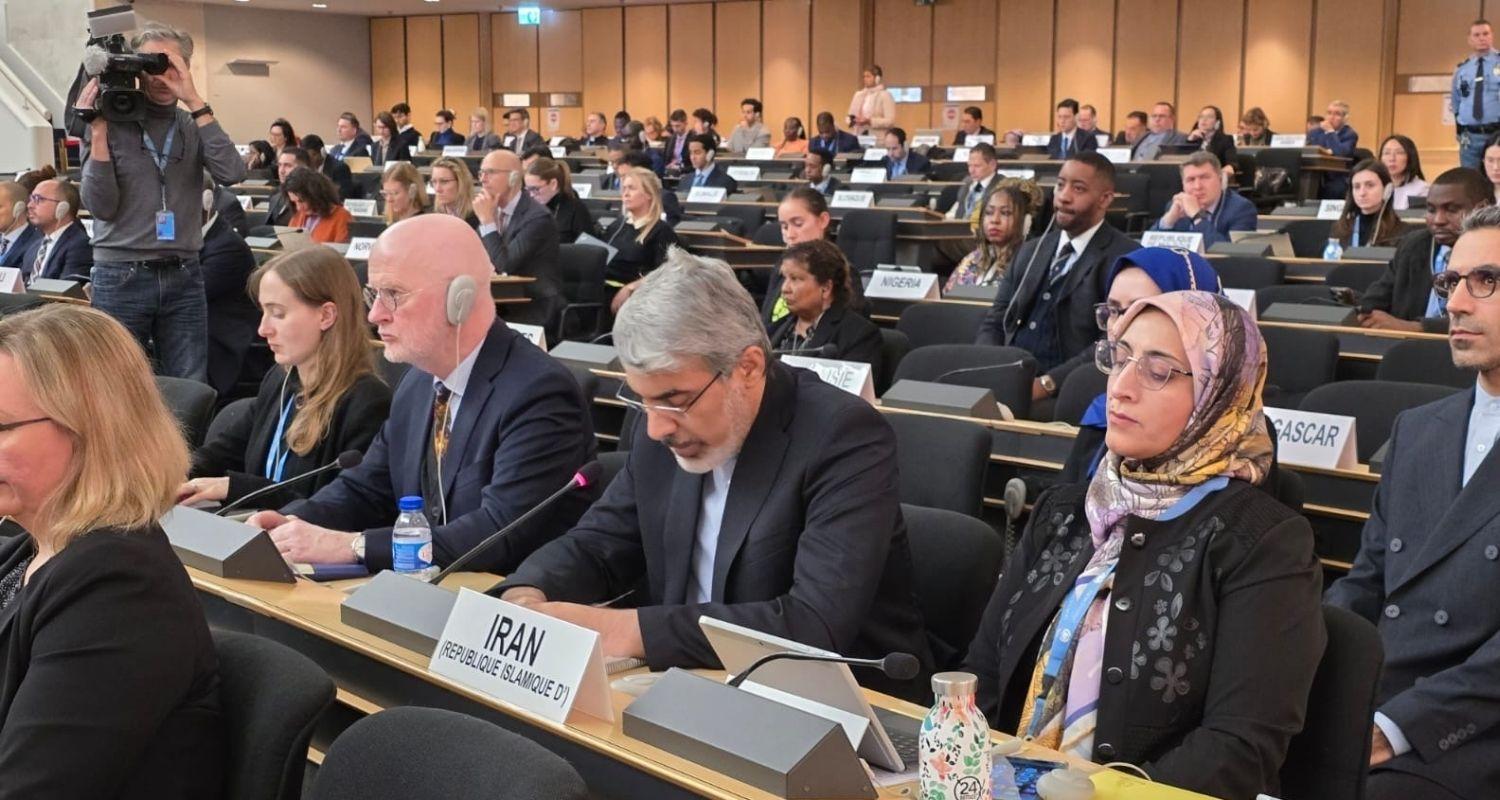
On January 23, India voted against a resolution in the United Nations Human Rights Council (UNHRC) on Iran, that called for urgent investigations into the alleged human rights violations in that country during the recent anti-government protests. The resolution called for appointment of a special rapporteur and fact-finding mission to probe these allegations.
Besides India, Pakistan and China also voted against the resolution, which was passed by 25 countries voting in favour and seven voting against it. Fourteen countries abstained from voting.
India has not only taken a principled stand that discourages foreign interference into the affairs of the sovereign states while dealing with internal strife, it has also reciprocated Iran’s similar gesture 31 years ago in the same council.
Besides, India has also asserted its diplomatic independence that cannot be influenced by any foreign power no matter what sort of bullying or blackmail it resorts to. This was important at a time when the rule-based global order is being subverted and bullying has replaced diplomacy.
The Government of India has also not responded to US President Donald Trump’s invitation to join the ‘Board of Peace’ for Gaza. The board has been established under the United Nations Security Council Resolution passed in November last year. President Trump had written a personal letter to Prime Minister Narendra Modi for India to join the board.
Trump has been made the lifetime chairman of the Board, as it apparently fits into his obsessive desire of getting the Nobel Peace Prize that he desperately craves. Interestingly, the Financial Times described the constitution of the board with a scathing headline, ‘Autocrats, monarchs and wanted men join Trump’s Board of Peace’.
Iran indeed is faced with widespread protests against the government there. There is a possibility of the government having used and still using ruthless force to curb the protests. That is how the governments deal with their internal strife and uprisings, which threaten the basic structure of governance.
In Iran, the protests are not for the change of government. These suggest the change in the very structure and system of governance that Iran has evolved since the Islamic Revolution of 1979. The country, against all odds, has established political stability, may be with a different worldview. The current uprising in Iran threatens not only to destabilise Iran as a country, but the region as a whole. The example of Iraq is too recent to be forgotten, when after the regime change, ISIS was born.
Also read: Iran’s uprising: The war of narratives
Moreover, it is not necessary that whatever is being “presented and projected” in the western media is what is actually happening in Iran. The only source of information available is the western media outlets, which are completely biased against the Iranian regime for whatever reasons. It is difficult to form an objective and balanced view when the reporting of events is completely biased and prejudicial.
The resolution on Iran was no doubt passed in the UNHRC. Its implementation will be a challenging task. Iran obviously will not feel obliged to accept it and it has nothing to lose on that count. The country is already facing severe and stringent sanctions. It cannot be worse than that. That way, the UNHRC exercise of passing a resolution when it cannot be implemented in itself is pointless.
As far as India’s stand is concerned, it is both pragmatic and reciprocal towards Iran. It demands a mention that when in 1994, Pakistan tried to bring in a similar resolution against alleged human rights violations in Kashmir, it was Iran among many other countries, which supported India forcing Pakistan not to press for voting, as it found tables having turned against it. Pakistan had relied a lot on Iran. It was the deft handling by then Prime Minister Narsimha Rao, who led from the front engaging everyone within and outside the country to make Pakistan beat a retreat.
India, by voting against a resolution to support Iran, has also shown that it is very much possible that a country can stand with both Iran and Israel at the same time. India’s relationship with Israel is independent of its relationship with Iran and vice versa. On earlier occasions, India has also taken a stance in favour of Israel. That proves India does not want to be seen subscribing to any particular bloc in the generalised way of former US president George W Bush doctrine, “with us or against us”.
India has also conveyed a subtle yet strong message to the US President that it cannot be bullied by any sort of blackmail, whether the tariffs or its cozying up to its perennially hostile neighbour Pakistan. India will assert its diplomatic autonomy at any cost under any circumstances. Moreover, India’s friends will not be chosen by anyone else.
The US has pushed the UNHRC to pass a resolution against the alleged violation of human rights taking place in Iran. Shouldn’t a similar resolution be brought against the United States for the way the officials of the Immigration and Custom Enforcement (ICE) have been treating people, even killing them wantonly? There cannot be more brutal, ruthless and inhuman abuse of force against people than the ICE is resorting to people in the name of identifying and deporting the “illegal immigrants”.

 Follow us