Fourteen former cricket captains from across the world, including India have written to the Pakistani authorities seeking fair trial and treatment of detained former Pakistan cricket captain Imran Khan. Among those who signed the petition include Sunil Gavaskar and Kapil Dev from India. The move is globally hailed for the goodwill shown by cricketers for one of their sporting colleagues, who has been a great legend of the game.
Interestingly, but not surprisingly, no cricketer from Pakistan signed the petition. That is understandable. They have to live and survive in Pakistan. Siding with Khan could risk meeting the same fate. Or at least a certain level of harassment.
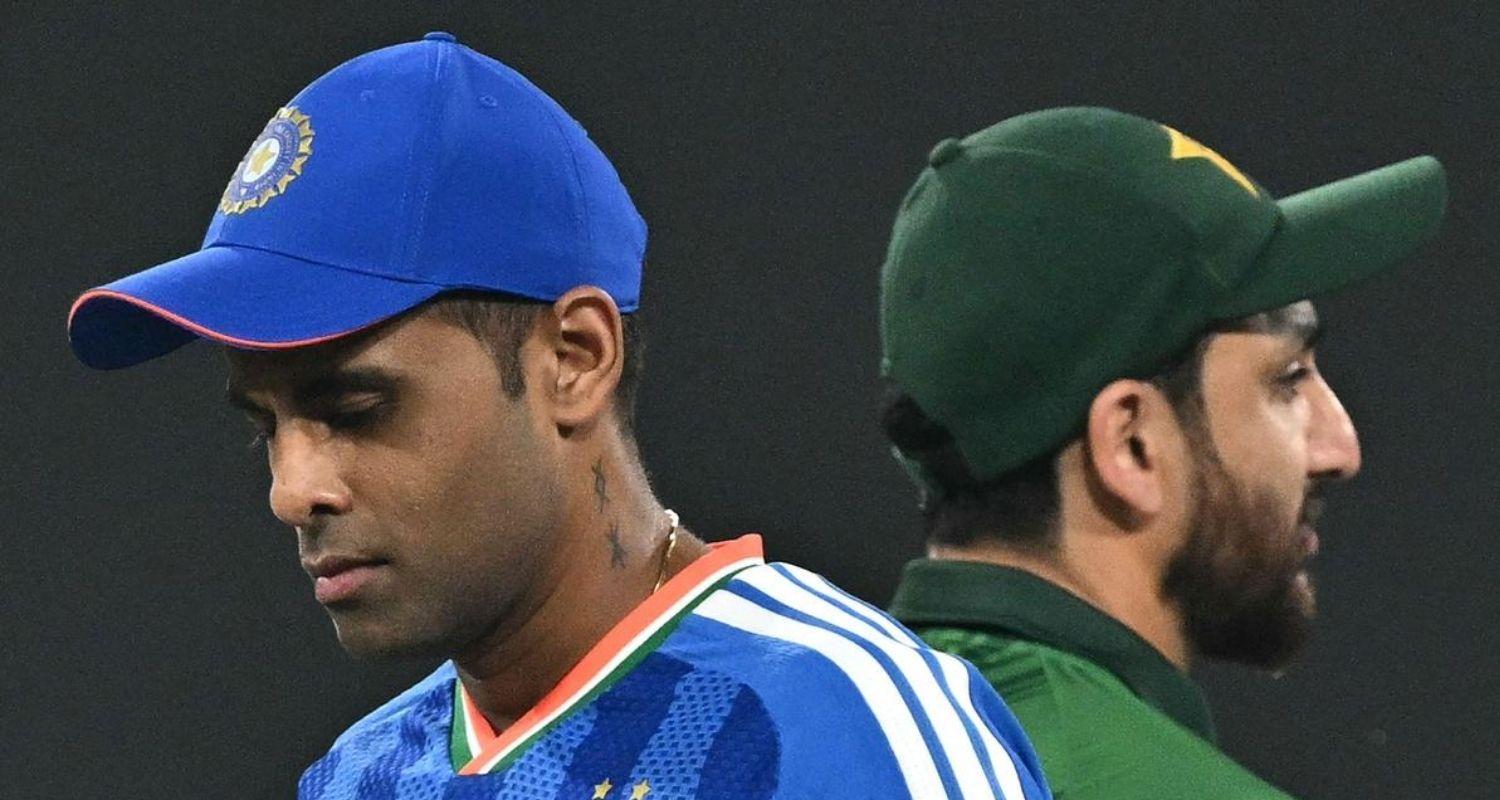
On the other hand, captains of the Indian and Pakistani cricket teams did not shake hands with each other at the onset of the game during the toss ahead of their game in Colombo last Sunday in the ongoing T-20 World Cup. Nor did the players shake hands at the conclusion of the game. This has been happening quite for some time now. This is avoidable.
India-Pakistan cricket is no longer a sporting contest. It is like a war by ‘other means’, where the supporters of the two teams try to seek cathartic pleasure in seeing their rival team defeated. This is not the sporting rivalry, but deep animosity for each other.
Given the massive fall in the level and standard of Pakistan cricket, for India it is now consistently not just a one-sided affair but a walkover. Playing has become a matter of formality as the eventual result is a foregone conclusion, unless there is some unprecedented upset. As of now, an adverse result, if it happens, in an India-Pakistan game will be among the most unexpected upsets, highly improbable and quite unlikely.
When Pakistan initially tried to avoid a contest with India, politics was not the only reason. Pakistan Cricket Board, like everyone else in the cricketing world, already knew what the outcome of the match between the two countries would be. Repeated and regular defeats at the hands of their arch rivals, whom they treat as enemies, is always quite demoralising for the entire nation, which has nothing else to look up to other than cricket, which used to provide some cathartic relief.
India and Pakistan are not traditional sporting rivals as Australia and England. Unfortunately, India and Pakistan, as two countries stand today, are each other’s sworn enemies. The blame entirely rests on Pakistan. It has never given up on its perennial agenda of suicidal hostility towards India. No matter which regime is in power in that country, be it a “civilian” one or direct military dictatorship, their first priority is to continue to try to “bleed India with thousand cuts”.
Irrespective of the quantum of repercussions and retribution Pakistan suffers, it does not desist from instigating and abetting acts of terror inside India, not just in Jammu and Kashmir, but also other parts of the country. Obviously, India cannot keep on taking everything lying down.
Also read: Suryakumar, Salman evasive on handshake, say ‘wait for 24 hrs’
When Pahalgam terror attack took place, India took the right steps and inflicted well-deserved retribution on Pakistan as that act of terror, like many others, had been conceived and planned there only. Moreover, Pakistan’s military chief Asim Munir had dropped enough hints about his designs just about a week before the attack, during his address to non-resident Pakistanis.
Within four months of Operation Sindoor that India launched against the terrorist camps in Pakistan, the two countries played in an Asia Cup tie in Dubai, a neutral venue, in September last year, when India quite expectedly defeated Pakistan. On February 15 this year, it was the second encounter between the two countries since Operation Sindoor. This was again not without hostility and bitterness in full display.
Pakistan earlier had decided not to play India to express solidarity with Bangladesh which was barred from participating in the ongoing T-20 World Cup after it refused to play in India citing security concerns. This was after Bangladesh cricketer Mustafizur Rahman’s contract with Kolkata Knight Riders team of the IPL was cancelled following anti-India protest demonstrations in that country and also selective and targeted killings of Hindus there. While Bangladesh was not allowed to participate, Pakistan eventually yielded to playing against India after facing warnings and threats from the International Cricket Council.
As happened in Dubai when Indian captain Suryakumar Yadav declined to shake hands with his Pakistani counterpart at the time of the toss and even the team members did not shake hands with Pakistani players after the conclusion of the match, the same thing happened in Colombo. Neither did the two captains shake hands at the time of the toss, nor did the teams exchange handshakes after the close of the game.
The patriotic sentiments of our cricketers are understandable. Unlike Pakistani cricketers who mostly act in an uncouth way, Indian cricketers have always maintained the highest level of dignity. No doubt when they play in an international event they represent the patriotic sentiments of 1.4 billion Indians. Their taking a position on not shaking hands is understandable. Majority of the Indian support and appreciate the stance and stand of our cricket players.
However, certain events and occasions demand certain courtesies. When the two captains of two great cricketing teams go for a toss, the world expects them to shake hands. And so does it when the match concludes irrespective of the result. When that does not happen it does not leave a good taste.
Our former cricket captains Sunil Gavaskar and Kapil Dev have done the best thing to join 12 other former world cricket captains from different parts of the world to seek justice and fair trial for one of their troubled colleagues, Imran Khan. That should be the spirit. Once it is a sporting event, practice sportsmanship. And when it is a war, use all means to crush your enemy as we did during Operation Sindoor.

 Follow us