
Trending:
Why are Indians unhappy?
India ranks 116th in the World Happiness Report 2026, reflecting deep inequalities, job stress and weak social support despite strong economic growth. Follow us
News Arena Network - Chandigarh - UPDATED: March 21, 2026, 04:37 PM - 2 min read
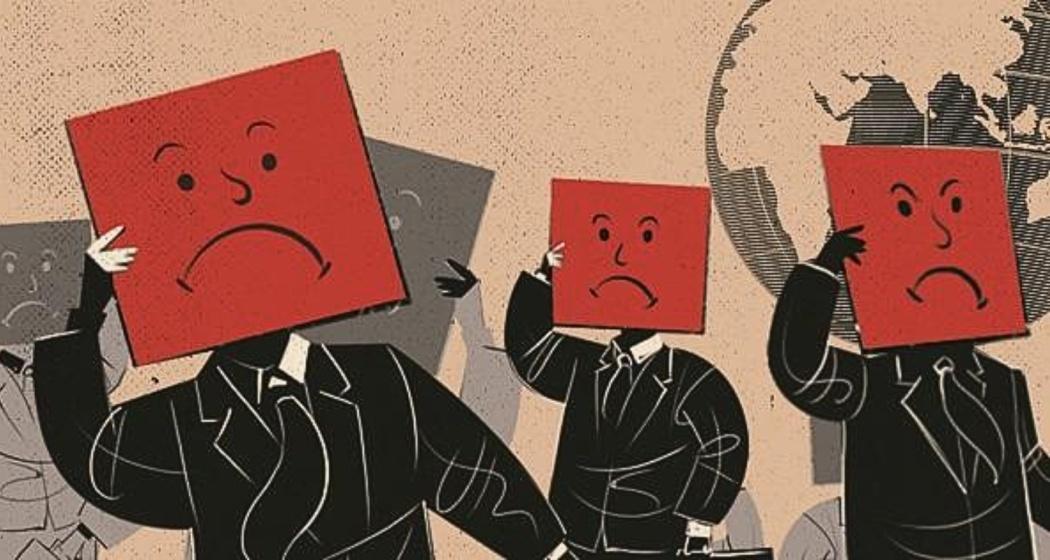
Representational image.
Philosophers may say that happiness is, after all, a state of mind. However, in practical terms, the state of mind cannot be independent of the realities of the physical world. Any attempt to measure the happiness level of an individual must take into account the nature of the social milieu, since individuals are integral parts of society.
Despite making rapid strides in multiple fields, India presents a picture of paradox when it comes to measuring the level of happiness of its people. A visible improvement in the living standards of people in urban areas is making them feel happy and comfortable, but rural regions still face issues related to infrastructure and basic services, contributing to rising distress levels.
The latest World Happiness Report 2026 has painted a bleak picture of India, placing it at the 116th position among 140 countries surveyed. Despite marginal improvement over the last few years, India is still counted among the unhappiest nations in the world.
Challenges galore
India’s poor ranking reflects the ongoing challenges despite being one of the world’s fastest-growing economies. Widening income inequalities, rising unemployment, and poor access to healthcare and education are among the major factors responsible for this unhappy state of affairs.
Life is a struggle for most people in the country. They navigate challenging conditions on a daily basis: corruption and dishonesty in every walk of life, weak social support systems, poor healthcare, and low life expectancy.
Additionally, rising stress levels, work pressure, and social disparities contribute to lower overall life satisfaction. Deep-rooted issues, including caste-based inequalities, gender disparity, and lack of safety, contribute to a sense of injustice and reduced life satisfaction.
The global report must serve as both a reality check and an opportunity for the country’s policymakers. Targeted policy interventions to improve healthcare, education, employment opportunities, and social equality could significantly boost happiness levels in the coming years.
Stepping up public spending to expand access to quality healthcare and education is necessary to boost life expectancy and well-being. Also, promoting social harmony by reducing discrimination and fostering unity among diverse communities will create an environment of peace.
The message here is that India needs to adopt more focused, people-centric policies that result in the fair distribution of economic gains. Instead of dismissing the report as a “Western conspiracy to sully the country’s image”, we must take the findings as a wake-up call and work earnestly to improve key development indicators.
The importance of having a job for happiness is a major factor and holds across all regions of the world. People with a job evaluate the quality of their lives much more favourably than those who are unemployed. The data also shows that rising unemployment negatively affects everyone, even those who are still employed.
As global conversations shift towards well-being and quality of life, the World Happiness Report remains an important benchmark for policymakers and citizens alike.
Flawed yet a wake-up call
There are those who argue that the Western model of evaluating the happiness of a society is not applicable to India. They contend that the country’s cultural diversity, family values, and strong community networks remain positive contributors to general happiness, even if they are not fully reflected in the rankings.
It must be pointed out that such international rankings are never perfect, because happiness is not a universally measurable concept. Yet, reports such as these prompt nations to confront a deeper question: what makes people happy beyond growth statistics?
For India, the question is very significant. We are living in a time of extraordinary transformation, rapid urbanisation, digital expansion, expanding aspirations, growing mobility, and soaring national ambitions.
Ironic as it may seem, alongside these gains runs a quieter undercurrent of anxiety, loneliness, insecurity, and mistrust. The World Happiness Report, despite all its inherent limitations, captures this underlying unease, at least partially. It may not fully reflect the moral and spiritual frameworks through which Indians endure adversity and continue to derive meaning from life.
A majority of Indians may live lives of modest means and grapple with material uncertainty, but they have a strong sense of spiritual rootedness. Religion and spirituality provide a framework for resilience, patience, gratitude, and hope. It is difficult to quantify the ability of Indians to seek spiritual meaning and purpose in life despite economic distress. As a result, the World Happiness Report may not fully register the spiritual side of lived experience.
Nordic nations show the way
The report evaluates countries based on several key factors, including GDP per capita, social support, life expectancy, freedom to make life choices, generosity, and perceptions of corruption. It uses global survey data to measure how people perceive their own well-being rather than relying solely on economic indicators. This holistic approach provides a broader understanding of what truly contributes to happiness.
Compiled by the University of Oxford's Wellbeing Research Centre in partnership with Gallup and the United Nations, the report is based on surveys of around one lakh people across 140 countries.
It was no surprise that Finland has been ranked as the world’s happiest country for a ninth consecutive year, followed by Iceland and Denmark, with Nordic nations continuing to dominate the top rankings. This dominance is attributed to wealth, equality, strong welfare systems, and high life expectancy. Social cohesion and a robust social safety net are common characteristics of the highest-ranking countries.
Afghanistan remained the lowest-ranked country in the world, along with Sierra Leone and Malawi. India has managed an average score of 4.536 out of 10, scoring below 1 on four of the six indicators, social support, healthy life expectancy, generosity, and perception of corruption.
One of the big surprises in the report is that, for the first time in its 14-year history, a Latin American country has made its way into the top five, with Costa Rica continuing its multi-year rise to fourth place, jumping from 23rd in 2023. The rankings are based on a three-year average of how residents across countries rate their own lives alongside factors such as GDP, social support, life expectancy, perceived freedom, generosity, and corruption.
Warning bells
Significantly, the report notes that heavy social media use is making people, particularly those below the age of 25, very unhappy. The impact of digital addiction among teenage girls in English-speaking countries and Western Europe is particularly worrying. It has emerged that life satisfaction among youth in countries including the United States, Canada, Australia, and New Zealand has fallen sharply over the past decade.
The findings come against the backdrop of plans by some countries to impose restrictions on social media use by minors. Researchers say extensive social media use is associated with lower well-being, with algorithm-driven, image-focused platforms and influencer content cited as key factors.
However, those who use social media for less than an hour a day are more likely to report higher well-being than those who do not use social media at all.
