
Trending:
Why governments fear Gen Z—rebels with a cause
History—contemporary, recent and present-day—is replete with instances of youth-backed political movements that toppled the governments and upturned a nation. Follow us
News Arena Network - Chandigarh - UPDATED: June 5, 2026, 03:43 PM - 2 min read
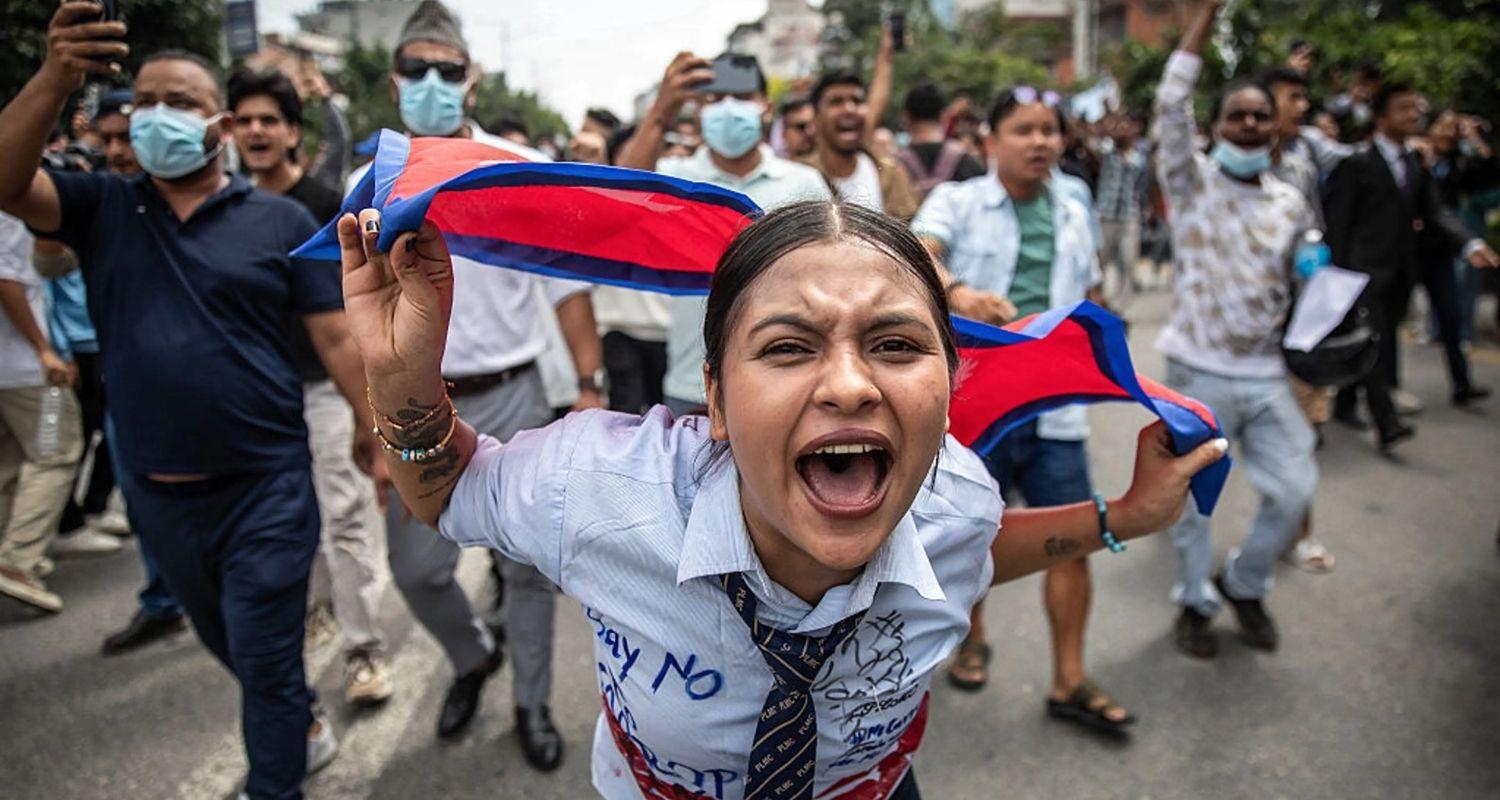
Representational image.
The Cockroach Janta Party is not even a political outfit. Not just yet. But before the mainstream media and prime time debates could even figure out its identity, they were forced to scratch their heads over its virality. The CJP’s rise from zero to 19M followers in record six days on Instagram and further to over 22M currently sparked one of the biggest debates and questions—was it algorithm-driven, organic, engineered?
Everybody nodded and agreed to one thing though—as to how unbelievable it was. “None of this was intentional,” founder Abhijeet Dipke clarified in countless interviews to media houses hounding him after the stupendous numbers. He pins the success down to youngsters and how the numbers are a marker for their frustration with the system and lack of neutral unbiased platforms.
The detractors still call it off as a meme page, but they miss a pertinent point—its potential. They also miss the power of those driving the numbers. Whether
the just born satirical Cockroach Janta Party eventually changed the political course of the nation is questionable, but the power of youth to precipitate a change is not.
Powered by youth, shaped by circumstances
History—contemporary, recent and present-day—is replete with instances of youth-backed political movements that toppled the governments and upturned a nation. One doesn’t have to look far or further back in time. Last September, Gen Z protests in Kathmandu prompted a change in 48 hours. Those watching termed 2025 as the year of the protests.
Around the same time, Madagascar was getting set to witness a nationwide three-week protest culminating in the exile of President Andry Rajoelina and simultaneous installation of a military-led transitional government. The first Gen Z-led revolution to topple a regime in Africa, its effectiveness was deeply studied, largely feared and will be infinitely replicated.
Also read: Steering the new science of negotiation in the age of AI
Just a year before, the youth in Bangladesh had already outlined a rough template. The 2024 revolution that unseated authoritarian leader Sheikh Hasina is often credited with inspiring young people to take to the streets and eventually, matters in their hand. The student-led revolution resulted in a historic win for the Bangladeshi Nationalist Party in the elections held in the aftermath of the protests. The young people at the forefront of the demonstrations were faced with police brutalities, threat of arrests, academic repercussions, but eventually their pressure proved unsustainable for the political strongholds.
Madagascar’s Gen Z activists deployed three strategies that proved winning and uncombatable for the centralised political power structures—leaderless coordination, hybrid mobilization, and transnational amplification. Penetrating state’s hidden power structures, information control and internet blackouts is not easy. But, ever since 2024 the political movements still spread like wildfire. In 2024, anti-government protests were held in countries including Kenya and Serbia. A year later, protests erupted in Indonesia, Mexico, Morocco, Peru, while the ones in Bangladesh, Madagascar and Nepal, successfully resulted in a change of guard.
History shows it, research proves it
In a recent journal essay, Harvard Kennedy School professors reviewed patterns in Gen Z-led protests or movements over time and found that those with extensive youth involvement are over twice as likely to succeed. The journal essay, by Professor Erica Chenoweth and research fellow Matthew Cebul, reviews patterns in Gen-Z-led protests alongside trends in youth protest over time. The young have led some powerful protests over the past century and continue to do so. The People Power Movement in the Philippines that removed Joseph Estrada from power in 2001, the Cedar Revolution in Lebanon in 2005, are another set of examples in global youth uprising leading to a political change.
Which is partly why, any movement with youth involvement is just as likely to be repressed more. A UNICEF research paper titled Youth, Protests and the Polycrisis breaks the myth that youth participation means ‘rowdyism’ and force. “Most protests involving the youth are peaceful, contradicting a misperception that young people are violent and unruly. Additionally protests with youth participation are more inclusive and larger. At the same time, governments are more prone to repress mass protests pre-emptively and violently when they involve youth.” A united, aware and participative youth is every regime’s worst nightmare.
Back home in India, what started as a parody of BJP has become a metaphor for the cockroach; bringing in the numbers, the resilience and resistance in the face of apathy. As CJP’s Dipke makes calls for a peaceful protest in the Capital demanding the resignation of the education minister, the young brace up. Will their demands be met? That’s most likely a no. Has the CJP already shown the writing on the wall? That’s a definite yes. It is now up to the authorities to either read it, and pay heed or remove it and pay the heavy price.
By Manpriya Singh
