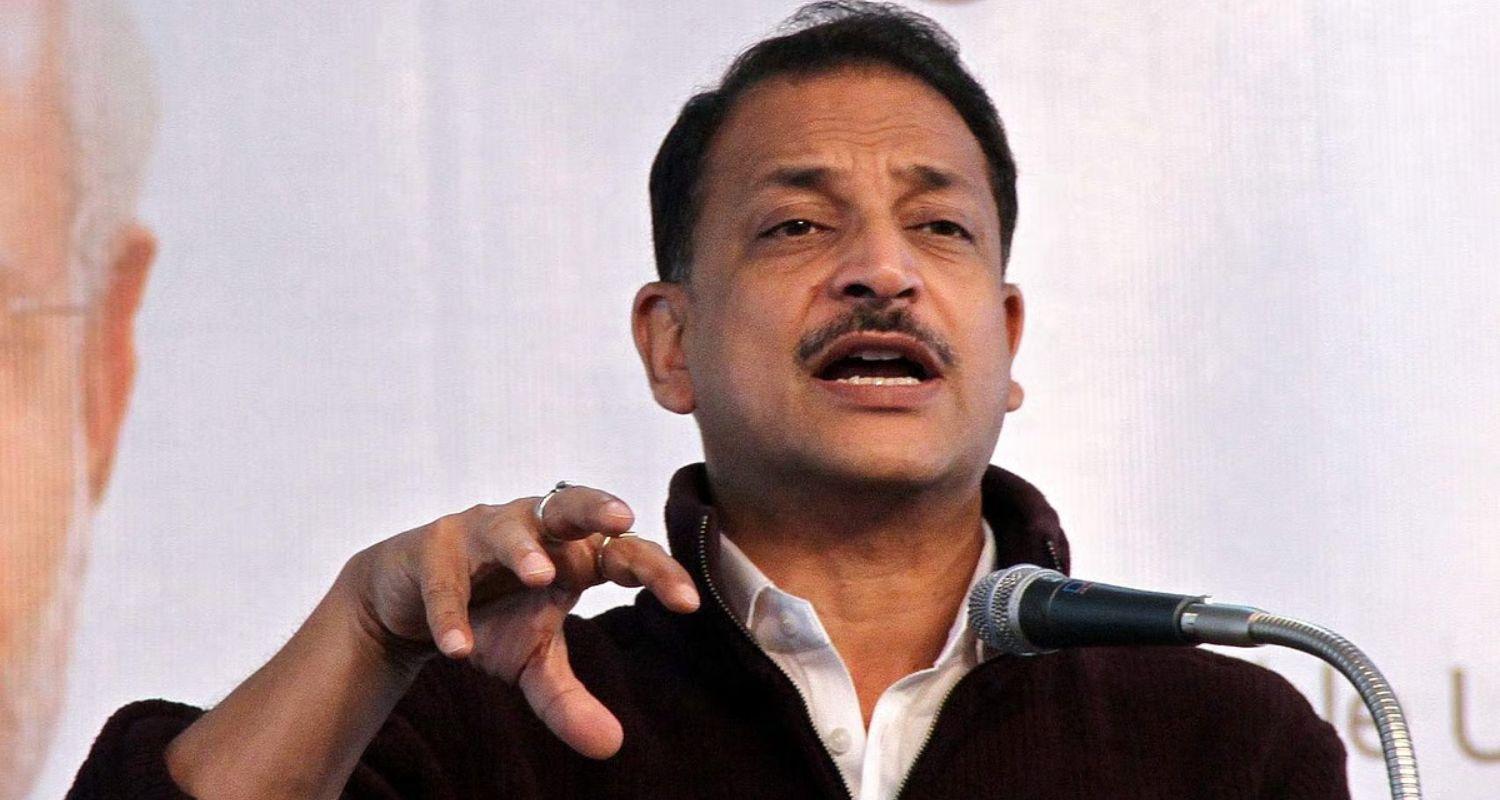
Rajiv Pratap Rudy has secured another term as secretary (administration) of the Constitution Club of India, defeating fellow BJP leader Sanjeev Balyan in one of the most closely fought elections in the club’s history.
The August 12 contest — only the fourth such election ever held — turned what is typically a low-profile event into a high-stakes political battle. It featured factional rivalries, contrasting campaign approaches and heavyweight voters from across party lines.
Mr Rudy, a six-time MP and former Union minister who has handled portfolios from Civil Aviation to Skill Development, is also a licensed commercial pilot.
Over his 25-year tenure, he is credited with transforming the club’s infrastructure. His challenger, Mr Balyan, is a former MP from Muzaffarnagar in Uttar Pradesh and a former minister of State for Agriculture and Water Resources, known for his Jat community base and grassroots political style.
Mr Rudy secured 354 in-person votes and 38 postal ballots, with reports putting the victory margin between 64 and 100 votes.
Mr Balyan mounted a spirited campaign, gaining open support from BJP colleagues such as Nishikant Dubey, while Mr Rudy enjoyed the backing of several Opposition MPs. Caste dynamics played a visible role, with community loyalties openly influencing the contest.
On polling day, former MPs mobilised by both sides travelled from across the country to cast their votes. Most BJP ministers, along with allies from the Shiv Sena and TDP, supported Mr Balyan, while Mr Rudy relied on his established network.
According to one observer, the race had effectively become an “anti-Rudy election”, driven by criticism over how the club was being run. Some members voiced concern that the entry of bureaucrats had reduced MPs’ exclusivity over the club, discouraging some, particularly women, from using its facilities.
Mr Rudy’s supporters countered these claims, citing his decades-long stewardship of the club — including hosting Sangh, party and Opposition events — as evidence of his ability to run an MPs’ hub in Delhi.
Founded in 1947 for members of the Constituent Assembly and formally inaugurated in 1965, the Constitution Club has become one of Lutyens’ Delhi’s most exclusive addresses, functioning as both a social space and a political salon.
The governing council is headed by the Lok Sabha Speaker, with posts such as secretary (administration) wielding considerable influence over events, facilities, and member engagement.
Under Mr Rudy, the club has been redeveloped from a fading institution into a plush venue with a spa, swimming pool, restaurants and modern event spaces.
The election drew 707 of 1,295 eligible voters — one of the highest turnouts on record. The roll call included senior political figures such as Amit Shah, JP Nadda, Sonia Gandhi and Mallikarjun Kharge.
Counting spanned 26 rounds. In the run-up, intense lobbying, late-night calls and careful caste coalition-building marked the campaign, with Mr Rudy drawing strong Rajput support and Mr Balyan consolidating Jat and rural MPs.
Mr Balyan campaigned on restoring what he called the club’s “lost glory”, accusing Mr Rudy of turning it into a “commercial place”. Mr Rudy countered with his record of expansion and revitalisation. His win, though contested, underscored his entrenched influence while exposing fault lines within the BJP.
The rare intra-party contest eclipsed opposition rivalry, with both camps mobilising extensive backroom operations and drawing in external allies. Mr Rudy’s polished persuasion contrasted with Mr Balyan’s in-person mobilisation, offering a glimpse into divergent political styles within the same party.
In the aftermath, conversations in the club’s corridors have been dominated by post-mortems of the campaign and speculation over future leadership changes.
For Mr Rudy, the focus now shifts back to managing an institution that serves as both a retreat and a networking hub for lawmakers. For Mr Balyan, the loss could bolster his visibility and influence within the BJP.
As one observer remarked, “This election is just the start. It shows no one is immune, and such battles could become a regular feature in the club’s future.”

 Follow us