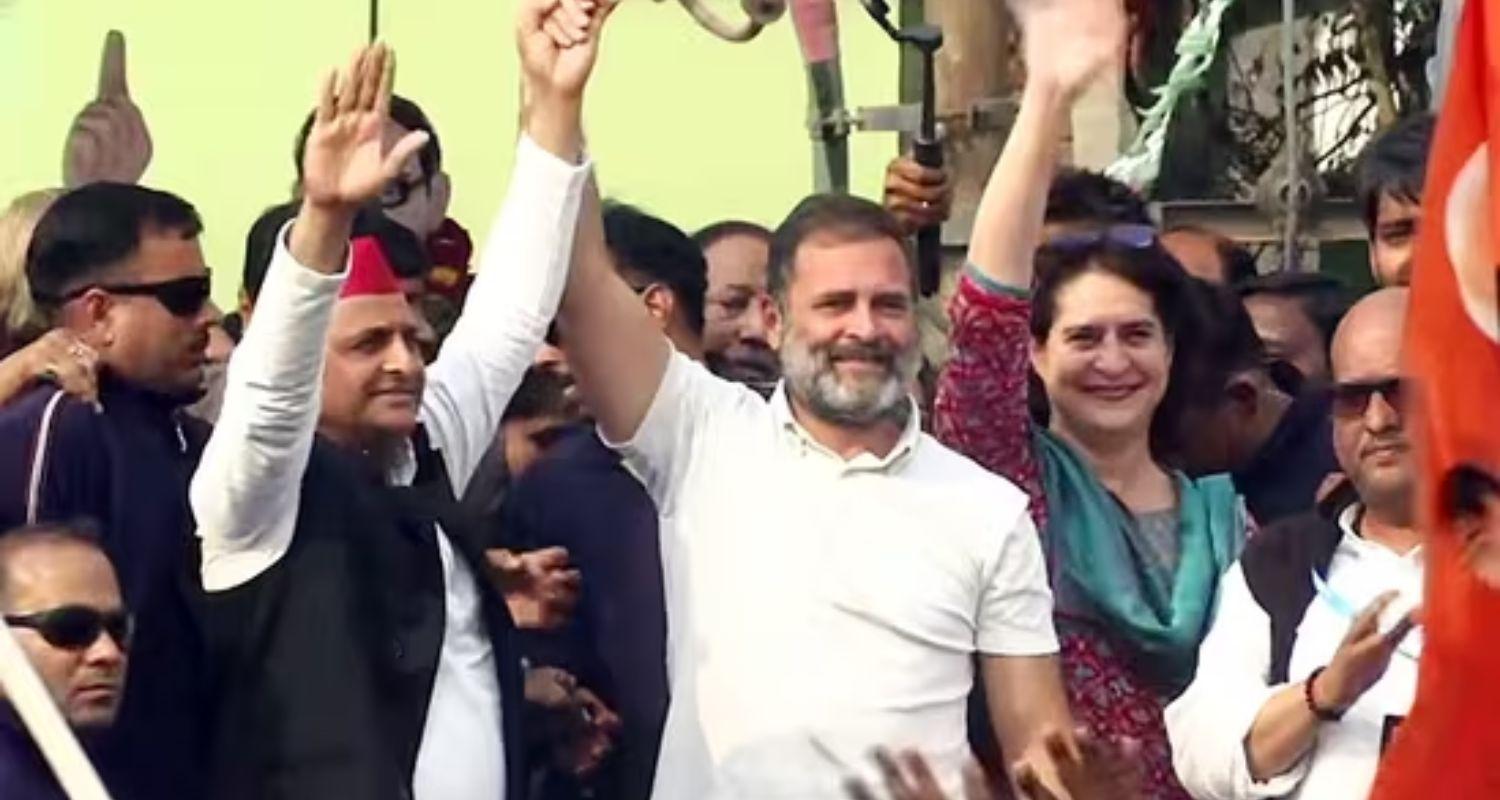
An almost an hour-long discussion between Congress leaders Rahul Gandhi and Priyanka Gandhi and SP leader Akhilesh Yadav, which took place in the office of the Leader of the Opposition on the very first day of Monsoon session of Parliament, is attracting much political attention. Although there were no official statements made, it was said that during this discussion held in the premises of Lok Sabha, several important political issues were discussed, such as seat-sharing strategy for upcoming Uttar Pradesh assembly elections and the theft issue related to Ram Temple in Ayodhya.
The meeting happens in the context of tension within the alliance in UP. Just recently, Rajendra Pal Gautam, the new in-charge of the Congress party in UP, made bold statements on how the party was growing stronger and demanded a significant number of seats, perhaps half of the 403 seats in the assembly constituencies. On the other hand, Congress party member of parliament Imran Masood has openly accused the Samajwadi Party of ignoring the issues of the Muslims.
These comments have been strongly rejected by the SP spokespersons. After the high-profile discussion in parliament, however, Masood adopted a softer approach saying that things become clearer when high-ranking leaders meet. He reaffirmed his position on having discussions on the alliance much before the final day and was optimistic that a proper deal would be made.
While public demands from Congress functionaries hover around 200 seats, internal sources suggest the party's realistic ambition is closer to 100. The Congress is seeking a larger share in regions where alliance arithmetic is strong, arguing that a visible Congress presence — supported by its appointment of Gautam, a Dalit leader — will reinforce the confidence of Dalit voters. The Dalit-Muslim-Backward Class consolidation was widely credited for the alliance securing 43 out of 80 Lok Sabha seats in UP during the last general elections, where the SP won 37 seats and the Congress took 6.
From the Samajwadi Party's perspective, the calculations remain distinct. Akhilesh Yadav has maintained that winning capability at the booth level is the paramount criterion. Reports indicate that the SP leadership prefers to evaluate potential Congress candidates on a seat-by-seat basis to determine if their ground organisation can deliver victory against Chief Minister Yogi Adityanath's Bharatiya Janata Party. SP insiders point out that while the Congress was allocated 105 seats in 2017 during a turbulent period for the SP, current political realties may cap a realistic allocation for the Congress at around 80 seats.
Addressing journalists after the meeting, Akhilesh Yadav played down speculation about the nature of the talks, remarking simply that leaders naturally meet when proceedings in the House are adjourned. Ground-level leaders from both parties continue to acknowledge that maintaining a cohesive front remains essential to challenging the ruling party in Uttar Pradesh.
Also read: Akhilesh Yadav slams Centre over NEET row, student protests

 Follow us