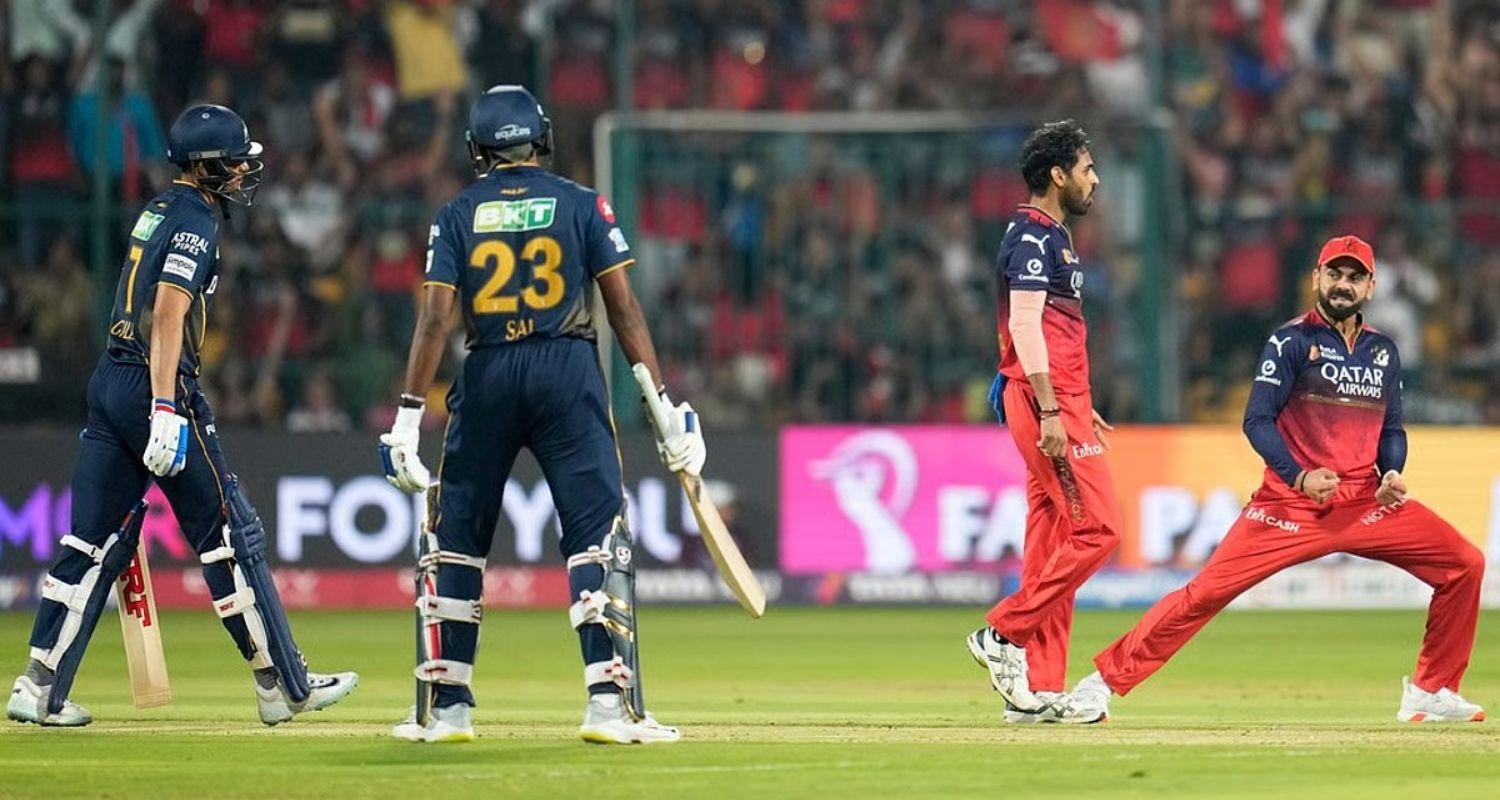
The three IPL matches played in Dharamsala this season indicate that the venue has transformed into a high-scoring ground while still offering enough assistance for fast bowlers, a balance that could prove crucial in Tuesday’s Qualifier 1 between Royal Challengers Bengaluru and Gujarat Titans.
The statistics underline that shift clearly. In all three completed games at the HPCA Stadium this season, first-innings scores have crossed or come close to the 200-run mark. While Dharamsala continues to provide seam movement and bounce, the long-standing view of it being a venue heavily tilted in favour of bowlers no longer entirely holds true. The consistent bounce and pace have instead created ideal batting conditions once players negotiate the early overs. What still sets the ground apart, however, is the behaviour of the new ball.
Situated around 1,450 metres above sea level, Dharamsala remains one of the few venues in India where fast bowlers regularly generate conventional swing along with steep bounce. The cooler mountain conditions and thinner air help seamers extract movement while hitting hard lengths effectively during the initial phase.
Also read: RR cruise into IPL playoffs with 30-run win over MI
Yet, unlike low-scoring grounds where seam-friendly conditions dominate throughout, Dharamsala’s quick outfield and true surface allow batters to regain control rapidly after the early movement fades. That trend has been visible in all three matches this season, with powerplays producing wickets and edges before batting conditions eased considerably once the ball lost hardness.
As a result, the key contest in Qualifier 1 could revolve around which side utilises the first six overs better with the ball. Based on current form and conditions, RCB may possess a slight advantage.
Their pace unit, featuring Bhuvneshwar Kumar and Josh Hazlewood, relies heavily on control, swing and disciplined hard-length bowling—qualities that have traditionally worked well in Dharamsala. Bowlers capable of moving the ball under lights and varying pace smartly during the death overs have often succeeded here, even in matches with large totals.
RCB’s successful defence of 222 against Punjab Kings highlighted that strength, with their seamers continuing to take wickets despite favourable batting conditions during the chase.
GT’s bowling attack, meanwhile, arguably carries greater outright pace, something the additional carry at Dharamsala could enhance further. However, one aspect that may reduce their usual edge is the relatively limited impact of spin on this surface. Although Rashid Khan remains a major threat, the conditions are likely to test his effectiveness.
Recent trends at the venue show fast bowlers accounting for the majority of wickets, while captains have seldom relied heavily on spin during decisive periods of the innings.
Another notable factor has been the importance of the toss. Teams batting second have won two of the three matches here this season, largely because conditions improve for batting once the ball softens and dew begins to settle later in the evening. That could once again make chasing the preferred option on Tuesday.
Overall, despite Dharamsala’s reputation as a bowler-friendly venue, Qualifier 1 is unlikely to turn into a low-scoring contest. The surface now rewards attacking batting more than before, while still offering enough early assistance to ensure fast bowlers remain central to the game.
In that context, RCB’s more balanced seam attack may provide them with a narrow edge over GT in exploiting the most decisive phase of the match—the powerplay overs.

 Follow us