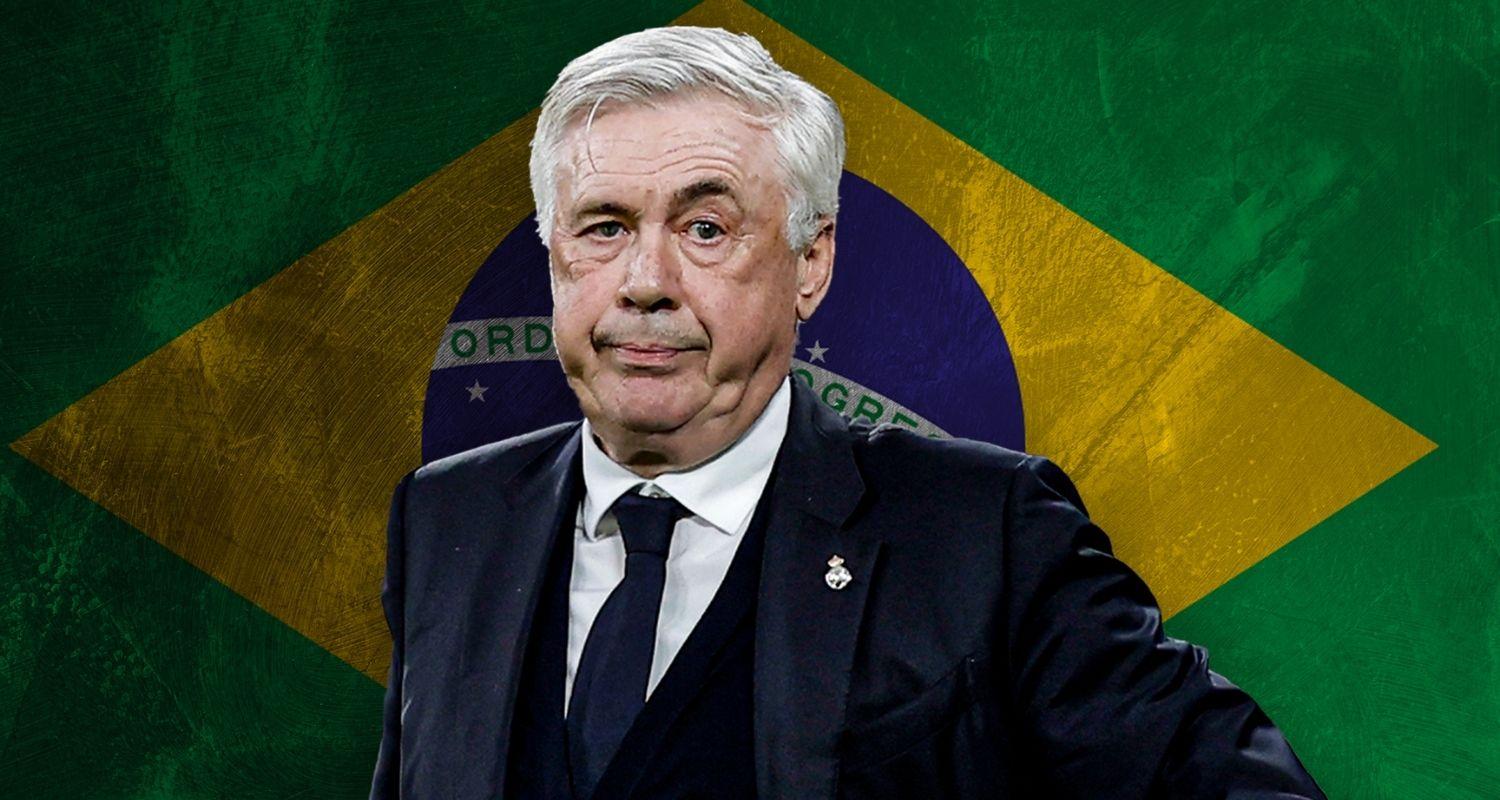
Brazil national football team is placing its hopes of ending a 24-year FIFA World Cup title drought not on a superstar striker or dazzling playmaker, but on a seasoned 66-year-old Italian coach standing on the sidelines.
Carlo Ancelotti, regarded as one of the most accomplished coaches of his era, left Real Madrid CF last year to take charge of Brazil—a rare instance of a foreign manager leading the Seleção. Although his tenure so far has produced mixed results, with five wins, three defeats and two draws, there is growing belief in Brazil that he can guide the national team back to the top despite the current squad lacking the aura of the country’s legendary sides of the past, even with stars such as Neymar and Vinícius Júnior.
Brazil remains the most successful nation in World Cup history with five titles, but the country has not lifted the trophy since 2002. For a football-obsessed nation that produced icons like Ronaldo Nazário, Ronaldinho and Pelé, the wait has felt unusually long.
Since that triumph in 2002, Brazil has advanced beyond the quarterfinals only once—during the 2014 World Cup on home soil—but even that campaign ended painfully with a humiliating 7-1 semifinal defeat to Germany national football team. The country’s confidence has further suffered amid the recent success of fierce rival Argentina national football team, which enters the tournament as defending world champion and consecutive Copa América winner.
“It is allowed to believe,” Ancelotti says in a World Cup-themed advertising campaign, a phrase that reflects the uncertainty that has gradually crept into Brazil’s football culture.
Brazil opens its World Cup campaign at MetLife Stadium on June 13 against Morocco national football team, semifinalists at the 2022 World Cup. The team’s other Group C opponents are Haiti and Scotland. Progressing beyond the group stage is considered the bare minimum in Brazil, especially in a tournament expanded from 32 to 48 teams. The bigger question is how the side will fare against elite opposition in the knockout rounds.
Also read: Singapore Open: Lakshya, Sindhu lead Indian challenge
“I know this team can compete with the best in the world. Can we reach the World Cup final? Yes, we can. But reaching the final alone is not enough—we want to win it,” Ancelotti said on May 18.
One of Ancelotti’s toughest decisions concerns Neymar, now 34, who was long regarded as Brazil’s main star before moving to Saudi Arabia in 2023. Persistent knee injuries limited his playing time there, and even after returning to boyhood club Santos FC last year, he continued to struggle with fitness problems.
Despite concerns over his physical condition, Ancelotti included Neymar in Brazil’s World Cup squad, calling him an ‘important player’ for the team. Raphinha also recently described Neymar as ‘the man of our sixth World Cup title’. If Brazil succeeds, however, it is likely to come through a more disciplined and tactical style than the flamboyant football traditionally associated with the nation.
Known for his tactical intelligence, Ancelotti has built a side comfortable with sitting deep and attacking selectively rather than dominating possession. His preferred setup often features a compact 4-4-2 formation that quickly transforms into an aggressive 4-2-4 in transition.
Despite inconsistent results, many Brazilians remain supportive of Ancelotti. Since taking charge, Brazil has recorded two wins, one draw and one defeat in World Cup qualifying, finishing fifth in South American qualifying behind Argentina, Ecuador, Colombia and Uruguay.

 Follow us