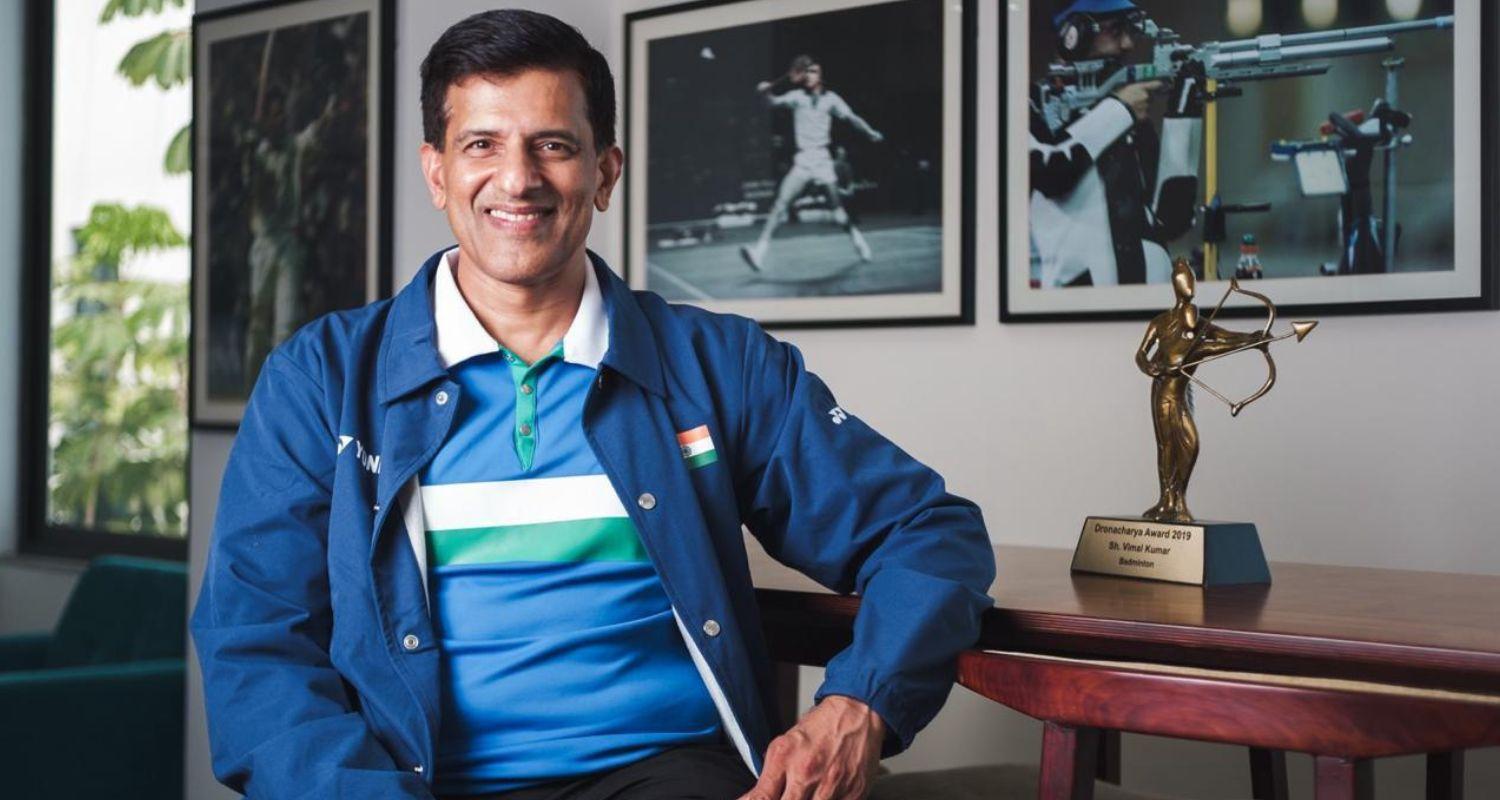
Choosing badminton over a career in medicine was not an easy call for U. Vimal Kumar, especially at a time when sport in India offered little assurance. “Those days, everyone believed medicine meant security,” he recalls. “Badminton meant uncertainty. But I knew I would regret it for life if I didn’t give the sport an honest chance.”
That decision would shape one of Indian badminton’s most influential journeys.
A two-time National Champion, Olympian, Dronacharya awardee and Co-Founder and Chief Coach of the Prakash Padukone Badminton Academy, Vimal’s influence runs deep. “My biggest satisfaction,” he says, “is not medals, but seeing players like Saina Nehwal and Lakshya Sen grow into responsible individuals.” For him, shaping champions has always meant shaping people first.
Also read: Sen, Satwik-Chirag carry Indian badminton in a year of rebuild
Life on the international circuit in the 1980s, Vimal says, was a test of character more than skill. “We travelled without coaches, physios or analysts. You learned by watching opponents and making mistakes,” he says. “Indian players were rarely favourites, but those years taught me resilience. You either adapted or got left behind.” Competing against better-equipped nations left a lasting impression on him, one that later defined his coaching methods.
The shift from player to coach came naturally, but not without challenges. “As a player, you only worry about yourself. As a coach, you carry the responsibility of an entire team,” he explains. Serving as the former Chief Coach of the Indian badminton team, Vimal focused on empathy and communication. “I never wanted to be a coach players feared. I wanted them to trust me enough to speak honestly.”
Identifying a true “champion mindset” in youngsters, he believes, has little to do with early medals. “Talent is common,” Vimal says. “What separates champions is how they react to failure, whether they sulk or come back to the hall the next day with more hunger.” He adds that curiosity, discipline and patience are signs he values more than short-term results.
In today’s hyper-connected world, Vimal is candid about the distractions athletes face. “Social media can give a false sense of achievement,” he warns. “Likes don’t win matches. Training does.”
He also urges players to prepare for life beyond sport. “Badminton will not last forever. Education, values and balance will carry you when sport cannot,” he feels.
By Joe Williams



 Follow us