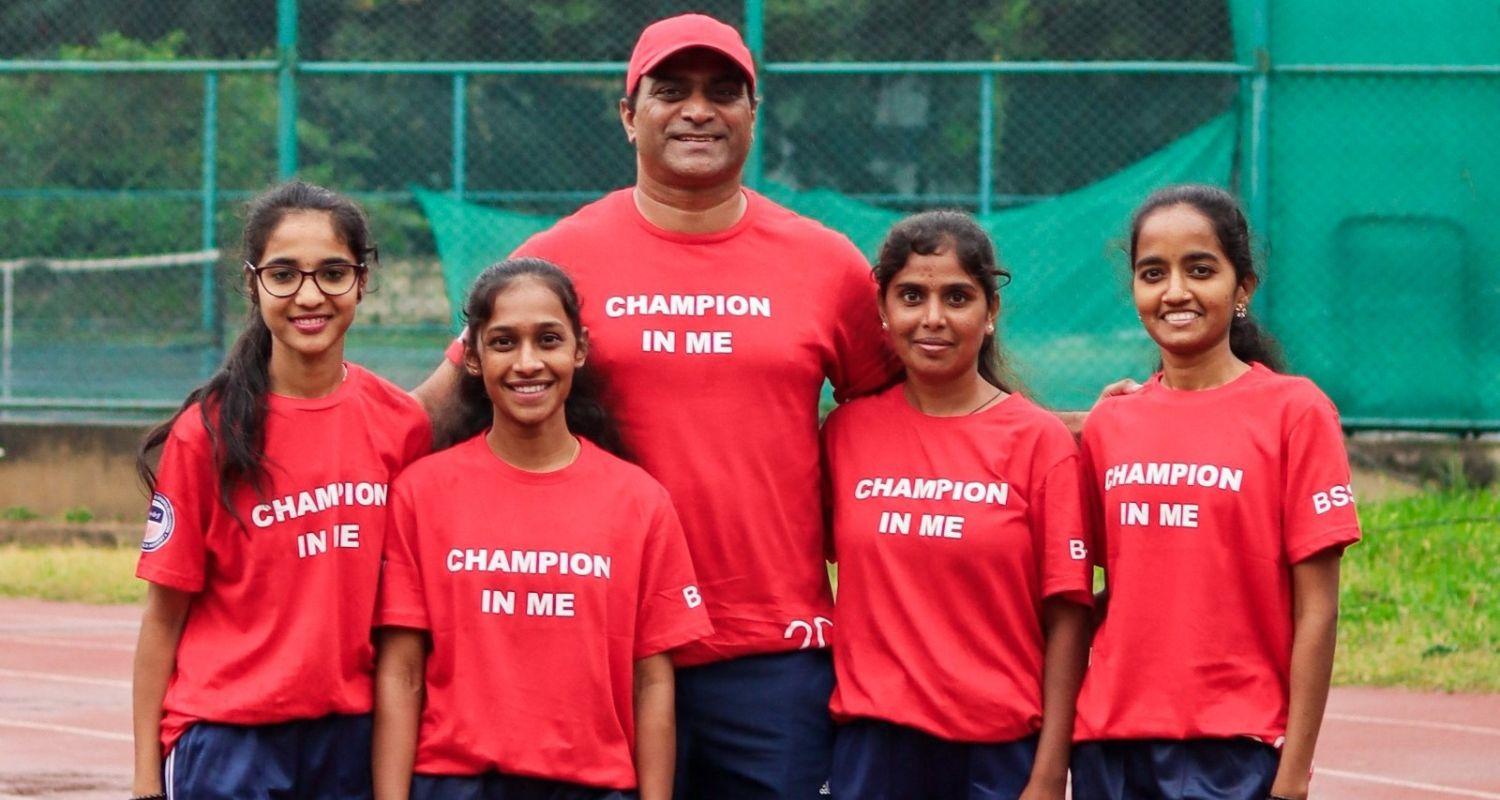
“We have no one to call our own. They say we belong to them, but we never truly had a family. What we had was sport, the only thing that held us, saved us, kept us going,” says Monika (name changed), her voice steady but weighed down by memories she seldom revisits.
She recalls the day she finished on the podium in the Tata Steel Kolkota 25k (she won in the women's 10k run category) in 2017, a victory that felt like reclaiming a life the world had once written off. As we approach the World AIDS Day on December 1, it offers a moment to reflect on the hardships children like her endure, and the possibilities sport continues to open for them.
Monika’s story begins in a small hamlet near Bengaluru. Born with HIV, raised amid stigma, pushed into a world no child should ever see, her life seemed destined for silence and shadows. But sport, unexpectedly, became her lifeline. “I was 11 when Sir Elvis Joseph found me,” she recalls. “And that step changed everything.”
From the cramped, suffocating corners where she grew up, Monika suddenly found herself running in open fields, breathing free air, discovering a world bigger than the four walls that once defined her existence. Through the sports led intervention and rehab program, she found not just training, but hope, dignity and a purpose she never imagined for herself.
Today, Monika dreams of standing at the starting line of the Tenzing Hillary Everest Marathon, one of the toughest high-altitude races on earth, held every May 29 in the memory of Tenzing Norgay and Sir Edmund Hillary’s historic ascent in 1953. If she qualifies from Champion-In-Me run club, she will become one of the first HIV-positive athletes in the world to attempt it.
“I don’t talk about my past… there is nothing there for me anymore,” she says quietly. “I only want to look forward. My life is new now.”
Also read: Para-archer Sheetal Devi makes it to able-bodied Asia Cup team
Monika works today at a multinational bank, a job she guards closely out of fear, because she has seen others like her lose employment the moment their HIV status became known. Each morning, she travels from Malleshwaram to the Kanteerava Stadium, training not for medals, but for meaning. For her, participation itself is victory. Qualification is the first summit. The marathon, the next. “It’s our dream, not just mine. I hope someone will be there to cheer for us,” she says, her eyes lighting up with a mix of fear and longing.
Apart from Monika, three other HIV-positive athletes will attempt the Everest marathon this year. And behind each of them stands one man who believed in them long before the world ever would. Sixteen years ago, Elvis Joseph walked away from a comfortable corporate career to build something this country had never seen: a sports-led rehabilitation project for HIV-positive children. “Champion-in-Me” began with just 20 kids in Karnataka. Today, more than 3,000 children have passed through its fold — children who finally have an identity, a community and a fighting chance at independence.
Some have competed at the Children’s Olympics in the Netherlands. Some have run the Boston Marathon. Others have flown to the Gold Coast. They are proving, step by step, that stigma can be outrun, but only if someone hands them the shoes. “These kids are vulnerable,” Elvis says. “And ironically, our country still has no plan for them.”
But for Monika, the plan is clear: keep running, keep climbing, keep believing. Every step she takes is a step away from the darkness she was born into, and a step towards the life she is now courageously building.
By Joe Williams

 Follow us