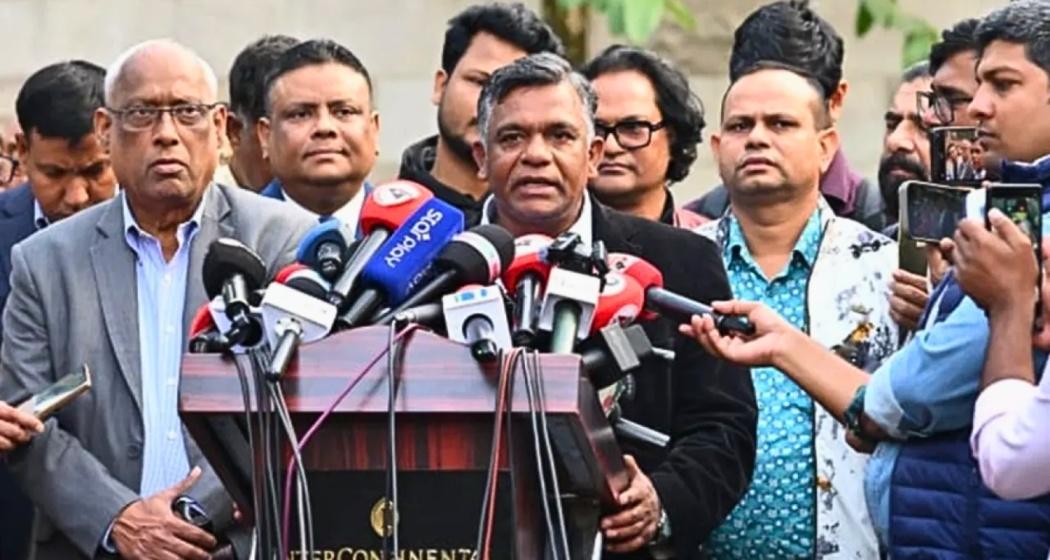
The Bangladesh Cricket Board’s (BCB) appeal against the International Cricket Council’s (ICC) decision to stage Bangladesh’s men’s T20 World Cup matches in India is unlikely to be heard, as the ICC’s Dispute Resolution Committee (DRC) does not have the mandate to review decisions taken by the ICC Board.
After the ICC Board of Directors voted 14-2 in favour of hosting Bangladesh’s fixtures in India following an independent security assessment that classified the threat level as “low to moderate”, the BCB approached the DRC as a last resort. The committee is chaired by senior English lawyer Michael Beloff.
“Yes, the BCB has approached the DRC as it wants to exhaust all available options. If the DRC rules against the BCB, the only remaining forum would be the Court of Arbitration for Sport (CAS) in Switzerland,” a BCB source said on condition of anonymity.
However, under Clause 1.3 of the DRC’s Terms of Reference, the committee cannot function as an appellate body against decisions of the ICC Board or any of its authorised decision-making entities. ICC officials have indicated that the appeal therefore falls outside the committee’s jurisdiction.
Also read: Bangladesh refuses to play T20 WC in India, cites 'security'
Bangladesh’s interim government had earlier announced that the national team would not travel to India citing security concerns, a position reiterated by sports ministry adviser Asif Nazrul, who maintained that the decision rested with the government rather than the cricket board.
The ICC, meanwhile, has kept Scotland on standby as a potential replacement. A formal announcement on Bangladesh’s status is expected by Saturday, with ICC chairman Jay Shah currently in Dubai.
Sources within the ICC said there was strong displeasure over the manner in which the BCB handled the issue, particularly holding a press conference before formally communicating its position to the global body.
The DRC primarily examines whether ICC procedures and regulations have been followed and does not entertain appeals on the merits of board decisions. In a notable 2018 ruling, the committee rejected the Pakistan Cricket Board’s compensation claim against the BCCI, holding that the agreement in question was not legally binding.

 Follow us