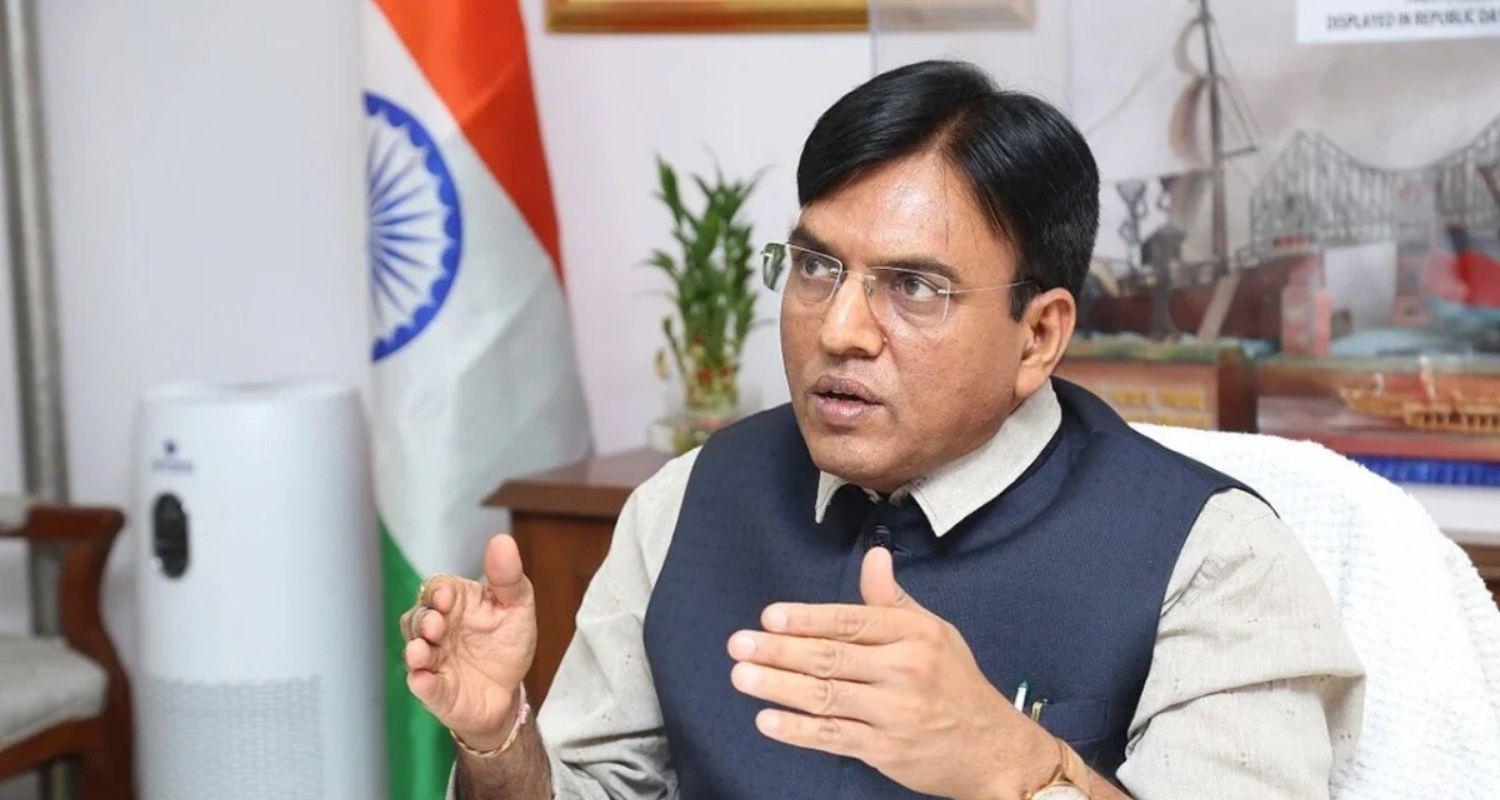
Amid Union Sports Minister Mansukh Mandaviya’s push to criminalise doping, provisions advocating jail and hefty fines for suppliers of banned substances from the draft anti-doping bill of 2018 are back in focus along with the debate and pushback it triggered from bodies like the Indian Olympic Association (IOA).
Criminalisation of doping was a major talking point at the World Anti-Doping Agency's (WADA) Global Anti-Doping Intelligence and Investigations Network (GAIIN) Final Conference here on Thursday. WADA President Witold Banka reiterated that he would always encourage governments to criminalise doping but only target the suppliers and facilitators like corrupt coaches and managers while safeguarding the interests of the athletes.
It was less than a decade ago when India had made preparations to criminalise doping following recommendations of a committee headed by Justice (Retd) Mukul Mudgal, the man who also investigated the 2013 IPL spot-fixing scandal in Indian cricket.
“...any person who indulges in supply of prohibited substance to an athlete on a regular basis for commercial purposes shall be guilty of the offence of 'trafficking' and shall be punished with simple imprisonment which may extend to one year and shall also be liable for a fine which may extend to Rs 10 lakh,” read the draft bill.
“Any person who is part of an organised crime syndicate shall be punished with simple imprisonment which may extend to four years and shall also be liable for a fine which may extend to Rs 10 lakh,” it stated.
However, the landmark provisions were scrapped from the bill that was eventually passed in 2022 and amended last year with the government, at that time, siding with the idea of a “preventive legislation, rather than a criminal legislation”. The IOA had also opposed the proposed penalties with its then secretary general Rajeev Mehta stating that supply of Performance Enhancing Drugs (PEDs) cannot be criminalised entirely as many of them are free for use in non-sporting environments.
Mandaviya on Thursday gave enough indications that revisiting the strict proposals is on the cards. India, which has topped the WADA's global list of dope offenders for the past three years, is aspiring to become an Olympic host in 2036 and has bagged the 2030 Commonwealth Games already.
“We are working on introducing criminal provisions for athlete support staff or other persons involved in trafficking and administering banned substances,” Mandaviya said, making it apparent that coaches who are found encouraging use of banned substances by athletes would be among those at the receiving end.
Currently, India does not have penal provisions to tackle supply of banned substances to athletes and disciplinary action is limited to bans that can last up to a lifetime depending on the degree of the offence. “Doping is no longer individual conduct. It is organised multi-national enterprise. The threat of doping undermines sport as India becomes a global sporting hub. Regulations are not enough. Ethics and values are at the core of sports but growing pressure of competition can lead to doping,” Mandaviya stressed.
Also read: Sincere efforts on to fix India’s doping problem: WADA chief

 Follow us