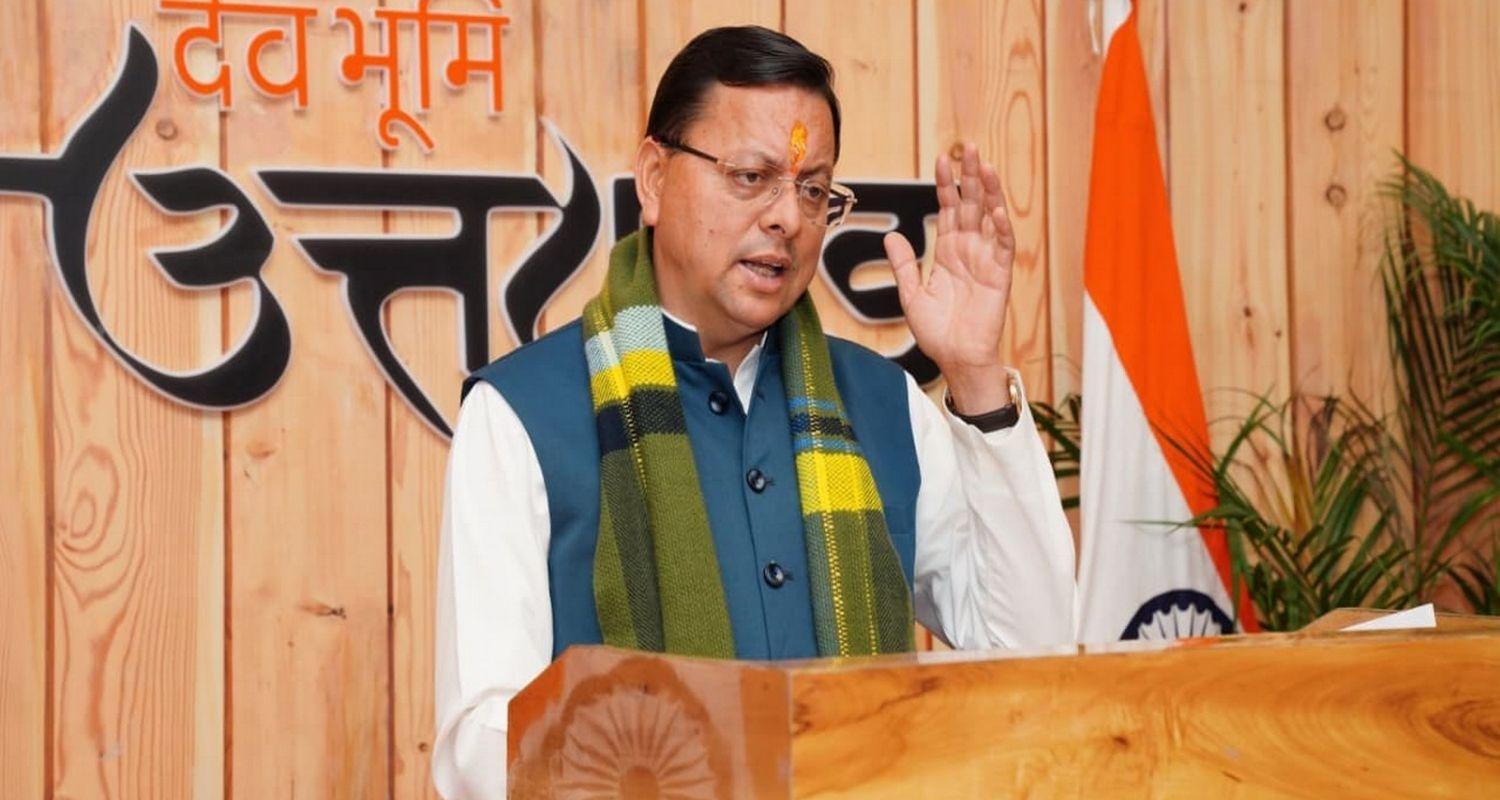
Uttarakhand Chief Minister Pushkar Singh Dhami said the Mukhyamantri Saur Swarojgar Yojana (MSSY) is helping connect local youth and residents with self-employment opportunities. He said the government is focusing on expanding jobs and entrepreneurship in sectors such as solar energy.
The Chief Minister said the scheme is doing more than promoting clean energy. It is also supporting economic activity in the hill areas and creating livelihood opportunities that could help reduce migration from the mountains.
The Mukhyamantri Saur Swarojgar Yojana was launched to encourage Uttarakhand residents to take up solar power projects as a source of income. The scheme aims to create employment while increasing the use of renewable energy across the state.
By June 2026, solar projects with a total capacity of 210 MW had been installed under the scheme, providing employment to more than 3,500 people. Dhami has set a target of taking the solar capacity under MSSY to 250 MW.
Under the scheme, local residents can set up solar plants with capacities of 20, 25, 50, 100 and 200 kW. Beneficiaries are also eligible for the benefits available under the MSME Policy-2023.
Government data shows that 1,132 solar plants had been set up across Uttarakhand by June 2026. Together, these projects have a capacity of 2,10,420 kW, or about 210 MW. Work on several other approved projects is still in progress.
Tehri has the highest number of solar projects under the scheme. The district has 369 plants with a combined capacity of 69,050 kW.
Uttarkashi has 227 plants with a total capacity of 43,660 kW, while Champawat has 144 plants with 28,200 kW of capacity. Haridwar has 86 plants with 16,900 kW, Pauri has 88 plants with 15,440 kW, Chamoli has 72 plants with 11,725 kW and Almora has 32 plants with 5,600 kW.
Solar projects have also been set up under MSSY in Dehradun, Rudraprayag, Bageshwar, Nainital, Pithoragarh and Udham Singh Nagar. The scheme is not only focused on generating solar power. It is also aimed at creating income and business opportunities for people living in rural and hill areas.
Projects established through MSSY are currently supporting around 3,500 direct and indirect jobs. The government believes the scheme can boost local economies and create stable livelihoods closer to people's homes, particularly in the hill districts. This could also help check migration from the mountain regions.

 Follow us