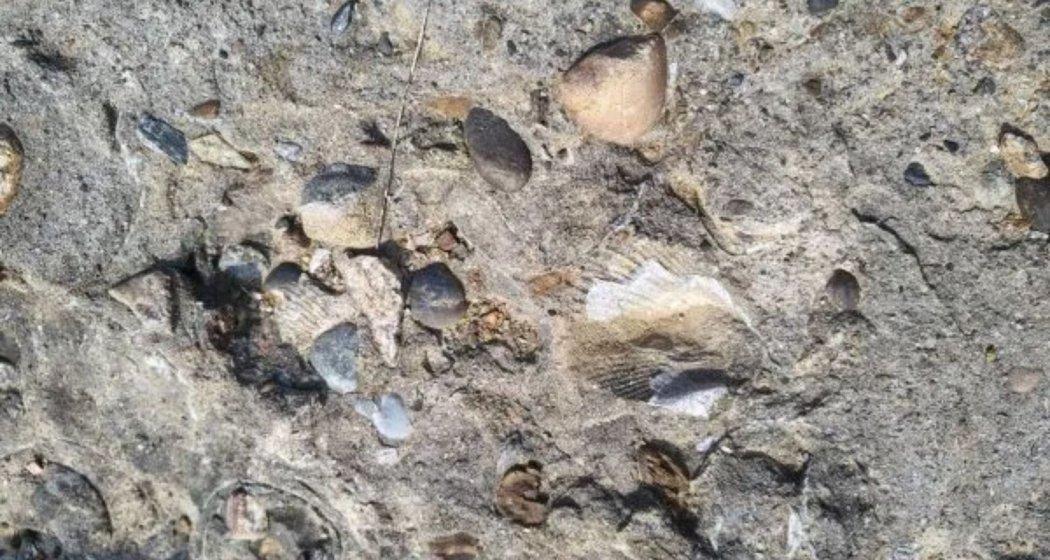
Marine fossils that are 280 million years old have been found on the banks of the Hasdeo River in Manendragarh district, Chhattisgarh. The state government plans to develop the site into a Marine Fossils Park, which will become a major attraction not only for Chhattisgarh but for all of Asia.
The park will draw history, archaeology, and nature enthusiasts.
Chief Minister Vishnu Deo Sai has shown strong interest in this project. The government is collecting detailed information about the fossils and is working to make Manendragarh a popular destination for both scientific research and tourism.
The Chief Minister called the discovery of these ancient fossils a proud moment for Chhattisgarh. He believes the park will boost scientific research and create new job opportunities in tourism.
The government is fully committed to preserving and enhancing the region's natural heritage.
Once developed, the Marine Fossils Park will be open to tourists and scientists as a biodiversity heritage site. Visitors will have the chance to learn about the origins and evolution of ancient marine life.
The project is a priority for the Chhattisgarh government, with teams from the Geological Survey of India and the Birbal Sahni Institute studying the site.
Dr. Vinay Kumar Pandey, Nodal Officer of the Department of Archaeology, said this will be the largest fossil site in Asia, attracting scientists from around the world.
Carbon dating has confirmed the fossils' age at 280 million years. The fossils were first discovered in 1954 by Dr. SK Ghosh, and later studied by teams from the ESI and Birbal Sahni Institute.
Also Read: 5 Naxalites killed in encounter with security forces in Bijapur
Scientists believe that millions of years ago, a glacier was located where the Hasdeo River is today. This glacier eventually melted and formed a thin strip of sea called 'Stathis,' where marine life entered the river and left fossils behind.
These fossils have been preserved over time, offering important insights into the earth's history. The Birbal Sahni Institute confirmed this in 2015.
The fossils provide evidence that there was once a sea in the area, which disappeared due to natural changes, leaving behind the preserved remains of marine life. This discovery offers valuable information about the earth’s ancient past.
Since 1982, the site has been recognized as a National Geological Monument by the Geological Survey of India, highlighting its cultural and scientific significance.
Also Read: Three arrested in Chhattisgarh PSC recruitment scam

 Follow us