
Trending:
5 children get HIV in Madhya Pradesh from donated blood
The children were administered HIV-infected blood during transfusions at government facilities in Satna. Follow us
News Arena Network - Bhopal - UPDATED: December 19, 2025, 10:04 AM - 2 min read
A representative image.
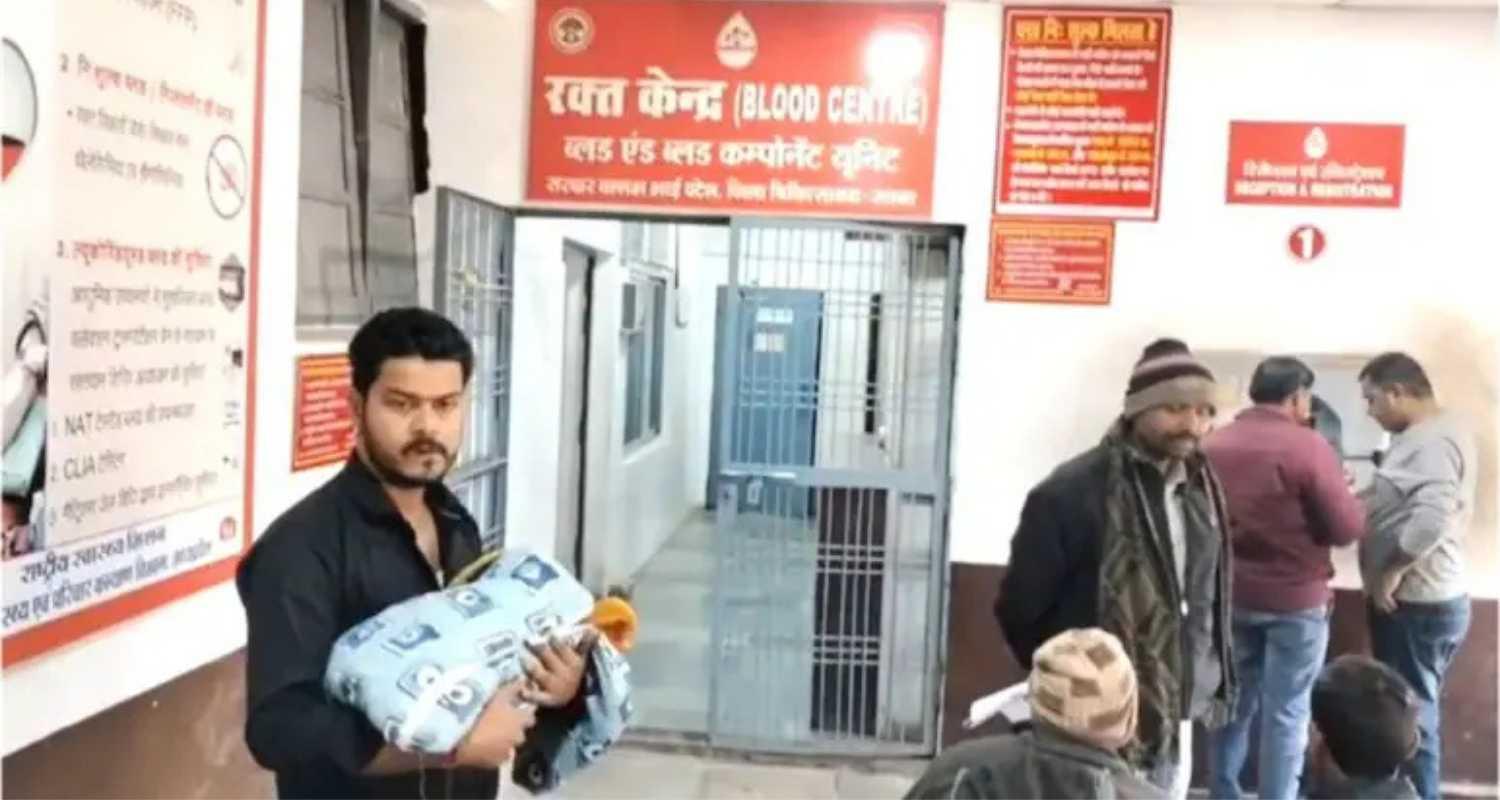
What began as routine, life-saving treatment for five children suffering from thalassaemia has turned into one of the gravest public health failures Madhya Pradesh has witnessed in recent years. An investigation has established that these children were administered HIV-infected blood during transfusions at government facilities in Satna -- an incident that not only raises questions of negligence but points to a deeper, systemic collapse of blood safety, surveillance, and accountability.
The affected children, all dependent on regular transfusions to survive, were given a total of 189 units of blood, sourced from three different blood banks. In the process, they were exposed to blood from over 150 donors, significantly widening the window of risk. The district-level inquiry has now concluded that HIV reached the children through donor blood, confirming a catastrophic breach in screening protocols meant to be infallible.
The Department of Public Health and Family Welfare has taken strict action in the case, suspending a blood bank in charge and two lab technicians and issuing a show-cause notice to the former civil surgeon of Satna District Hospital. Dr Manoj Shukla, the former civil surgeon, has been instructed to submit a written explanation and warned of strict departmental action if the explanation is not satisfactory.
The action against him, as well as Dr Devendra Patel, Pathologist and Blood Bank In-charge, and lab technicians Ram Bhai Tripathi and Nandlal Pandey, was taken on basis of preliminary investigation report of a seven-member inquiry committee constituted under the chairmanship of Dr. Yogesh Bharsat, IAS (CEO, Ayushman Bharat).
The timeline of events reveals a troubling pattern of silence. The first HIV-positive case among these children surfaced in March this year. By April, multiple children had tested positive. Yet, for several months thereafter, this information did not reach or was not formally acknowledged by the hospital administration or the district authorities. During this period, no emergency audit of blood banks was initiated, no public alert was issued, and no preventive steps were taken to stop further exposure.
The first red flag emerged on March 20 when a 15-year-old thalassaemia patient tested HIV positive. Between March 26 and 28, two more children were found infected. On April 3, a fourth case surfaced. Shockingly, despite these confirmations, the hospital administration and district authorities allegedly remained unaware or silent for nearly nine months.
Behind these failures are families living with irreversible consequences. The father of one of the affected girls described the human cost of the lapse. He said his daughter was diagnosed with thalassaemia at the age of nine and has since depended entirely on blood transfusions to survive. The family learnt about her HIV infection only three months ago.
"Where do I complain? What will happen?" he asked, struggling for answers. His daughter needs transfusions three times a month -- three units every eight days. Though she is on medication, he said it is not suiting her. "She vomits, becomes lethargic, and keeps falling ill," he said, capturing the helplessness now shared by multiple families.
Sources involved in the investigation have said that while plasma used by the hospital is procured through a contracted agency that conducts a three-layer testing and immediately alerts the hospital if infection is detected, the platelets were processed and used locally. Investigators are now examining whether platelets subject to weaker local oversight could have been the source of the HIV infection, a possibility that exposes a dangerous loophole in the system.
The state government maintains that the matter was detected internally. Deputy Chief Minister and Health Minister Rajendra Shukla said that the case was uncovered by officials within the health system. He said transfusions do not always take place at a single centre and that patients often move between government hospitals, private clinics, relatives, and donor-linked blood banks depending on circumstances. However, this explanation has only intensified questions about why a coordinated response was not triggered earlier, despite confirmed HIV cases.
Hospital authorities insist protocols were followed. Manoj Shukla, Chief Medical and Health Officer, said notices were issued to the Programme Officer and ICTC Counsellor and claimed that donor lists and records were available. He acknowledged, however, that deficiencies were observed at the programme officer's level, an admission that underscores gaps in monitoring rather than closing them.
Accusing the government of suppressing information, the opposition has termed the incident criminal negligence. Congress leader Dr. Vikrant Bhuria said that contracting HIV through blood transfusion in 2025 cannot be an accident. He alleged that blood screening failed, testing protocols were violated, and the surveillance system collapsed. He pointed out that only 125 out of nearly 250 donors could be traced, exposing severe lapses in record-keeping. According to him, HIV-positive reports surfaced in March-April, yet the matter remained buried for months.
Also Read: Children used in Shillong drug network, admits Meghalaya govt
The tragedy is compounded by the socio-economic reality of the victims. The affected children come from poor families, already burdened by the cost and emotional toll of thalassaemia.
They now face lifelong antiretroviral treatment, social stigma, and financial hardship, with no clarity yet on compensation, long-term care, or state responsibility.
This crisis unfolds in a state already grappling with a serious HIV burden. Madhya Pradesh has over 70,000 HIV patients, an adult prevalence rate of 0.10 per cent, and injecting drug user prevalence at 4.20 per cent. Seven districts have been classified as high-risk. In such a scenario, even a single breach in blood safety has consequences far beyond individual cases; it becomes a public health emergency.
Despite multiple inquiry committees being announced at district-level, state-level, and a Central Drugs Standard Control Organisation team, the reality on the ground is that the committees were formed late and are yet to demonstrate sustained, on-site action. Files have moved, notices have been issued, but accountability remains elusive.
Also Read: Mystery fever kills 3 children within 48 hours in UP village
