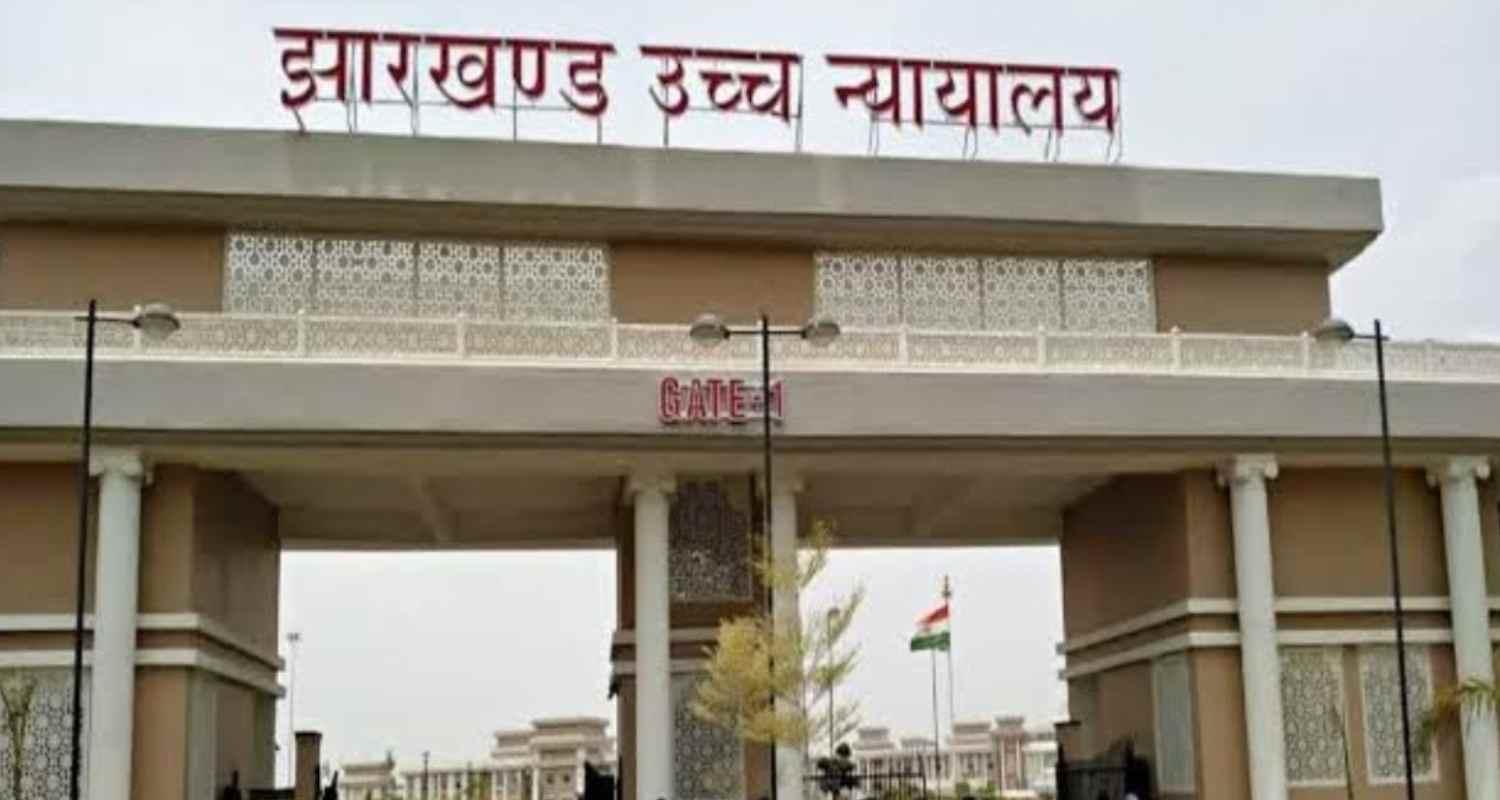
Jharkhand High Court overturned the dismissal of a Jharkhand Armed Police (JAP) Constable who was removed from service over allegations of an extramarital relationship, ruling that adultery ceased to be a criminal offence following the Supreme Court's landmark judgment in Joseph Shine v. Union of India.
Justice Deepak Roshan, while deciding a writ petition, held that the disciplinary proceedings suffered from a serious legal flaw as the Constable was ultimately punished on the basis of allegations that did not form part of the original charge-sheet. The court observed that such action violated the principles of natural justice and could not be sustained in law.
The petition challenged both the dismissal order and the subsequent appellate decision that had upheld the punishment. Allowing the plea, HC quashed the dismissal and all consequential departmental orders passed against Constable Bharat Pathak.
The controversy arose from a complaint lodged by a woman in 2023. She alleged that although both she and the Constable were already married and had children, he had married her and maintained a physical relationship with her between October 2019 and April 2023 before refusing to live with her. Based on the complaint, an FIR was registered, following which departmental proceedings were initiated, and the Constable was dismissed under Rule 824(B) of the Police Manual.
Examining the records, the High Court noted that the departmental charge-sheet was confined to allegations of misconduct and maintaining a relationship with a married woman. However, the dismissal order relied extensively on a rape FIR, an allegation that was never included in the charge-sheet served on the constable.
HC observed that under established service jurisprudence, disciplinary authorities cannot impose punishment on the basis of charges that were never communicated to the delinquent employee. Doing so deprives the employee of a fair opportunity to defend himself and violates the fundamental principles of natural justice.
The Bench also pointed out that the inquiry lacked corroborative evidence to substantiate the allegations. Apart from the complainant's statement, there was no documentary or independent material, such as proof of marriage, evidence of cohabitation, or CCTV footage, to support the charges.
Holding that the disciplinary authority had acted beyond the scope of the charges and exercised its powers improperly, the High Court set aside the dismissal order as well as the appellate order, granting relief to the constable.

 Follow us