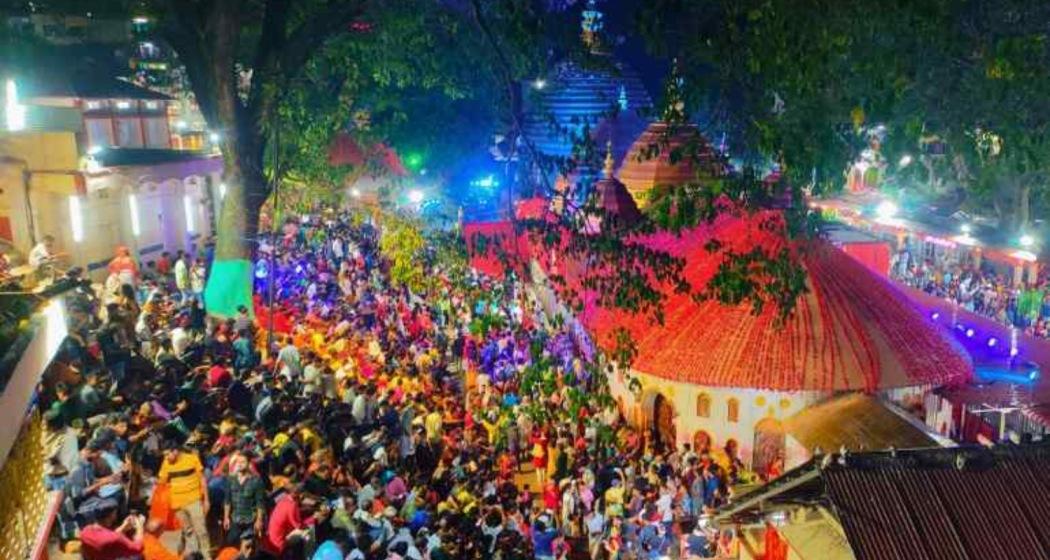
Preparations have begun for the annual Ambubachi Mela at Kamakhya Temple, with the four-day religious congregation scheduled to commence on the night of June 22 and conclude at sunrise on June 26.
Members of the temple’s Doloi community said the festival would begin on the seventh day of the Assamese month of Ahaar. Considered one of the largest spiritual gatherings in northeastern India, the mela is expected to attract lakhs of devotees, pilgrims, tantriks and ascetics from across the country to the Nilachal Hills shrine dedicated to Goddess Kamakhya.
Temple authorities have already initiated meetings with the district administration to finalise arrangements related to security, crowd management, sanitation, traffic regulation and accommodation for pilgrims.
In a move aimed at easing congestion during the peak days of the festival, authorities have decided to introduce an additional access route from the Pandu side this year. Along with the existing Nursery route, devotees will also be able to approach the temple through the newly developed Pandu-side road.
Advanced CCTV cameras are also set to be installed across the temple premises and adjoining areas to strengthen surveillance and security during the mela. Officials expect footfall to rise sharply in the coming weeks, with several sadhus and ascetics already arriving at Kamakhya Dham ahead of the annual event.
Also read: Record footfall at Kamakhya's Ambubachi Mela
The Ambubachi Mela holds immense religious and cultural significance in Assam and the wider Shakta tradition of Hinduism. The festival marks the annual menstruation cycle of Goddess Kamakhya and symbolises fertility, womanhood and the creative power of nature. During this period, the sanctum sanctorum of the temple remains closed for three days as it is believed that the goddess undergoes her yearly menstrual phase.
The temple doors are reopened to devotees after ritual purification ceremonies on the fourth day, an occasion that draws massive crowds seeking blessings and prasad from the shrine. Pieces of red cloth believed to be imbued with the goddess’s spiritual energy are distributed among devotees and are considered sacred by followers.
Often described as the “Mahakumbh of the East”, the Ambubachi Mela is also regarded as one of the most important gatherings of tantric practitioners in the country. The festival transforms the temple complex and surrounding areas into a sprawling spiritual camp, with ascetics, aghoris and devotees participating in rituals, prayers and religious discourses.
The annual mela also provides a major boost to Assam’s tourism and local economy, with hotels, transport operators, traders and small businesses witnessing a significant rise in activity during the festival period.

 Follow us