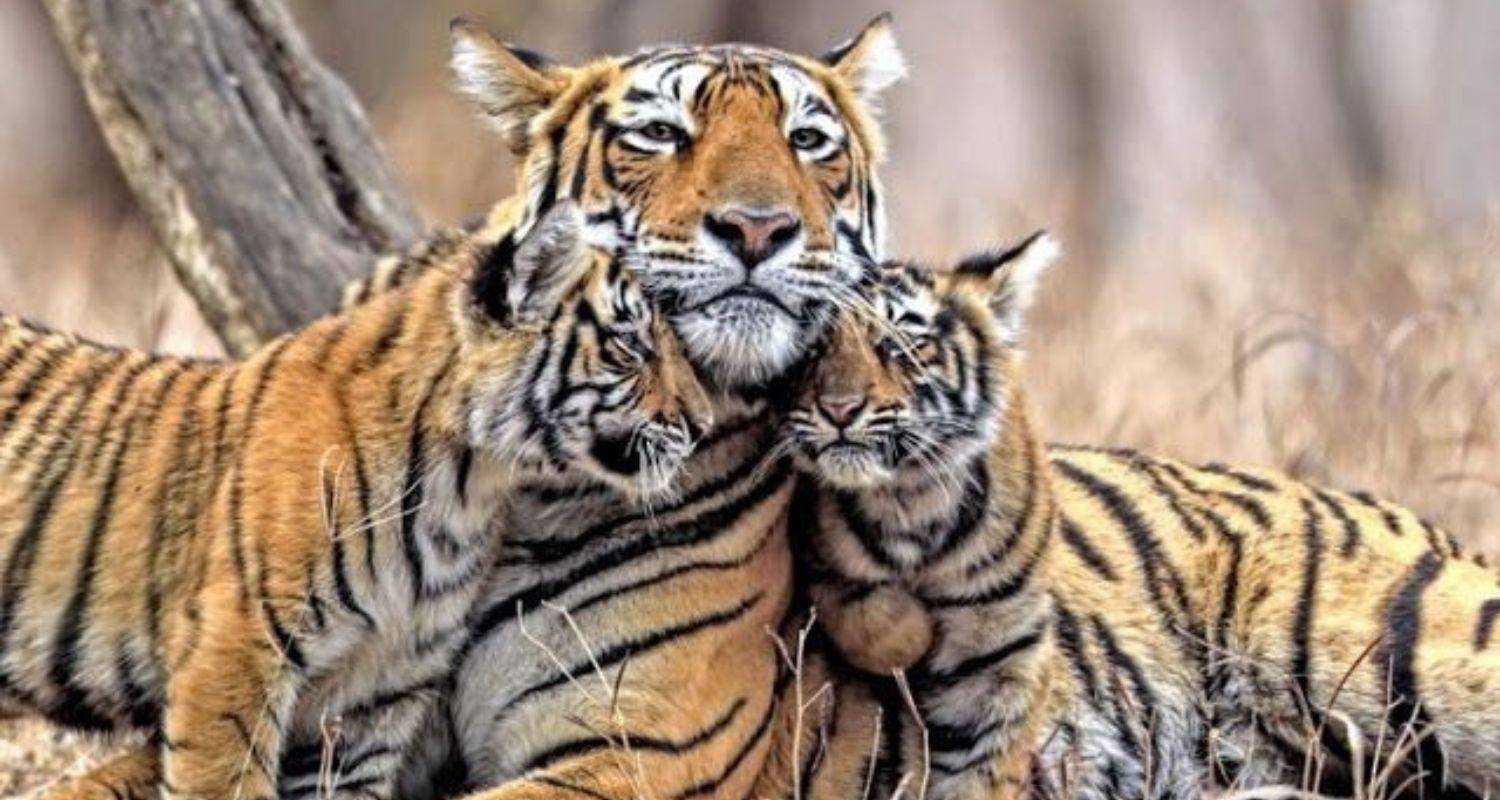
The Royal Bengal Tigers of the Sundarbans are not only symbols of wilderness — they are the species sustaining the fragile ecology of the world’s largest mangrove forest. Recent developments have raised a concern among conservationists — is the delta region running out of space for its tigers?
According to the Forest Department’s record, West Bengal is presently home to approximately 131 tigers, of which an estimated 30 to 35 are living outside the designated core areas. Many of these tigers are roaming across islands and peripheral zones of the Sundarbans, often straying dangerously close to human settlements. The Sundarbans itself hosts around 101 tigers, making it one of the most densely populated tiger habitats in the country.
In a major conservation move, the Sundarbans Tiger Reserve (STR) is set to become India’s second-largest tiger reserve following an expansion of more than 1,000 square kilometres. At a meeting of the National Board for Wildlife in New Delhi last year, the Centre approved the West Bengal government’s proposal to bring three additional forest ranges — Ramganga, Raidighi and Matla — under the STR. With this expansion, the reserve’s area will increase from 2,585 sq km to 3,629 sq km, second only to Andhra Pradesh’s Nagarjuna Sagar–Srisailam Tiger Reserve, which spans 3,727 sq km.
The state government is expected to issue a notification soon, detailing how much of the newly added 1,044 sq km will be designated as core and buffer zones. At present, the STR comprises four forest ranges— National Park (East), National Park (West), Sajnekhali and Basirhat.
“The newly included ranges will function as a mix of core and buffer areas, bringing additional tiger-bearing forests under formal protection. Despite this expansion, the Sundarbans remains an increasingly fragile habitat. Island erosion, rising sea levels, increasing salinity, and expanding human settlements are steadily shrinking the space available for tigers. These pressures have intensified territorial conflicts among tigers and increased the frequency of animals straying into villages, resulting in a rise in human–tiger conflict,” said a forest department official.
The warning signs became significant in early 2025, when a motion-sensor camera installed in the forests of Purulia captured a blurred image. Experts describe the sighting as a signal that India’s tiger map is undergoing a transformation. Using camera trap data, researchers reconstructed the animal’s extraordinary journey. In March 2024, the tiger was detected in the Balrampur forest area of Chhattisgarh. As temperatures rose, it appeared in Jharkhand’s Palamu Tiger Reserve. By January last year, it had reached Purulia.
India’s tiger population, once on the brink of extinction, has rebounded dramatically. “From just 1,411 tigers in 2006, the number rose to 3,682 in 2022, placing nearly 75 per cent of the world’s wild tigers within India’s borders. However, this conservation success has created new challenges. Scientists at the Wildlife Institute of India estimate that nearly 30 percent of the country’s tigers—over 1,100 animals—are now roaming outside notified tiger reserves,” said the forest department official.
To address this emerging reality, the Wildlife Institute of India launched the Tiger Outside Tiger Reserves (TOTR) project in 2025. While India’s success in reviving its tiger population is undeniable, experts warn that conservation strategies must now evolve.
Also read: Fisherman killed in tiger attack in Sundarbans

 Follow us