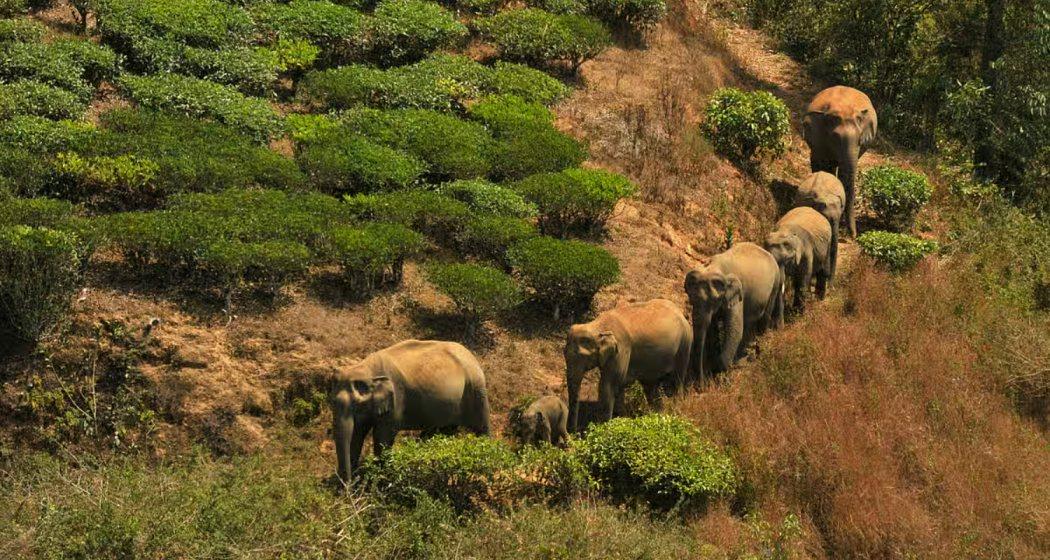
Arunachal Pradesh has recorded the world’s highest known elephant range, with herds documented at elevations above 3,000 metres above sea level, highlighting the extraordinary ecological adaptability of Asian elephants and reinforcing the state’s significance as a global biodiversity hotspot.
The finding emerged from a statewide assessment conducted jointly by WWF-India and the Arunachal Pradesh Forest Department between December 2024 and March 2026. The study mapped elephant distribution, migration routes, habitat connectivity and human-elephant conflict zones across the state.
Conservationists said the record is particularly significant because elephants are generally associated with tropical forests, grasslands and lowland habitats. The latest assessment documented elephant presence above 3,000 metres, with camera traps in parts of Arunachal recording herds at elevations reaching around 3,266 metres, the highest ever documented globally.
Arunachal Pradesh, located within the Eastern Himalaya biodiversity hotspot, supports one of India’s richest wildlife landscapes, ranging from subtropical forests to alpine ecosystems. The state hosts populations of Asian elephants, tigers, clouded leopards, red pandas and several endangered bird species.
The report identified key elephant corridors, movement patterns across diverse terrains and conflict-prone areas requiring mitigation measures. It also provided baseline data on crop losses, property damage and human casualties linked to human-elephant conflict, which remains a major challenge in several districts.
Also read: Nagaland sets up wildlife division to tackle elephant conflict
The Northeast remains one of the most important elephant landscapes in India. Assam alone hosts one of the country’s largest elephant populations, while forested corridors stretching across Arunachal Pradesh, Assam, Meghalaya and neighbouring Bhutan form critical habitats for the species.
Asian elephants found in India belong primarily to the subspecies Elephas maximus indicus, which differs from African elephants in several ways. Asian elephants have smaller ears, a more curved back and a single “finger” at the tip of the trunk, while African elephants possess larger ears and two trunk-tip projections. Only some male Asian elephants develop large tusks, unlike African elephants where both sexes may have tusks.
Wildlife experts said the presence of elephants at such extreme Himalayan elevations may offer valuable insights into habitat adaptation, climate-linked ecological shifts and long-term conservation planning.
The findings have renewed calls for stronger protection of Arunachal Pradesh’s forests and wildlife corridors to ensure the survival of one of Asia’s most important elephant populations.

 Follow us