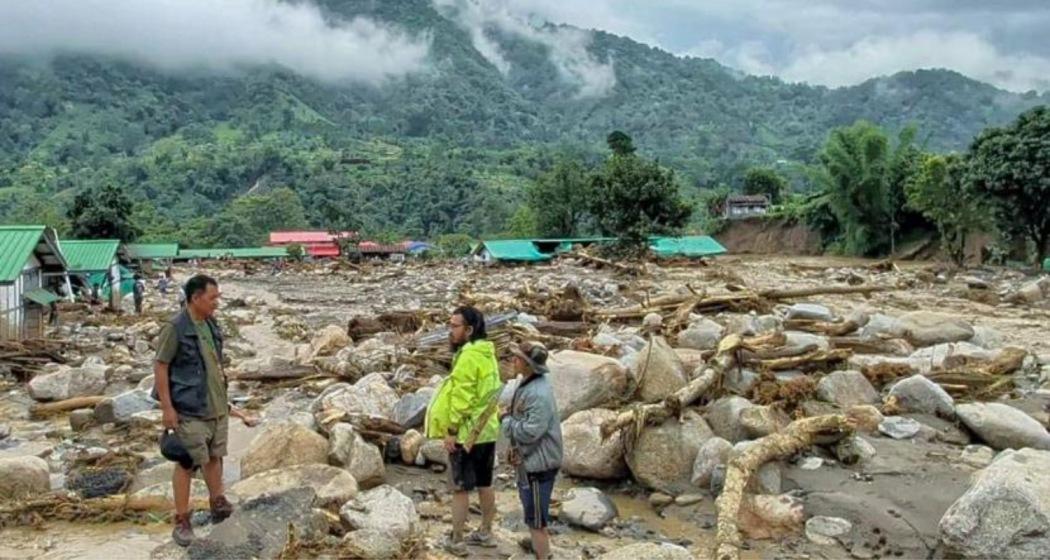
Rescue teams on Sunday recovered the body of the third victim of the June 24 cloudburst in Arunachal Pradesh's Keyi Panyor district, while seven districts remained cut off from road connectivity as incessant monsoon rains continued to trigger landslides and hamper restoration work.
The body was found around 10 km downstream from the cloudburst site at Poosa, bringing the death toll in the disaster to three. Search operations had been underway since the cloudburst triggered flash floods and landslides that swept through the area.
The disaster caused widespread destruction, including the demolition of 18 residential quarters of the NEEPCO colony in Keyi Panyor district.
Road connectivity across large parts of the state has been severely affected, with several key routes remaining blocked by mudslides, flash floods and road washouts. Authorities said the Kimin-Potin road was blocked again following fresh spells of heavy rain, further disrupting transportation.
The Hoj-Potin Road along National Highways 13 and 713A, a vital link connecting central and upper Arunachal Pradesh, remains completely closed.
The closure has cut off access to Keyi Panyor, Lower Subansiri, Kurung Kumey, Kra Daadi, Kamle, Upper Subansiri and adjoining districts, disrupting the movement of people as well as essential supplies.
Also read: Four still missing in Arunachal floods; rescue intensifies
The district administration has advised commuters to avoid all non-essential travel along the Hoj-Potin stretch because of unstable terrain and the continued risk of fresh landslides.
Papum Pare Deputy Commissioner Lobsang Tsering inspected restoration work on Sunday despite persistent rainfall. He said the damage at several locations was extensive and estimated that reopening the road would take more than a week.
Officials said the Public Works Department's Highway Division has deployed heavy machinery to clear debris and restore connectivity, but continuous rainfall has slowed operations.
PWD Junior Engineer Nagesh Kumar Singh said multiple machines were engaged in the restoration effort, although a shortage of fuel was posing operational challenges.
He added that some sections of the damaged road had developed vertical gorges nearly 40 to 50 metres deep, and restoring those stretches could take more than a month.
Officials said restoration work is continuing on a war footing despite adverse weather conditions, with heavy rain continuing to impede efforts to reopen critical road links.

 Follow us