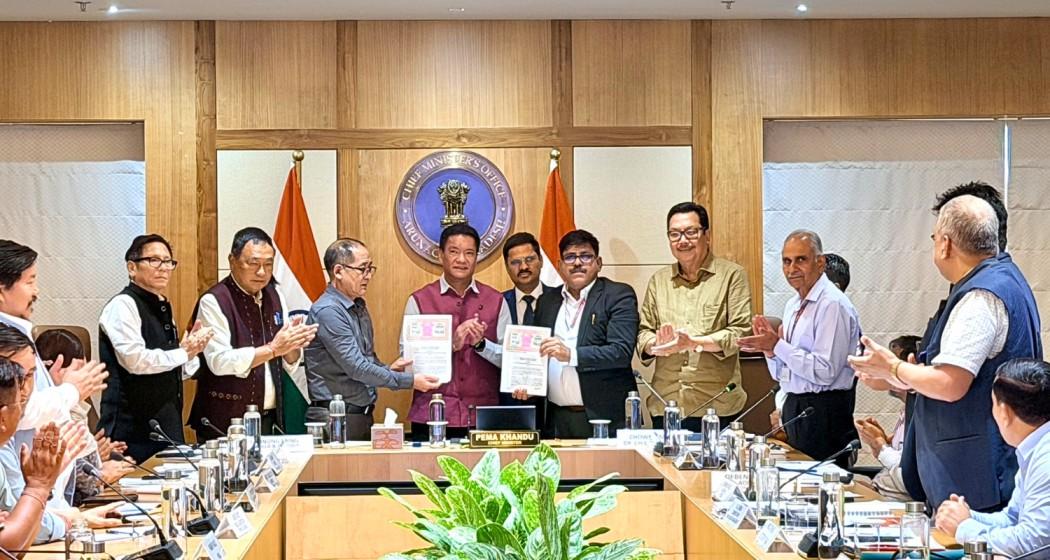
The Arunachal Pradesh government and NHPC Limited have signed an agreement for the 3,097 MW Etalin Hydroelectric Project in Dibang Valley, paving the way for one of India's largest hydropower developments and a major boost to the state's clean energy ambitions.
The agreement was finalised during a meeting of the Steering Committee on Hydropower Development chaired by the state government, where progress on hydroelectric projects being developed by central public sector undertakings and independent power producers was reviewed.
Once completed, the Etalin project is expected to generate around 11,600 million units of electricity annually, strengthening the national power grid and contributing to India's transition towards cleaner energy sources.
The project is located in Dibang Valley, one of the most remote districts of Arunachal Pradesh. Officials said it is expected to bring significant infrastructure development, employment opportunities and economic activity to the region.
Also read: Northeast at centre of India’s growth strategy: President Murmu
NHPC, which will execute the project, has been tasked with ensuring sustainable and structured development while keeping local communities involved as stakeholders in the process.
Chief Minister Pema Khandu emphasised the need for timely implementation during the review meeting.
"No delays, no excuses, and no slow movement. Every project, every bottleneck, every timeline all under sharp focus," Khandu said.
The Etalin project is regarded as a key component of Arunachal Pradesh's strategy to harness its vast hydropower potential. The state possesses some of the country's largest untapped hydroelectric resources and has been pushing for accelerated development of projects to support energy security and economic growth.
Officials said the project would not only contribute to national renewable energy targets but also improve connectivity and infrastructure in remote areas of the state.
The signing of the agreement marks a significant step forward for the long-pending project, which is expected to play a crucial role in meeting rising electricity demand while promoting sustainable development in the Northeast.

 Follow us