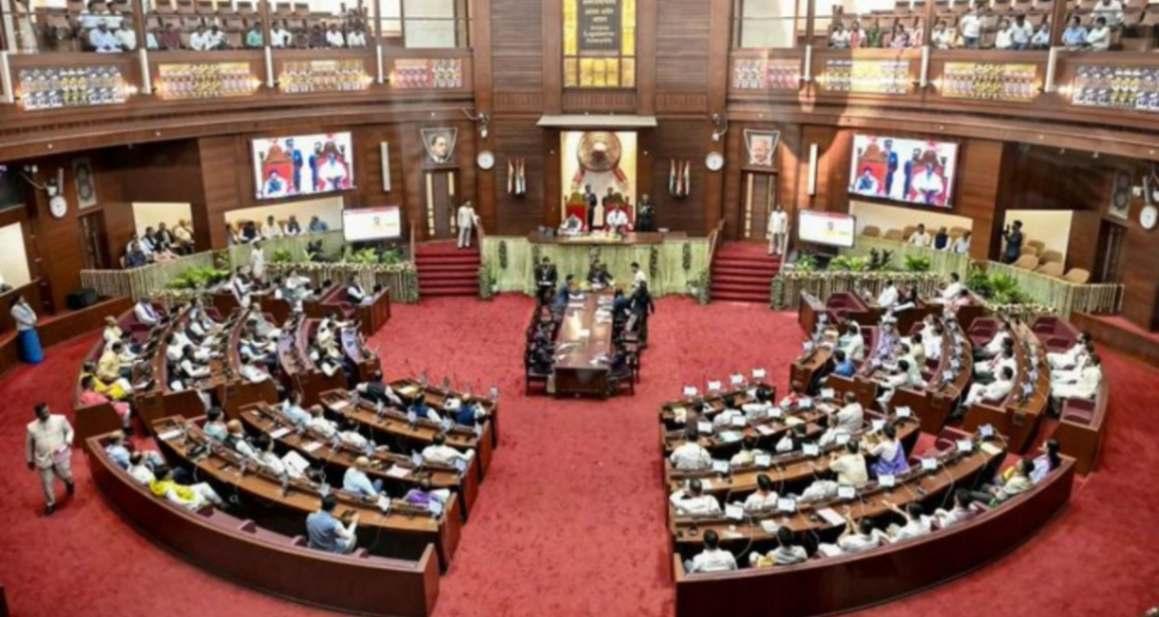
The Assam Legislative Assembly on Monday witnessed the tabling of a significant legislative proposal as the state government introduced ‘The Uniform Civil Code, Assam, 2026 Bill’, aiming to bring sweeping reforms in personal laws.
The Bill was tabled by Parliamentary Affairs Minister Atul Bora on behalf of Chief Minister Himanta Biswa Sarma. It seeks to standardise laws related to marriage, divorce, succession, and live-in relationships across the state.
However, the proposed legislation explicitly excludes Scheduled Tribes residing in Assam from its purview, acknowledging the need to preserve their distinct customs and traditions.
According to the ‘Statement of Objects and Reasons’ accompanying the Bill, the proposed code aims to simplify and consolidate existing legal provisions while ensuring fairness and equality. One of its key provisions is the prohibition of polygamy. It also sets the legal minimum age of marriage at 21 years for men and 18 years for women.
The Bill emphasises compulsory registration of marriages and divorces, a move the government says will help safeguard legal rights related to maintenance, inheritance, and other protections for spouses. In a notable step, it also introduces a legal framework for live-in relationships, making their registration mandatory to ensure that the rights of partners and children born from such unions are formally recognised.
“The Bill aims to modernise succession laws and ensure a fair and equal distribution of property,” Sarma stated, adding that it introduces uniform inheritance rules applicable to all residents of the state.
To facilitate implementation, the legislation proposes the establishment of administrative mechanisms, including the appointment of registrars, ensuring that the code functions effectively in practice.
Referring to Article 44 of the Constitution of India, Sarma said the Bill aligns with the constitutional directive for the state to endeavour towards a Uniform Civil Code. He added that the initiative is intended to create a common legal framework irrespective of religion, thereby ensuring legal clarity and protection of fundamental rights.
The move, however, faced opposition from several political parties, including the Congress, Raijor Dal, and the Trinamool Congress (TMC). Opposition leaders called for broader consultations with stakeholders before introducing such a comprehensive reform.
The Bill is expected to be debated in the coming days, with its provisions likely to spark significant political and social discussions across the state.
Also read: Himanta hails Assam Eidgah's appeals against cow slaughter

 Follow us