In an age where absenteeism is battled with warnings and reprimands, a government school teacher in a small Bihar village has composed a different response— quite literally.
At the Mahadalit Tola Primary School in Kormathu, missing a class does not invite scolding. Instead, it triggers what teacher Imroz Ali calls a “Swagat Punishment” — a musical procession to the student’s doorstep.
Armed with cymbals, rattles, flutes and a disarming smile, Ali and his 15-member student team march through narrow village lanes, turning truancy into theatre. The spectacle is neither accusatory nor humiliating. It is celebratory, persuasive and impossible to ignore.
Headmaster Suresh Chaudhary describes the initiative as a quiet revolution in community engagement. “This is his way of reminding both children and parents that school matters,” he says, adding, “It entertains the students and spreads awareness among families. Sometimes parents themselves come and inform us that their child is absent.”
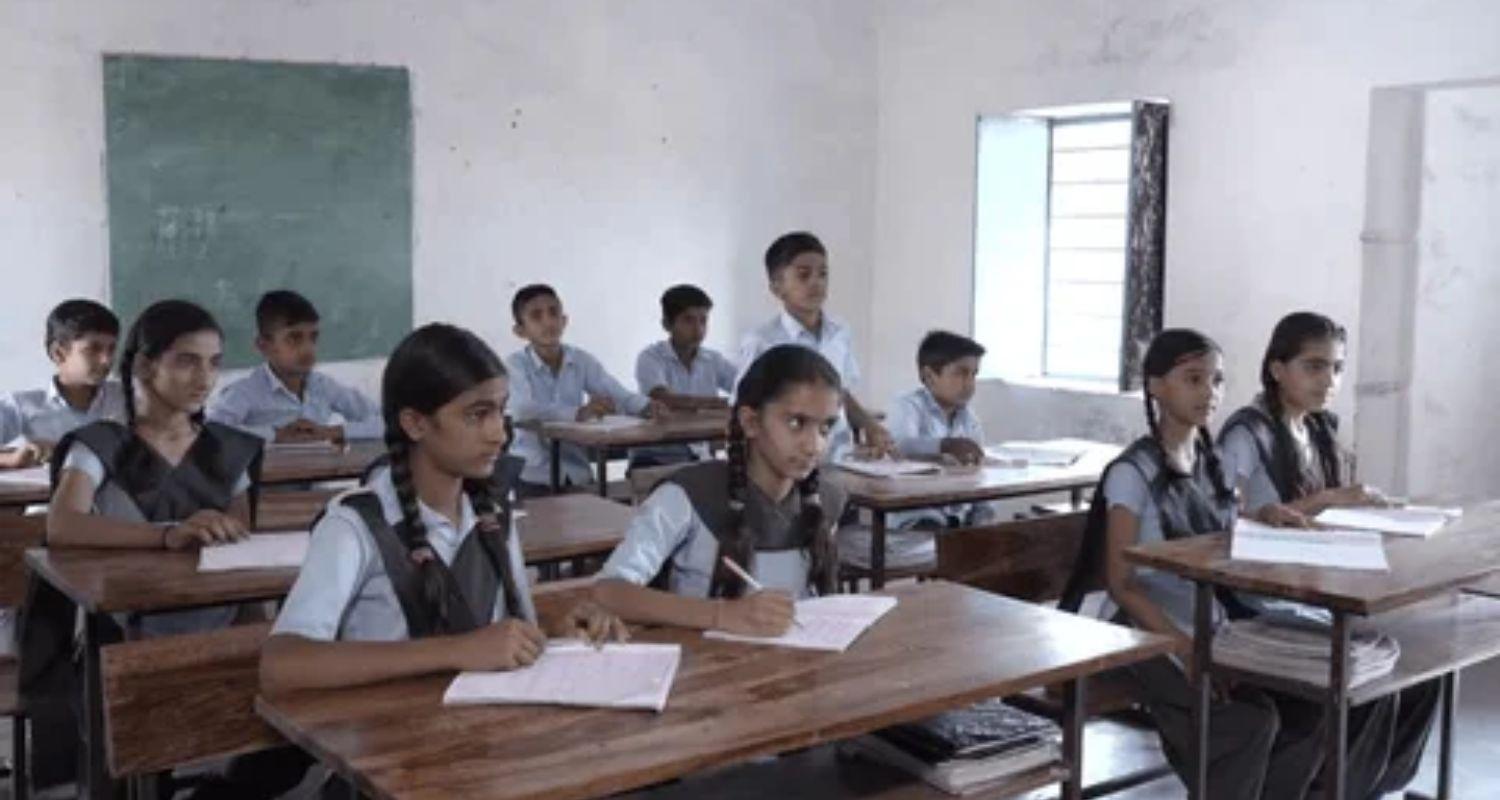
The village of Kormathu has over 250 households and three primary schools, one of which serves the Mahadalit Tola — a hamlet of around 80 families. Until recently, reluctance and indifference kept classrooms sparse. Despite an enrolment of 138 students and five teachers, daily attendance hovered between 30 and 40.
That has changed.
Ali’s music-led mobilisation, aligned with the “School Chale Hum” campaign to improve attendance, has steadily altered academic behaviour. Even during the holy month of Ramadan, when he observes fasts, the teacher continues his rounds — teaching in the morning, reviewing attendance, identifying absentees and setting out to fetch them.
Since most students live within half a kilometre of the school, the retrieval is swift. But its impact is profound.
When Ali approaches a house, doors open. Villagers gather. The missing child often steps forward voluntarily, touches the teacher’s feet and joins the troupe. There is no resentment — only approval. The once-absent student is escorted to school not in shame, but in song.
Fifth-grader Vikas Kumar, who served as February’s team monitor, says the initiative has reshaped not just attendance, but aspiration. “My parents have stopped brewing and now focus on my education,” he says. “I want to become a police officer one day.”
Parents echo the sentiment. “Beating is not the only way to make children study,” says Rajendra Mandal. “A loving approach works better.”
The transformation has been institutional as well. When the Education Department supplied musical instruments to the school, Ali saw opportunity. Students were trained, a rotating “raiding team” was formed, and the instruments found a purpose beyond co-curricular activity.
The result is a rare tableau: discipline without dread, authority without aggression, and education delivered with melody.
In a region where dropout rates once cast long shadows, a teacher’s tune is now rewriting the script— one doorstep at a time.
Also read: Shah vows crackdown on infiltration, eyes WB win

 Follow us