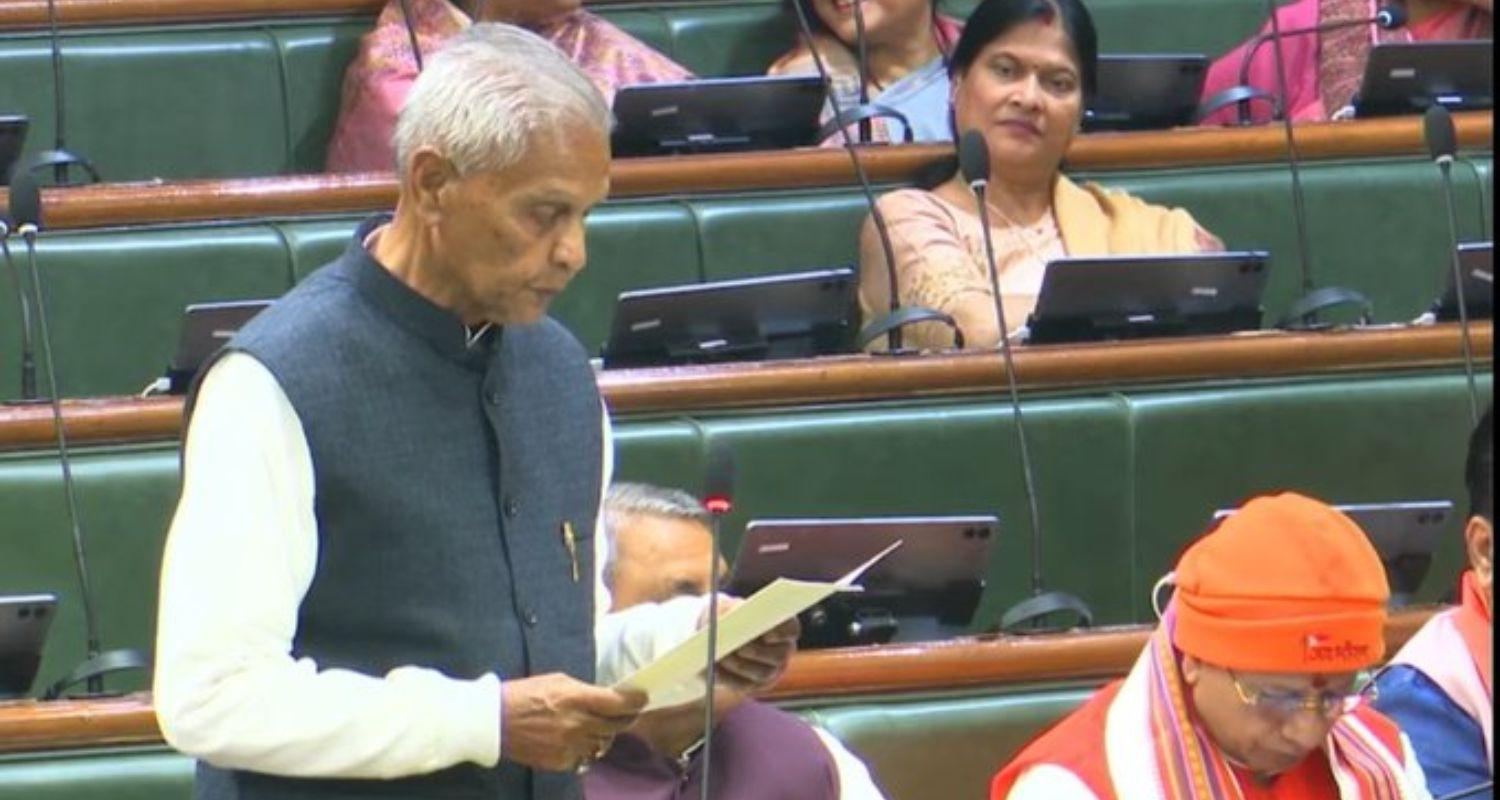
In a session marked by high expectations and political triumph, the Nitish Kumar government unveiled a massive ₹3.47 lakh crore budget for the 2026-27 fiscal year on Tuesday. Finance Minister Bijendra Yadav, while presenting the figures in the state assembly, painted a picture of a state on the fast track, projecting an ambitious 14.9 per cent growth rate— a figure that positions Bihar among the fastest-growing regions in the country.
The budget’s total outlay of ₹3,47,589.78 crore marks a significant jump of over ₹30,000 crore from the previous year. While the fiscal deficit for the upcoming year is estimated at 2.99 pc of the state’s GDP — staying just under the traditional 3 pc threshold — the minister admitted that the deficit for 2024-25 had hit 4.16 pc, slightly overshooting the mark despite healthy revenue figures.
A recurring theme throughout Yadav’s speech was the synergy between Patna and New Delhi. He took a moment to explicitly thank Prime Minister Narendra Modi for the Centre’s "generous help," citing the recent Union budget’s gift of new airports and a dedicated Makhana board as catalysts for Bihar’s economic engine. Back home, he credited Chief Minister Nitish Kumar’s leadership for the ruling NDA’s recent electoral success, specifically pointing to the Mukhyamantri Mahila Rozgar Yojana. The scheme has already distributed ₹10,000 to 1.56 crore women, with Yadav promising an additional ₹2 lakh for those who have successfully launched businesses.
The spending priorities for the year lean heavily toward the grassroots. The Rural Development Department secured the biggest slice of the pie at 18.33 pc, followed by Education at 15.02 pc and Health at 8.21 pc. In a move to ensure targeted spending, the government has earmarked ₹19,603.02 crore for the Scheduled Castes Special Component Plan and ₹1,648.41 crore for the Tribal sub-plan under "minor heads," a technical safeguard to prevent these funds from being diverted elsewhere. Another ₹13,202.38 crore has been set aside for the broader social welfare of SCs, STs, OBCs, and minorities.
Looking ahead, the administration is betting big on industrialisation, setting a goal to attract ₹5 lakh crore in private investment. The ultimate target, according to Yadav, is to double the state’s per capita income within the next five years. On the revenue side, Bihar expects to generate over ₹75,202.98 crore of its own funds, with tax collections projected to bring in the lion's share of ₹65,800 crore.
Also read: NEET aspirant death case: Bihar govt seeks CBI probe

 Follow us