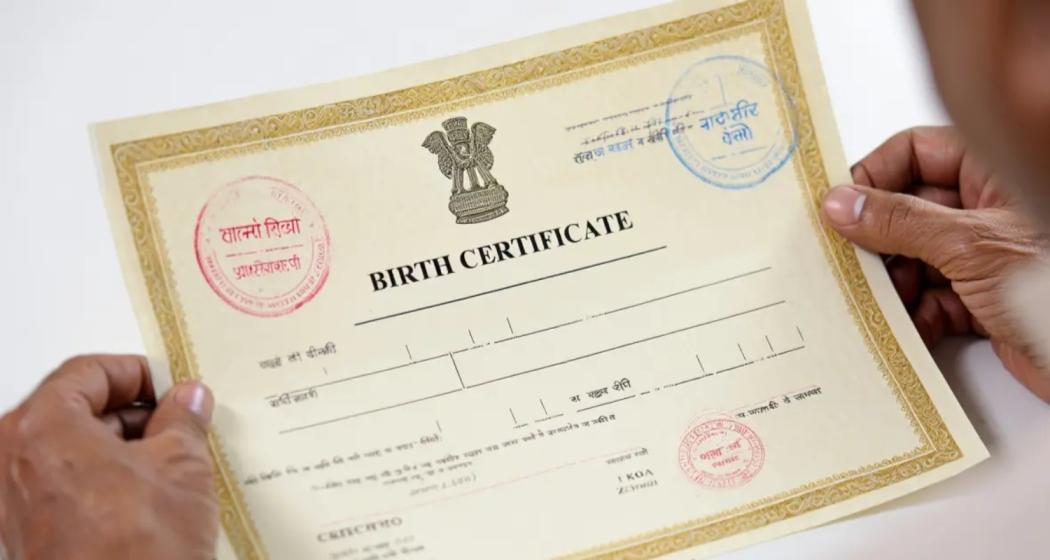
The Nagaland government has made birth certificates the sole mandatory document for school admissions, government employment and a wide range of official services following the enforcement of the Nagaland Registration of Births and Deaths (Amendment) Rules, 2024.
The amended rules were notified on February 8, 2025, in alignment with changes made to the Registration of Births and Deaths Act, 1969 by Parliament in 2023, which came into force nationwide from October 1, 2023.
Advisor for Economics and Statistics, Evaluation and IT&C, S Sethronkyu Sangtam, said the amendment aims to strengthen civil registration and establish a uniform, legally robust system for determining individual identity across the state.
“Registration of births and deaths is a critical responsibility of the state, essential not only for legal identity but also for effective planning and implementation of welfare programmes,” Sangtam said.
Under the revised rules, a birth certificate will be the only valid document for school admissions, appointments to government jobs, issuance of driving licences, registration for Unique Identification (UID), marriage certificates and other official purposes. Sangtam said the certificate will also serve as the sole proof of date and place of birth for persons born on or before October 1, 2023, ending reliance on alternative documents such as school certificates.
Also read: 500 insurgents held, weapons seized across Northeast
Urging citizens to ensure timely registration, he cautioned that other documents will no longer be accepted as substitutes.
To facilitate access, the state has established 1,474 registration centres across Nagaland. In rural areas, every recognised village has a registration unit, with government teachers designated as registrars. Community health centres and primary health centres have also been authorised as registration units, with the nurse-in-charge acting as registrar.
In urban areas, registration services are available at the Directorate of Economics and Statistics, offices of District Economics and Statistics Officers and all district hospitals.
Highlighting procedural reforms, Sangtam said the requirement of a notarised affidavit for delayed registration beyond 30 days but within one year has been removed. A self-attested document with approval from the competent authority will now suffice. For registrations delayed beyond one year, approval will be granted by the district magistrate or an authorised sub-divisional magistrate to expedite the process.
The amended rules also prohibit the use of abbreviations in a child’s name on birth certificates, reinforcing standardisation and legal clarity in official records.

 Follow us