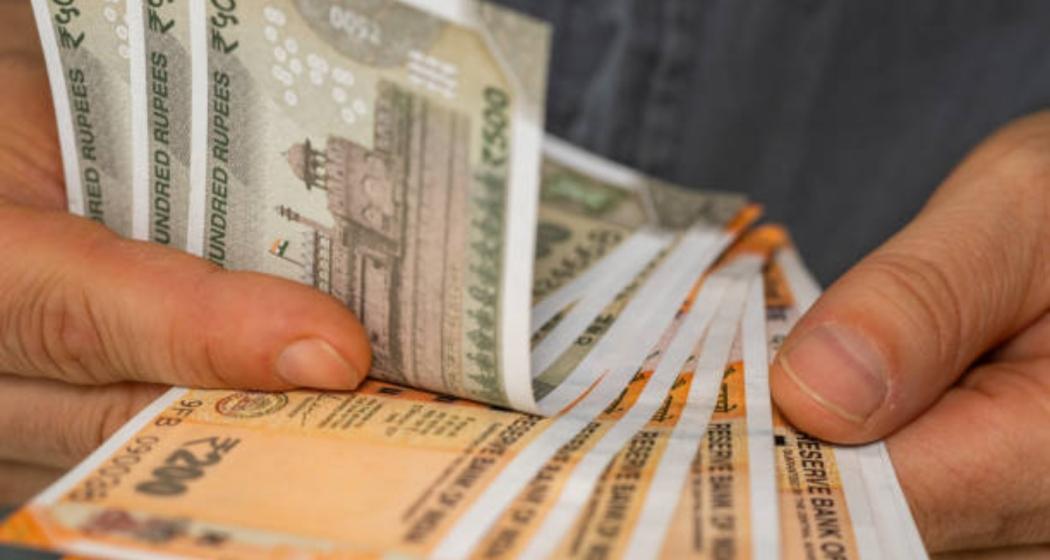
The bottom 50 per cent of households in Nagaland receive only around 18 per cent of the total income, while the top 5 per cent account for nearly 21 per cent, according to a government report released on Thursday, underlining sharp income inequality in the state.
The findings, published in the Report on Income Disparity in Nagaland, were released by Chief Secretary Sentiyanger Imchen.
The report noted that the top 5 per cent households earn an average monthly income of ₹71,028, while the bottom half earn just ₹1,639 on average, highlighting a stark income gap.
Nagaland recorded a Gini coefficient of 0.46, a widely used measure of inequality where 0 denotes perfect equality and 1 indicates extreme disparity — pointing to a significant imbalance in income distribution.
Also read: Nagaland’s equestrian Rio wins Haras de Liverdy Grand Prix
Prepared under the Ministry of Statistics and Programme Implementation’s Support for Statistical Strengthening Sub-scheme in collaboration with University of Hyderabad, the study is based on a field survey conducted between October and December 2024.
A total of 4,396 households were surveyed across the state, including 1,315 from 60 urban wards and 3,080 from 140 villages.
The findings showed that inequality is marginally higher in urban areas, which recorded a Gini coefficient of 0.44, compared to 0.42 in rural areas.
District-wise, Longleng recorded the highest income disparity with a Gini coefficient of 0.492, while Phek reported the lowest at 0.366.
In rural areas, Longleng again topped the list with a Gini coefficient of 0.456, whereas Zunheboto recorded the lowest rural disparity at 0.330. In urban areas, Longleng posted the highest inequality at 0.509, while Zunheboto had the lowest at 0.359.
The report provides a detailed snapshot of income distribution trends and is expected to aid policy planning aimed at reducing inequality across the state.

 Follow us