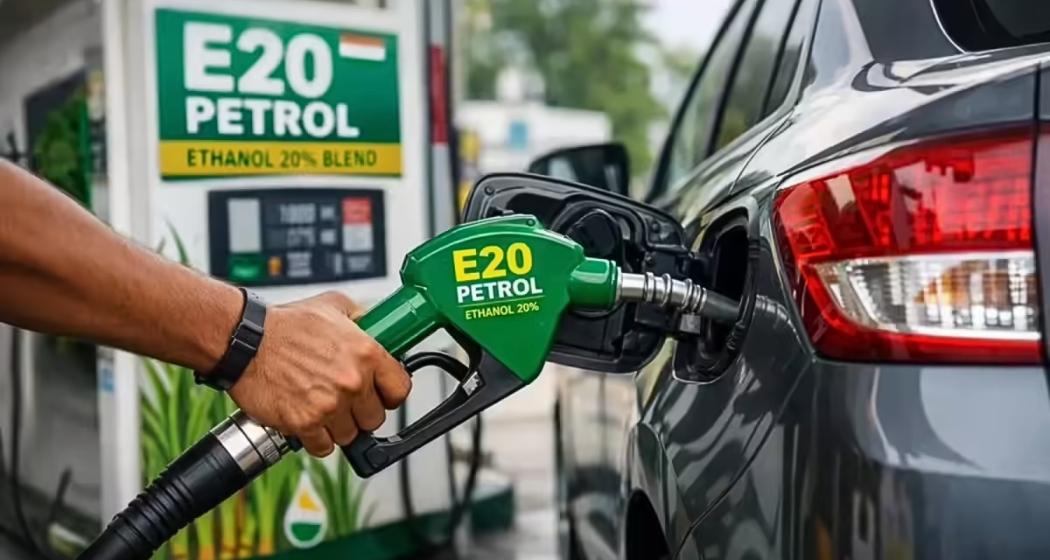
The Centre on Friday issued a detailed 10-point clarification countering what it described as misinformation surrounding India's E20 ethanol blending programme, rejecting claims that the fuel damages engines, consumes excessive water, voids vehicle warranties or harms the environment.
The Ministry of Petroleum and Natural Gas said the programme, under which petrol contains up to 20 per cent ethanol, is backed by scientific studies, regulatory safeguards and international experience. The clarification follows a surge of misleading claims circulating on social media after India achieved its target of 20 per cent ethanol blending in petrol in December 2025, ahead of schedule.
The ministry said trials conducted by the Automotive Research Association of India (ARAI), along with studies by Indian Oil Corporation, the Indian Institute of Petroleum and the Society of Indian Automobile Manufacturers, found no significant impact on engine performance or drivability. While mileage may witness marginal changes, vehicles designed for E20 can benefit from ethanol's higher octane rating, it said.
Rejecting concerns over environmental impact, the ministry said ethanol production has helped save more than Rs 1.9 lakh crore in foreign exchange since 2014-15, generated payments exceeding Rs 1.6 lakh crore to farmers, reduced carbon emissions by around 930 lakh metric tonnes and displaced over 310 lakh metric tonnes of crude oil imports.
The ministry also dismissed claims that ethanol production wastes water, saying modern distilleries consume only 3-5 litres of processed water for every litre of ethanol and increasingly operate Zero Liquid Discharge systems. It added that maize, which now accounts for over 40 per cent of ethanol production, requires significantly less irrigation than paddy.
The government further rejected viral claims that E20 corrodes engines, attracts insects because of sugar content, allows water into fuel tanks or invalidates vehicle warranties and insurance. It also termed videos purportedly showing sugarcane juice being mixed with petrol as fabricated.
According to the ministry, installed ethanol production capacity has reached about 2,000 crore litres, while procurement is projected to exceed 1,200 crore litres during the 2025-26 ethanol supply year. The Centre said the ethanol blending programme remains a key component of India's energy security strategy, aimed at reducing dependence on imported crude oil while supporting farmers and lowering emissions.
Also read: E20 can reduce vehicle mileage: Hardeep Puri
Government's 10 clarifications on E20 petrol
Water use: Ethanol production does not require 10,000 litres of water per litre; modern plants use about 3-5 litres of processed water and recycle it.
Food security: Only surplus rice and increasingly maize are used for ethanol production after meeting food security needs.
E20 is not experimental: Ethanol-blended fuel has been used for decades in countries such as the US, Brazil, Canada, Japan, Thailand and several European nations.
Fuel efficiency: ARAI trials found no significant impact on drivability, with only marginal changes in mileage.
Engine damage: Scientific studies found no adverse effects on engines or metal and plastic components; some older rubber parts may require earlier replacement.
Warranty and insurance: Using E20 does not void warranties or insurance for E20-compatible vehicles.
Ants and bees myth: Fuel-grade ethanol contains no residual sugar and includes denaturants; insects are not attracted to E20.
Supreme Court claim: The Centre said it never described E20 as an experiment before the Supreme Court; reports suggesting otherwise were inaccurate.
Water entering fuel tanks: Modern vehicles and fuel infrastructure have safeguards to prevent water ingress.
Environmental benefits: The programme has saved Rs 1.9 lakh crore in foreign exchange, reduced 930 lakh metric tonnes of CO₂ emissions, displaced 310 lakh metric tonnes of crude oil imports and generated over Rs 1.6 lakh crore in payments to farmers.

 Follow us