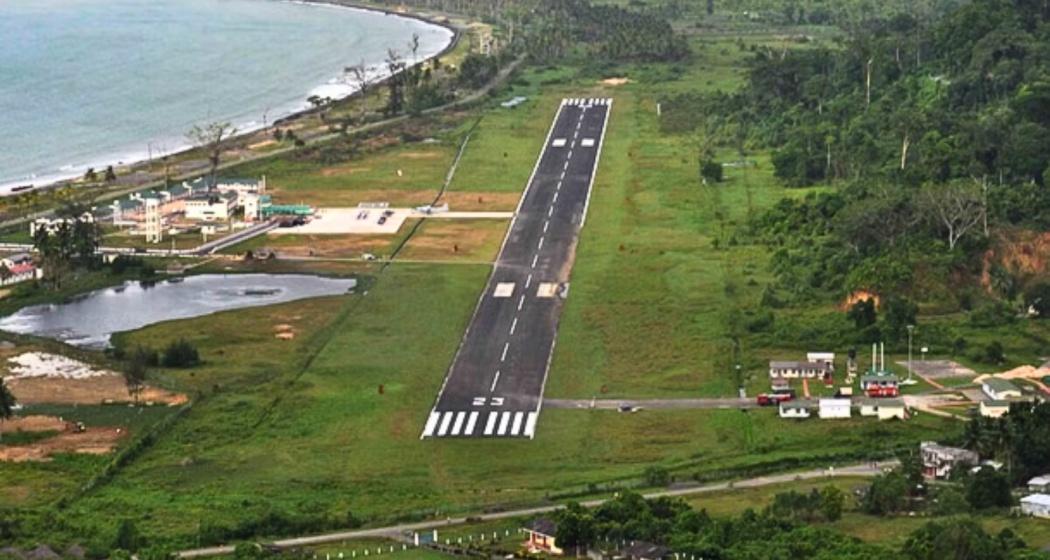
The Centre has drawn up plans for a greenfield international airport at Great Nicobar, envisaged as a dual-use facility that will serve both civilian aviation and strategic military requirements, according to a Detailed Project Report prepared for the project.
The proposed airport, to be developed as a dual-use military airfield, is expected to play a critical role in strengthening India’s national security architecture in the eastern Indian Ocean while also improving connectivity and boosting tourism in the Andaman and Nicobar Islands.
As per the DPR, operational control of the airside and Air Traffic Control will rest with the Indian Navy, while the Airports Authority of India will manage the civil apron, passenger terminals and associated facilities.
Great Nicobar, the southernmost and largest island in the Nicobar group, occupies a strategically significant location. Port Blair, the administrative capital of the Andaman and Nicobar Islands, lies over 500 km away, while international destinations such as Phuket and parts of Sumatra fall within a similar radius of the proposed airport.
The DPR notes that the airport would not only address strategic imperatives but also unlock tourism-oriented development, potentially positioning the Andaman and Nicobar Islands as a global travel destination through improved international air connectivity.
The Indian mainland is located at least 1,500 km from Great Nicobar, with Delhi nearly 3,000 km away, Kolkata around 1,850 km and Mumbai approximately 2,250 km distant. In contrast, regional hubs such as Singapore, Vietnam and Bali lie within 1,000 to 1,500 km of the island.
Also read: Andaman hikes minimum wages for all workers
Geographically, Great Nicobar extends from Ranganatha Bay on the eastern coast southwards to Galathea Bay, around Indira Point, India’s southernmost tip, and onward to Pemayya Bay. The Indonesian island of Sumatra lies just 180 km south of Indira Point.
Covering an area of about 910 sq km, much of Great Nicobar is designated as the Great Nicobar Biosphere Reserve. The island is home to the indigenous Shompen and Nicobarese tribes.
The proposed airport site is located along the coast between Gandhi Nagar and Shastri Nagar on the southern side of the island, around 30 km from Campbell Bay, and is accessible via the Galathea Bay-Campbell Bay road.
According to the DPR, the site is surrounded by hills, with planned grading to ensure safe aircraft operations. Flight paths will largely pass over the sea, minimising disturbance from low-altitude aircraft movement. The runway, aligned roughly in a north–south direction, has been oriented to suit prevailing wind conditions.
The airport forms a key component of the larger Great Nicobar Development Plan, a massive infrastructure initiative that also envisages a transhipment port and enhanced strategic defence facilities at the southern tip of the island.
Under this plan, the island’s population is projected to rise sharply to around 6.5 lakh by 2050, from the current estimate of about 6,500 residents.

 Follow us