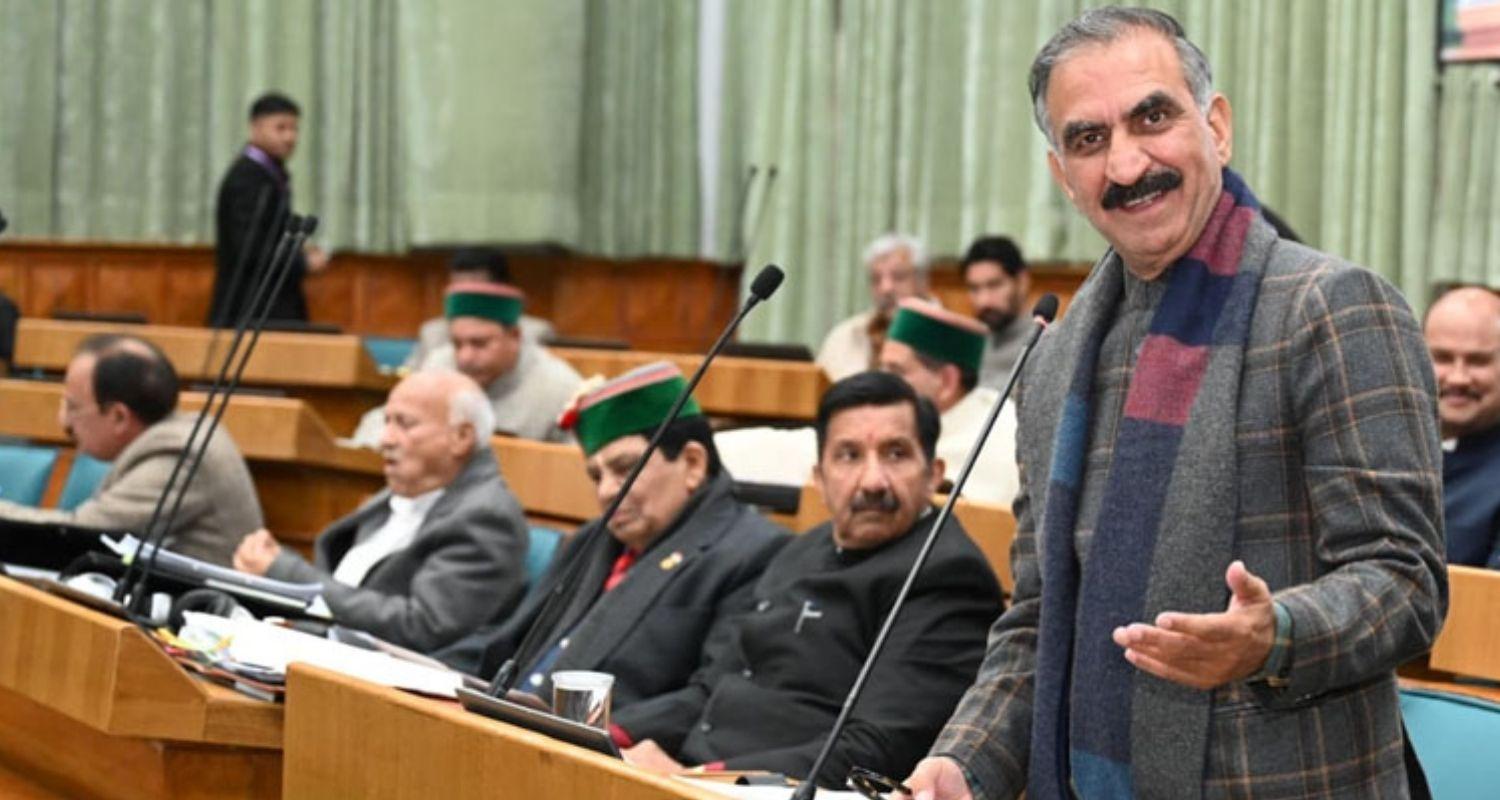
The Himachal Pradesh Assembly passed an amendment to the Value Added Tax (VAT) Act, allowing the state government to impose a cess of up to ₹5 per litre on petrol and diesel, a move that sparked intense debate between the ruling side and the Opposition in Shimla on Tuesday.
Chief Minister Sukhvinder Singh Sukhu defended the decision, stating that the cess is intended to fund welfare initiatives for orphans and widows. He clarified that ₹5 per litre is only the upper limit and the government could choose to impose a much smaller amount within that cap. Emphasising the intent
behind the policy, Sukhu said the aim is to ensure vulnerable groups can live with dignity and not feel neglected.
Also read: Hotel Holiday Home in Shimla back to ‘chulhas’
He also accused the Centre of levying higher taxes on fuel and questioned why the Bharatiya Janata Party was opposing what he described as a welfare-driven measure. Sukhu added that the government would ensure fuel prices remain competitive with neighbouring states such as Punjab and Haryana.
The Opposition, however, strongly criticised the move, calling it anti-people. BJP leader Randhir Sharma argued that fuel in the state is already heavily taxed, with VAT rates of about 17.5 per cent on petrol and 13.9 per cent on diesel. He warned that the additional cess could push petrol prices beyond ₹100 per litre and diesel close to ₹90, increasing the financial burden on ordinary citizens. Sharma also questioned the rationale of funding welfare schemes through fuel taxes, saying the same beneficiaries would ultimately bear the cost through higher prices of essential goods such as food and milk.
Trilok Jamwal raised concerns that the move could make fuel prices the highest in North India and adversely affect transporters, particularly in Bilaspur, which has a large base of truck operators. He cautioned that commercial vehicles might choose to refuel in neighbouring states, leading to potential revenue losses for Himachal Pradesh.
Former BJP state president Satpal Satti echoed similar concerns, warning that petrol pumps in border areas could face significant losses. He also criticised the framing of the cess, suggesting that collecting money in the name of widows could be perceived as insensitive. According to him, higher fuel prices would inevitably raise freight costs and public transport fares.
Leader of Opposition Jai Ram Thakur questioned the government’s approach, arguing that burdening citizens in the name of welfare is not a sustainable solution to the state’s financial challenges. He also pointed to global factors, such as tensions in West Asia, which could further push up fuel prices and worsen the impact of the proposed cess.
In response, Sukhu reiterated that the Opposition should instead urge the Centre to reduce its share of taxes and cess on fuel, noting that a significant portion of fuel pricing is determined by central levies. Despite strong objections and demands for withdrawal, the Bill was ultimately passed, clearing the way for the state government to implement the cess.

 Follow us