Assam’s socio-political landscape in 2025 was shaped by a volatile mix of cultural upheaval, charged identity politics, and an early electoral pitch ahead of the 2026 Assembly elections, with governance often unfolding against a backdrop of public mobilisation and political confrontation.
The mysterious death of cultural icon Zubeen Garg in September became a powerful emotional undercurrent through the year, triggering sustained protests, a criminal investigation, and intense political sparring. Garg, who had travelled to Singapore to attend the North East India Festival, died while swimming in the sea on September 19. Doubts over the circumstances of his death quickly spilled onto the streets.
Lakhs of people turned up as his mortal remains were flown back to Assam, with crowds lining the roads and a three-day public homage preceding his cremation. The demand for justice evolved into a mass movement, forcing the state government to constitute a Special Investigation Team of the CID.
On December 12, the SIT filed a charge sheet accusing festival director Shyamkanu Mahanta, Garg’s manager Siddhartha Sharma, and band members Shekharjyoti Goswami and Amritprava Mahanta of murder. His cousin Sandipan Garg, an Assam Police official, was charged with culpable homicide not amounting to murder, while two personal security officers were booked for criminal conspiracy and criminal breach of trust. The trial has begun, with the government promising to seek fast-tracking in the Gauhati High Court.
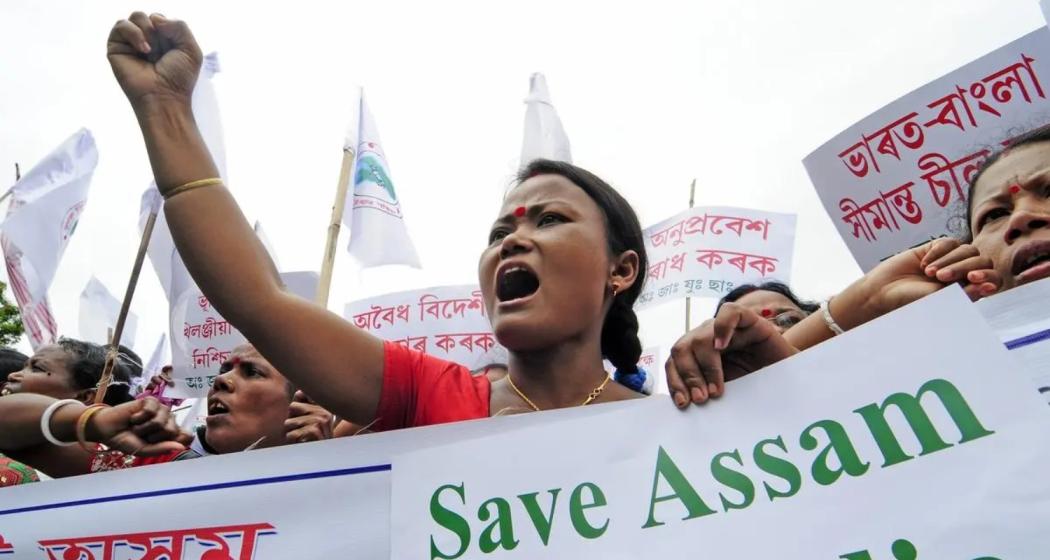
Parallel to the unrest, Assam witnessed an intensifying political contest. Chief Minister Himanta Biswa Sarma dominated the narrative with an aggressive campaign centred on infiltration, eviction drives in forest and sattra lands, and repeated assertions that 35–40 people were being “pushed back” weekly as part of efforts to make Assam infiltration-free.
The political temperature rose further when Sarma alleged links between Deputy Leader of the Opposition in the Lok Sabha Gaurav Gogoi, his British wife Elizabeth Colburn, and Pakistan’s intelligence agency ISI. An SIT probe into the alleged links with Pakistani national Ali Tauqeer Sheikh submitted its report in September, with the Chief Minister claiming it pointed to a “larger conspiracy”.
Also read: Four arrested over Christmas eve vandalism at Assam school
Gogoi rejected the allegations as a “C-grade Bollywood film” that would flop, while opposition parties accused the ruling BJP of using national security claims to influence the 2026 polls. Eight opposition parties later announced plans to contest the elections together, even as Sarma asserted that an NDA victory was a “foregone conclusion”.
Governance in 2025 also featured a series of legislative and administrative moves widely viewed through an electoral lens. Bills on polygamy, land rights for tea garden workers, and the cabinet sub-committee report on granting Scheduled Tribe status to six communities were introduced, drawing both support and scepticism. The tabling of the Tewary and Mehta Commission reports on violence ahead of the 1983 Assembly elections, including the Nellie massacre, similarly divided opinion.
Amid the political churn, the state government rolled out welfare schemes for women, girls and students, while Sarma claimed that nearly 1.5 lakh government jobs had been provided over the last five years.
Culturally, the year also marked the launch of the birth centenary celebrations of Bhupen Hazarika, inaugurated by Prime Minister Narendra Modi on September 13, with events planned across the country. President Droupadi Murmu is scheduled to attend the concluding ceremony next year.
Even as Assam grappled with grief and polarisation, Garg’s final film Roi Roi Binale was released on October 31 as planned and went on to become the highest-grossing Assamese film till date — a reminder of how culture continued to intersect with politics in a year defined by heightened emotions and early electoral calculations.

 Follow us