In the mist-wrapped folds of the eastern Himalayas, where the narrow-gauge tracks curl like silver threads along the slopes, the Darjeeling Himalayan Railway continues to carry more than just passengers— it carries history, nostalgia, and now, a powerful milestone.
Sarita Yolmo, a 55-year-old Gorkha woman from the hills, has etched her name into the 145-year legacy of the UNESCO-recognised Darjeeling Himalayan Railway (DHR) by becoming its first female ticket collector. Her appointment marks a symbolic breakthrough on a line long steeped in tradition, where steam whistles, pine-scented air, and colonial-era coaches evoke a bygone era.
The toy train, a cherished emblem of the “Queen of the Hills,” is not merely a mode of transport. It is an experience woven into the identity of Darjeeling itself. Tourists who board the tiny blue coaches often do so in search of nostalgia, watching the train wind through tea gardens, markets, and mist-laden curves. In this living museum on rails, Sarita now walks the narrow aisles, punching tickets and carrying forward a story larger than her own.
Her journey to this moment has been long and varied. Born in Sonada in the Darjeeling hills, Sarita later moved to the outskirts of Siliguri for work. Over the years, she served as a ticket inspector on several major trains, including the Rajdhani, the Guwahati–Bengaluru Express, and the Amrit Bharat Express. She also handled multiple responsibilities as a Chief Ticket Collector at New Jalpaiguri station. Yet, despite her extensive railway career, she never imagined that her path would lead to the heritage toy train of her homeland.
She officially assumed duty on February 5 as the senior ticket collector on the toy train route from New Jalpaiguri to Darjeeling. The transition, she admits, came with a touch of apprehension.
“At first, I was a little scared,” she said. “In other trains, I always had many colleagues with me. But in the toy train, I am alone, and all the responsibilities of the passengers and tourists are on me. Still, after completing the first journey, I felt very happy.”
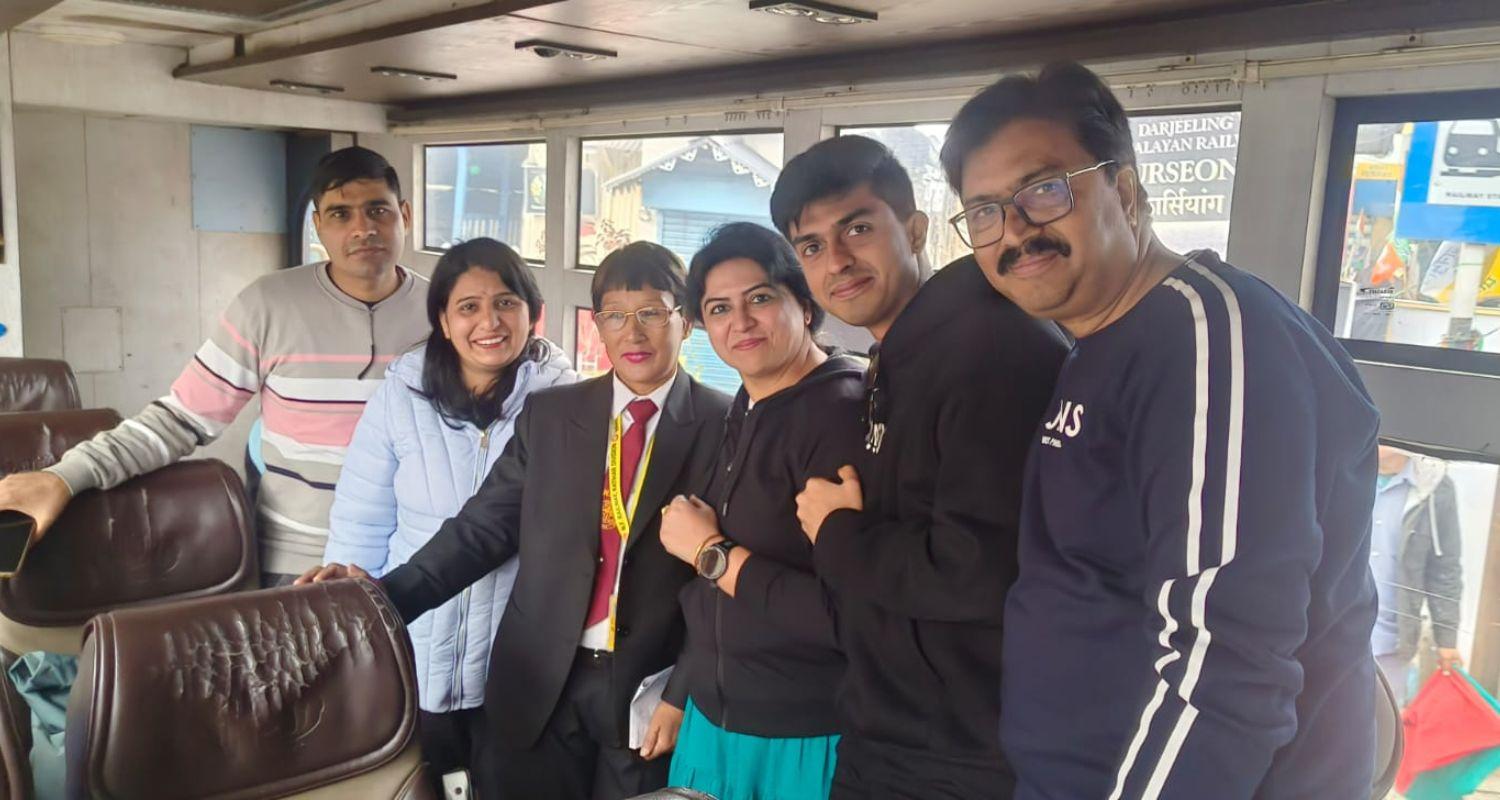
What she did not anticipate was the warm reception from passengers. Tourists crowded around her, asking for photographs and congratulating her for the historic achievement.
“It is a special feeling for me to be a girl from the hills and board the heritage toy train,” she said. “The reaction of the passengers on the first day is something I will never forget. These pictures and words from tourists will remain a priceless treasure in my life. They give me extra enthusiasm for my new responsibility.”
Her husband, Dawa Yolmo, a former DHR employee who retired last year, was among her strongest sources of encouragement. “The toy train launched by the British is the pride of Indian Railways,” he said. “And my wife being the first woman ticket collector on that heritage train feels very special.”
Railway officials say her achievement is more than a personal milestone. Darjeeling Himalayan Railway Director Rishab Choudhury said that there had never been a recorded instance of a woman ticket collector on the toy train before. “Sarita Yolmo’s achievement will inspire women to dream big in the future,” he said.
Her appointment comes at a time when the DHR is actively reinventing itself for modern tourism. Station renovations, cultural events like the DHR Festival and Ghoom Festival, and the revival of century-old engines have all been part of efforts to make the heritage line more vibrant and appealing. The railway has also been setting new revenue records, drawing visitors from across India and abroad.
Against this backdrop, Sarita’s presence on the toy train feels both symbolic and organic— a daughter of the hills now serving on the very tracks that wind through her birthplace. For her, the experience carries an emotional resonance that goes beyond professional duty.
“Being on duty on the toy train that runs along the mountain slopes where I was born and raised is a very enjoyable moment,” she said. “At the same time, I have entered the history of this heritage railway as its first woman.”
As the toy train chugs past tea gardens and mountain bazaars, its whistle echoing through the valleys, Sarita Yolmo walks its narrow corridors—quietly rewriting a chapter in its storied journey. In a railway that thrives on memory and heritage, her presence signals something new—a gentle, determined step toward a more inclusive future on these historic tracks.
Also read: Darjeeling zoo’s ageing tiger Samrat gets painful grip trimmed

 Follow us