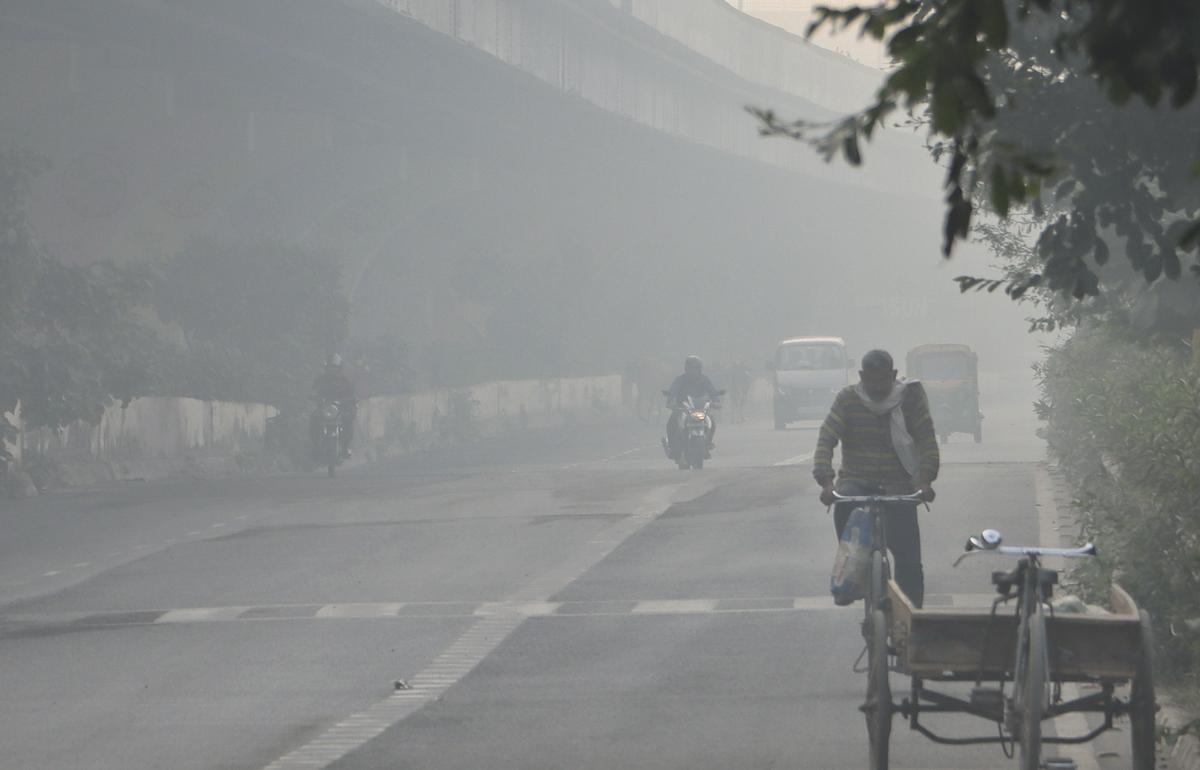
The Centre's air quality panel for Delhi-NCR on Monday imposed the strictest Stage 4 restrictions under the winter air pollution control plan, including a ban on all construction activities, as the region's air quality deteriorated to 'severe' due to unfavourable weather conditions.
Stage 4 restrictions under the Graded Response Action Plan (GRAP) for winter also include a ban on the entry of polluting trucks carrying non-essential goods into Delhi and the mandatory transition of school classes, except for Years X and XII, to hybrid mode.
Delhi's 24-hour average Air Quality Index (AQI), which was 379 at 4 pm, breached the 400 mark around 10 pm due to extremely calm wind conditions and the formation of an inversion layer, which hinders the vertical mixing height – the level up to which pollutants can disperse.
The decision to enforce Stage 4 restrictions came just hours after the Commission for Air Quality Management (CAQM) implemented measures under GRAP Stage 3, following Delhi's AQI crossing the 350 mark earlier in the afternoon.
According to the revised GRAP guidelines, classes for students in Years VI-IX and XI in Delhi, Gurugram, Faridabad, Ghaziabad, and Gautam Buddh Nagar must operate in hybrid mode (a mix of physical and online classes) under Stage 4.
Classes up to Year V are required to shift to hybrid mode under Stage 3. Parents and students may opt for online learning wherever it is available.
Stage 4 also enforces a ban on all construction and demolition activities, including public projects such as highways, flyovers, power lines, and pipelines. Non-essential diesel trucks are prohibited from entering Delhi.
Public, municipal, and private offices are required to decide on allowing only 50 per cent of staff to work in offices, with the remaining staff working from home. States may consider additional measures, such as closing universities and non-essential businesses or implementing odd-even vehicle restrictions.
Under Stage 3, which was imposed earlier in the day, the use of BS-III petrol and BS-IV diesel cars (four-wheelers) is restricted in Delhi and nearby NCR districts. People with disabilities are exempt. Stage 3 also bans non-essential diesel-operated medium goods vehicles that comply with BS-IV or older standards in Delhi.
Delhi and NCR state governments have been asked to stagger timings for public and municipal offices under Stage 3. The Centre has been advised to consider similar measures for its offices in Delhi-NCR.
During winter, Delhi enforces restrictions under GRAP, which classifies air quality into four stages: Stage I (Poor, AQI 201-300), Stage II (Very Poor, AQI 301-400), Stage III (Severe, AQI 401-450), and Stage IV (Severe Plus, AQI above 450).
GRAP Stage 4 was invoked in Delhi for the first time this season in November due to persistently high pollution levels in the city and surrounding areas.
The Supreme Court allowed the CAQM to ease restrictions in early December after the city's air quality showed signs of improvement.
Unfavourable meteorological conditions, coupled with vehicle emissions, paddy straw burning, firecrackers, and other local sources of pollution, lead to hazardous air quality levels in Delhi-NCR during winter.
Doctors warn that breathing Delhi's polluted air is equivalent to smoking approximately 10 cigarettes a day.
Prolonged exposure to such high pollution levels can aggravate respiratory conditions such as asthma, bronchitis, and chronic obstructive pulmonary disease (COPD) and significantly increase the risk of cardiovascular diseases, according to medical experts.

 Follow us