
Trending:
DIG Gandhi shifted after ₹30 crore fund audit demand
The transfer came after Gandhi sent several communications seeking an audit by the Accountant General (AG), Himachal Pradesh. He wanted the audit to examine the use of Road Safety Fund money sanctioned between 2021 and 2026. Follow us
News Arena Network - Shimla - UPDATED: August 12, 2026, 10:20 AM - 2 min read
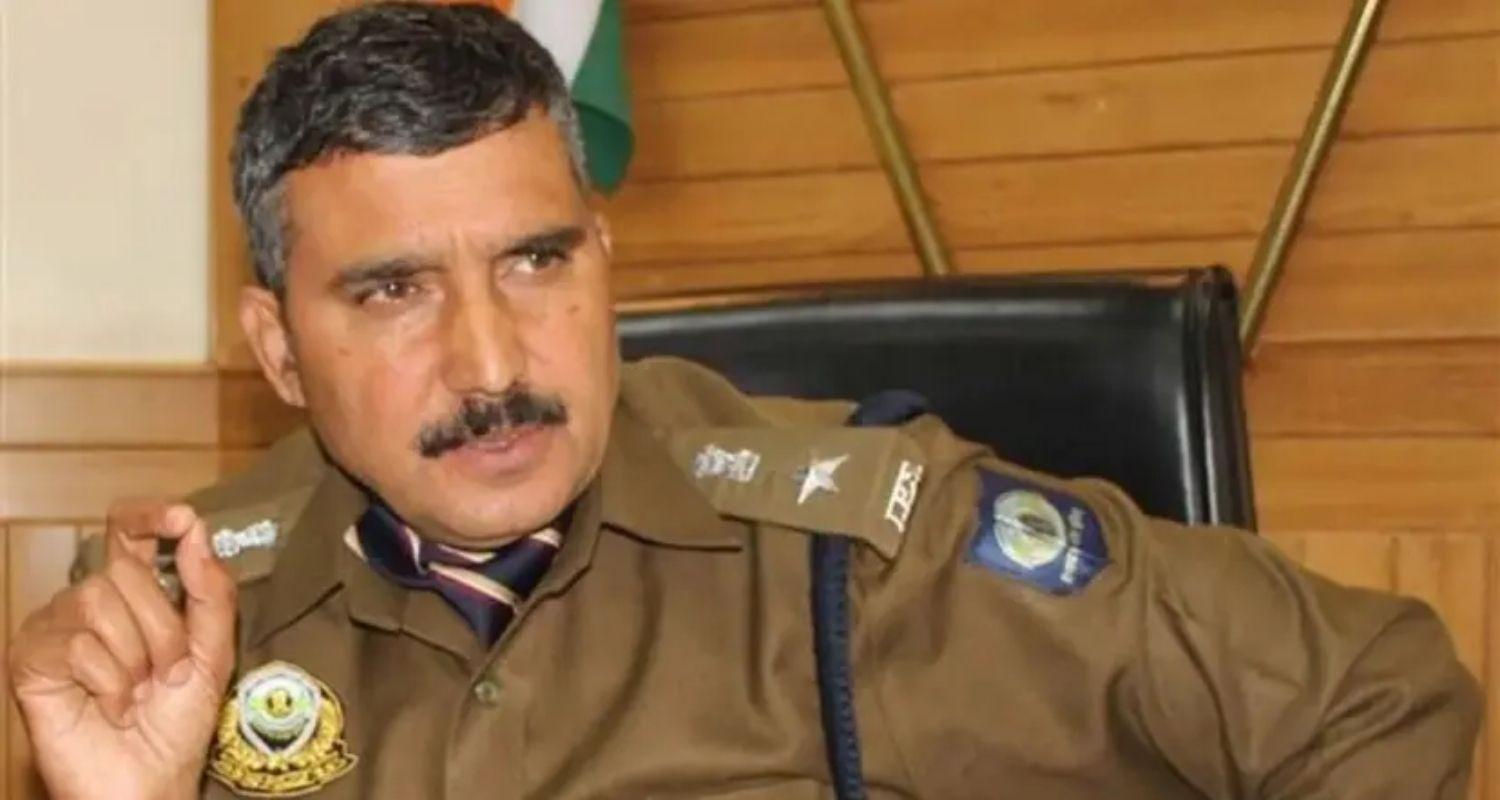
senior IPS officer Sanjeev Kumar Gandhi
The transfer of senior IPS officer Sanjeev Kumar Gandhi to the Department of Personnel, shortly after he called for an independent audit of nearly Rs 30 crore held under the Himachal Pradesh Road Safety Fund, has raised questions about the timing of the government’s decision. It has also brought renewed attention to his concerns over the financial management of the fund.
Gandhi, who was serving as Deputy Inspector General of Police (Traffic, Tourist and Railways), was transferred from his post on Monday. He was asked to report to the Department of Personnel until further orders.
The transfer came after Gandhi sent several communications seeking an audit by the Accountant General (AG), Himachal Pradesh. He wanted the audit to examine the use of Road Safety Fund money sanctioned between 2021 and 2026.
Gandhi referred to Rule 6(4) of the Himachal Pradesh Road Safety Fund and Activities Rules, 2022. The provision allows for external audit oversight. He pointed out that no such statutory external audit had been carried out since the rules came into effect.
In his representations, Gandhi raised questions about how expenditure from the fund was recorded, checked and documented. He referred to issues such as the prescribed maintenance of the Cash Book, the absence of physical verification reports and missing supporting records for completed works.
He also raised concerns about compliance with the General Financial Rules, 2017, and the Himachal Pradesh Financial Rules. These relate to approval of expenditure, procurement processes and the proper allocation of funds.
Gandhi argued that an internal departmental audit could not take the place of the external audit specifically provided for under Rule 6(4). He sought clarification from the authorities on why the statutory provision had not been implemented.
The State Police Headquarters, however, did not agree to his request for an AG audit at this stage.
In a communication dated August 3, 2026, Acting DGP Ashok Tiwari reportedly described Gandhi’s demand for an AG audit as “premature and misconceived”. The Police Headquarters said a detailed internal financial audit had already been ordered on July 31.
The internal exercise was placed under the supervision of Anil Kumar, Joint Controller with the State Vigilance and Anti-Corruption Bureau. Gandhi was also asked to extend his cooperation to the departmental audit.
His transfer soon after these exchanges has added to the questions surrounding the matter. The timing has attracted attention because Gandhi had repeatedly sought an independent review of the public funds.
There is no official order or document available at present to show that his transfer was a response to his demand for an AG audit. However, sources in the Police Department have connected the two developments.
A separate matter involving Gandhi is also under discussion. It relates to a traffic challan case concerning the Solan police.
Documents linked to the case indicate that Gandhi’s findings were reportedly different from the position taken earlier when Gaurav Singh was serving as SP, Solan. Gandhi’s report is said to have concluded that the earlier stand did not match the facts of the case.
Gaurav Singh, a 2013-batch IPS officer, was later posted as SP, Shimla, after Gandhi was moved from the position. He took over the post after Gandhi.
The matter gained another dimension after the National Commission for Scheduled Castes (NCSC) reportedly took cognisance of the complaint. This is based on documents and representations associated with the case.
The traffic challan dispute and the NCSC proceedings are separate from the controversy surrounding the Road Safety Fund. The two matters would need to be examined independently.
Gandhi is also involved in a dispute over a government house allotted for the Shimla SP. He continued to occupy the residence after leaving the post of Shimla SP. Gandhi has said that the house needed repairs and that he could not move out until it was made fit for occupation.
The authorities later issued him a notice demanding around ₹1.80 lakh as penal rent. He was also asked to vacate the property so that it could be handed over to the serving SP, Gaurav Singh.
Earlier reports had also confirmed the penal-rent demand and the direction to vacate the residence.
Gandhi has challenged the action and questioned whether the Acting DGP had the authority to impose the penal rent. He has cited the Himachal Pradesh House Allotment Rules, 1994, and argued that such a financial liability can be imposed only by the designated Estate Officer under the applicable rules.
The housing dispute has become significant because the residence is meant for the serving Shimla SP. Its vacation would allow the current incumbent, Gaurav Singh, to occupy the allotted accommodation.
According to sources, a government house allotted to Gandhi in June could not be occupied because the previous occupant had allegedly remained there beyond the permitted period.
Another accommodation allotted to Gandhi in July was reportedly in poor and unsafe condition. Gandhi has said the circumstances surrounding the allotment should be considered before any penal rent is imposed on him.
Gandhi has alleged that he was “personally targeted by the Acting DGP”. He has also submitted a detailed representation to the Chief Secretary, Himachal Pradesh, challenging the various administrative decisions taken against him. “I am sure the government will deal with my house allotment case on merit,” Gandhi said.
Taken together, the developments present a series of disputes involving Gandhi. These include his request for an independent audit of the Road Safety Fund, the Police Headquarters’ decision to order an internal audit instead, his subsequent transfer, the traffic challan report, the NCSC’s reported intervention and the dispute over the government residence.
The sequence has led to greater scrutiny of the functioning and decisions of the police headquarters.
The Road Safety Fund issue is particularly important because it involves public money and the rules contain a provision for external audit. The key question now is whether Gandhi’s concerns about the use of the Road Safety Fund will be examined through an independent statutory audit or only through the internal inquiry ordered by the Police Headquarters.
Another issue is whether the administrative action taken against Gandhi was based entirely on separate grounds or whether his repeated representations about the fund played any role in the decisions.
The documents currently available establish that Gandhi sought an external examination of the utilisation of public funds. The Police Headquarters, instead, opted for an internal audit. His transfer after these developments has raised questions about the timing, but there is no official evidence at present establishing a direct link.
The traffic challan case and the reported NCSC proceedings have added another layer to the controversy. The dispute over the official residence has further increased the friction between Gandhi and the Police Headquarters.
An independent review of the Road Safety Fund, the traffic challan case and the accommodation dispute could clarify whether the procedures followed by the authorities were in line with the relevant rules. It could also help establish whether the administrative decisions involving Gandhi were based on the reasons officially cited.
Acting DGP Ashok Tiwari was not available for comment when contacted about the audit issue, Gandhi’s allegation of personal targeting, the traffic challan case, the NCSC proceedings and the dispute over the government accommodation.
