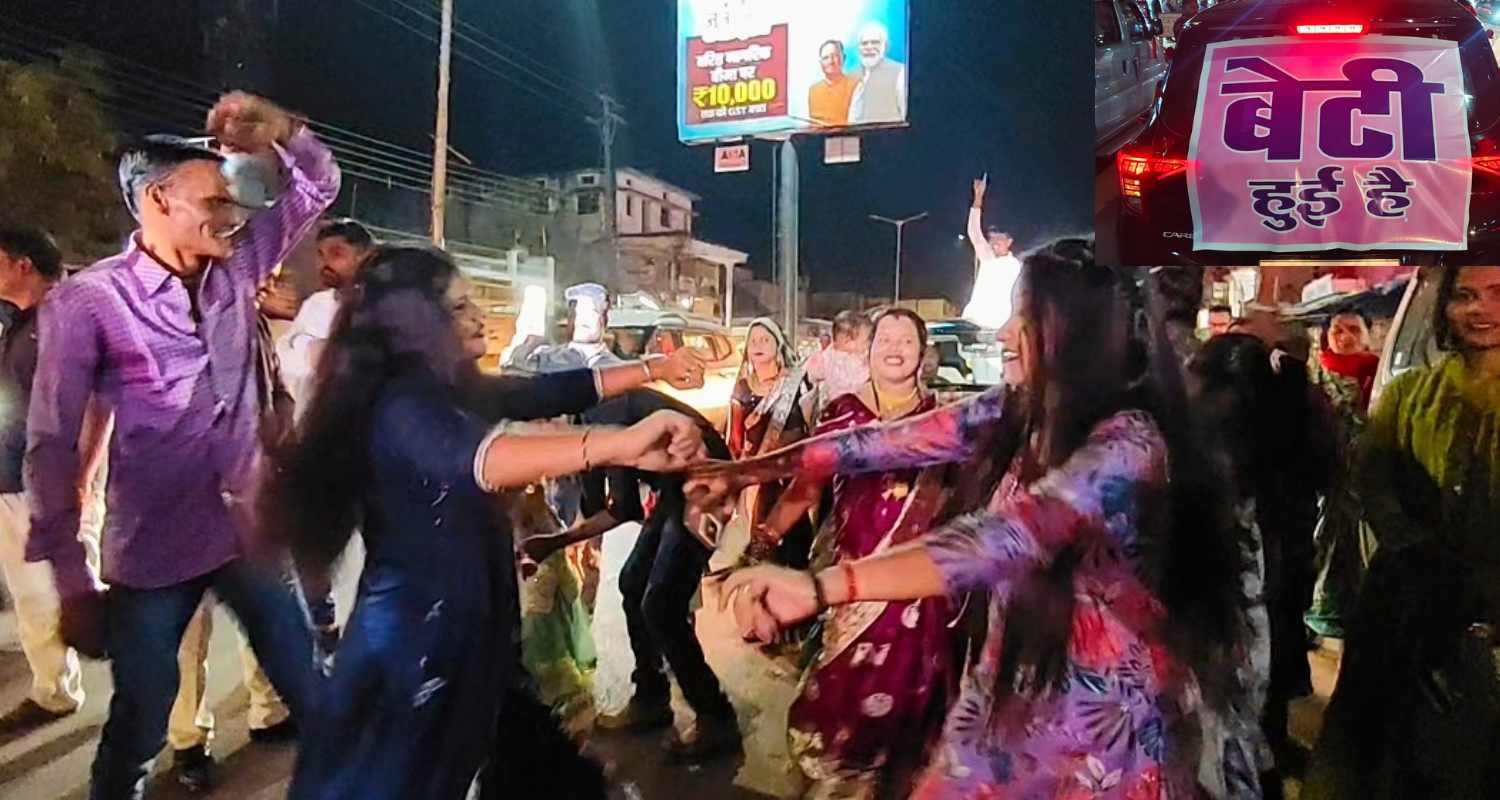
It began like any other loud, festive evening—blaring DJ music, dancing crowds, and bursts of fireworks lighting up the streets. Passersby paused, puzzled. Was it a wedding? A political rally?
The answer came into view on a moving vehicle carrying a simple yet striking poster: “Beti Hui Hai”—a daughter has been born.
In an offbeat and heartwarming celebration from Chhattisgarh’s Makeshwar Ward, a family turned the birth of their baby girl into a full-fledged community procession—marking what locals say is the first birth of a girl in the family, and possibly the entire ward, in nearly 24 years.
The child’s parents, Rupesh Kosaria and Kiran, welcomed their daughter on April 1 at Bathena Hospital. But it was her homecoming that transformed the neighbourhood into a festival ground. Residents came together to organise a vibrant “Beti Aayi Hai” procession, complete with drums, DJ music, dancing, and fireworks—elements typically reserved for weddings or major public celebrations.
As the procession wound its way through the locality, sweets were distributed generously, and curious onlookers soon became enthusiastic participants. What started as a family celebration quickly turned into a collective expression of joy.
For the Kosaria family, the moment carried deep emotional weight. “This is the first time a daughter has been born in our family after 24 years. A daughter is what we were longing for,” said a senior family member, adding that they are committed to raising her with care and ensuring quality education. “Having a daughter is a matter of pride and a blessing.”
Other relatives echoed the sentiment, emphasising the significance of daughters in a household—not just as children, but as lifelong pillars of support and happiness.
The celebration also struck a chord with residents, many of whom praised the family’s progressive outlook. In a society still grappling with gender biases, such public displays of joy at the birth of a girl sent a powerful message.
Locals noted that the event reinforced the spirit of campaigns like “Save the Girl Child, Educate the Girl Child,” while subtly challenging outdated mindsets. As one resident put it, “Daughters are not just equal—they are a blessing worth celebrating.”
Beyond the music and the sweetness, this was more than just a homecoming. It was a statement—loud, proud, and impossible to ignore—that daughters deserve not just acceptance, but celebration.

 Follow us