The Election Commission will publish West Bengal’s post-Special Intensive Revision (SIR) electoral rolls on Saturday, categorising 7.08 crore voters as “approved”, “deleted” or “under adjudication”, in what has become a major pre-election flashpoint.
The February 28 publication marks a pivotal stage in the first statewide intensive revision since 2002, undertaken by the Election Commission of India ahead of the Assembly polls. What began as a statutory clean-up has evolved into a politically charged confrontation.
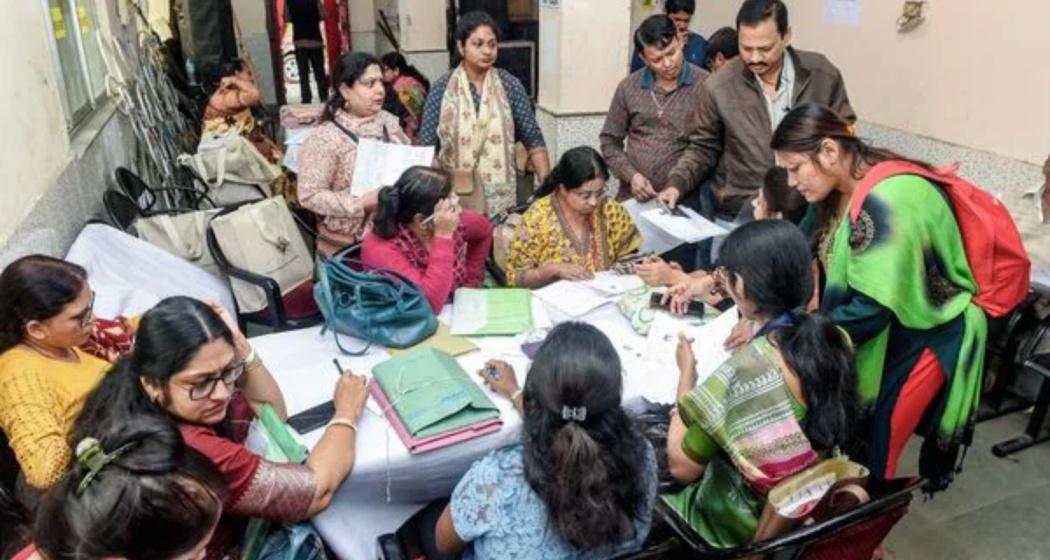
Draft rolls released on December 16 showed the electorate shrinking from 7.66 crore to 7.08 crore, with over 58 lakh names deleted due to death, migration, duplication or untraceability. The second phase involved hearings for 1.67 crore electors, 1.36 crore flagged for “logical discrepancies” and 31 lakh lacking mapping. Around 60 lakh voters remain under adjudication.
The Commission has maintained that the exercise is “routine and necessary to ensure accuracy”. But the revision has triggered sharp political reactions.
The ruling All India Trinamool Congress has described the SIR as “NRC through the backdoor”. Chief Minister Mamata Banerjee moved the Supreme Court “as a common citizen”, seeking that the upcoming election be conducted on the existing 2025 rolls.
“Lakhs of genuine voters are at risk of exclusion. This is not revision, this is omission,” Banerjee said, alleging that names were “surreptitiously removed”.
The Bharatiya Janata Party has backed the revision, asserting that “a clean and transparent rolls is the foundation of democracy” and arguing that duplicate or questionable entries distorted previous mandates.
Also read: Families affected during SIR: WB govt to provide jobs
The Communist Party of India (Marxist) and the Indian National Congress have criticised the timing and execution. CPI(M) leader Sujan Chakraborty said, “Transparency is welcome, but panic-inducing processes erode trust.”
Controversy has deepened over alleged deaths linked to fears of disenfranchisement. The TMC claims at least 120 deaths since the exercise began on November 4, including alleged suicides of voters and booth-level officers. The BJP has dismissed attempts to directly link the incidents to the revision.
On the ground, apprehensions have surfaced among marginalised communities, including sections of the Matua community and Bengali-speaking Muslims in border districts, over documentation requirements and legacy data linkage.
Those marked “under adjudication” will not be permitted to vote until cleared and included in supplementary rolls. Names tagged “deleted” will remain visible but ineligible unless reinstated.
With Assembly polls barely two months away, Saturday’s publication is expected to sharpen the TMC-BJP contest, with identity, citizenship and electoral integrity emerging as central themes in Bengal’s political battleground.

 Follow us