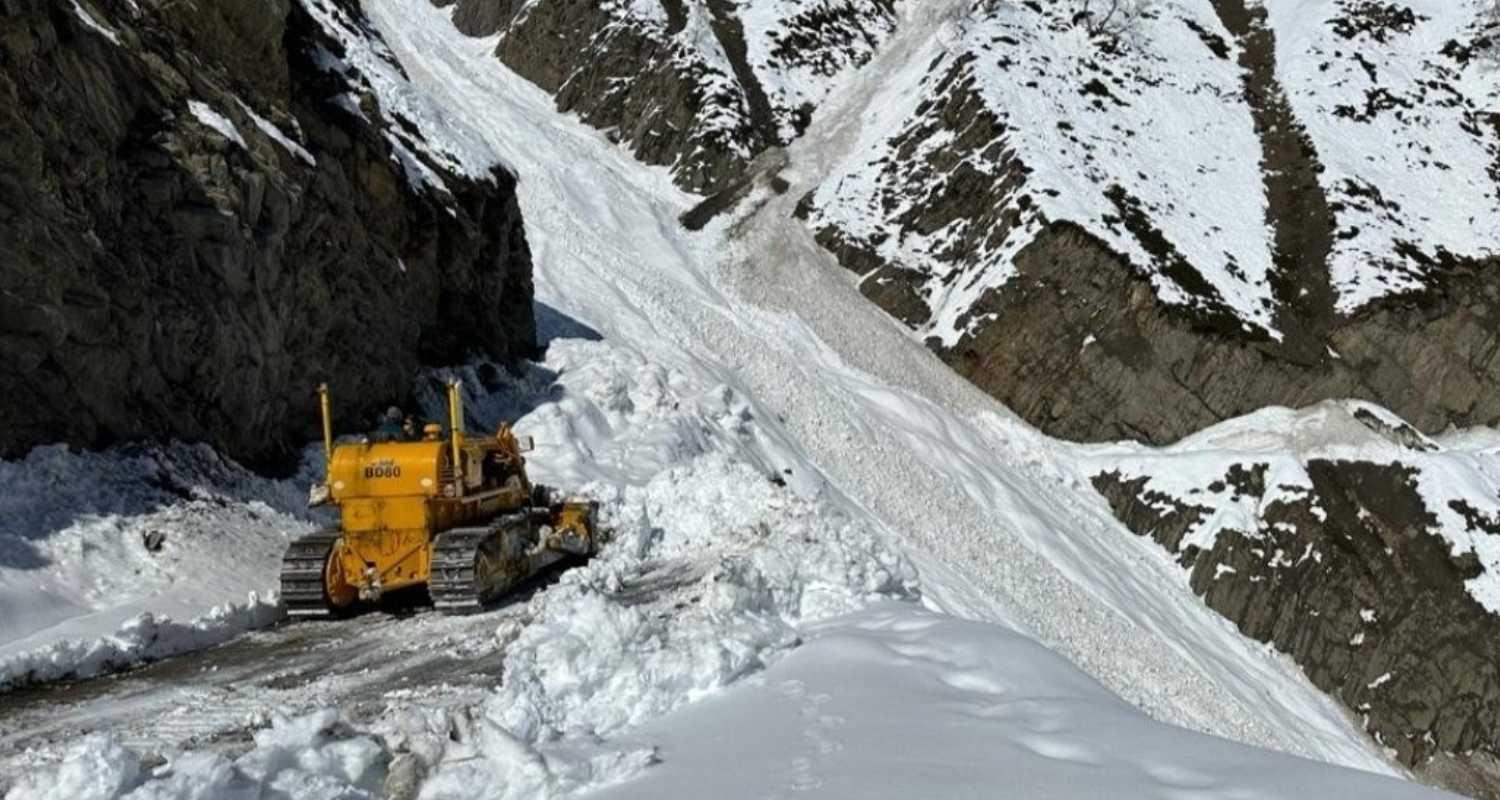
Jammu and Kashmir has witnessed erratic weather conditions in the first half of 2026, with contradictory weather patterns, disrupted rain and snowfall spells adding to the misery of the region. From January to March, the region witnessed a severe deficit in rain and snowfall, with the deficiency figures going up by roughly 50 to 60 per cent.
However, from late March to the first week of June, the region experienced moderate rain and snowfall, bringing down the deficit to 43 per cent in April and 34 per cent at the end of May 2026. Despite the constant rainfall spell, Jammu and Kashmir is still experiencing a deficit of around 20 to 30 per cent.
However, the concentration of rainfall at fewer places has remained relatively higher compared to other areas, triggering worry and concern among the farming community.
On average, the region has witnessed nearly six deadly cloudburst occurrences, with five in Jammu and one in the Kashmir Valley. These erratic weather patterns have caused damage worth billions, especially in the Jammu region, triggering massive landslides and flash floods.
On Thursday, a fresh cloudburst struck Bahthoi village in the Mahore subdivision of Reasi district, sending massive debris along with water and mud into residential areas and destroying several houses, officials said on Friday after taking stock of the situation. Besides, two more cloudbursts struck the Kishtwar district — one in the Gahan area of Sarthal and another in Machipal — while a third struck Thathri in the Doda district.
As per the Global Forest Watch data, Jammu and Kashmir lost about 212 sq km of tree cover between 2001 and 2023.
Director of the Meteorological Department in Srinagar, Dr Mukhtar Ahmad, said higher temperatures allow the atmosphere to hold more moisture.
"With every one-degree Celsius increase in temperature, the atmosphere can hold about seven per cent more moisture," Ahmad said.
He said cloudbursts are almost impossible to detect, like earthquakes; however, with the latest technological advancements, alerts are sent to people living in areas that are prone to such phenomena.
Experts have flagged deforestation, heavy construction, and development-related activities in the normally untouched regions, along with the expansion of residential houses close to forest areas, as major reasons for the increased cloudburst events.
Meanwhile, one of the deadly cloudburst events occurred in Chisoti Village last year on August 14 when pilgrims were heading towards the Machail Yatra.
The cloudburst triggered massive flash floods and swept away nearly 130 people. While half of the victims were recovered, 63 people lost their lives in the aftermath of the weather-induced disaster. According to figures shared by the Ministry of Home Affairs in the Rajya Sabha earlier this year, floods and heavy rains claimed 199 lives, killed 11,693 livestock, damaged 8,404 houses, and affected 77,915 hectares of agricultural land across Jammu and Kashmir during the year.

 Follow us