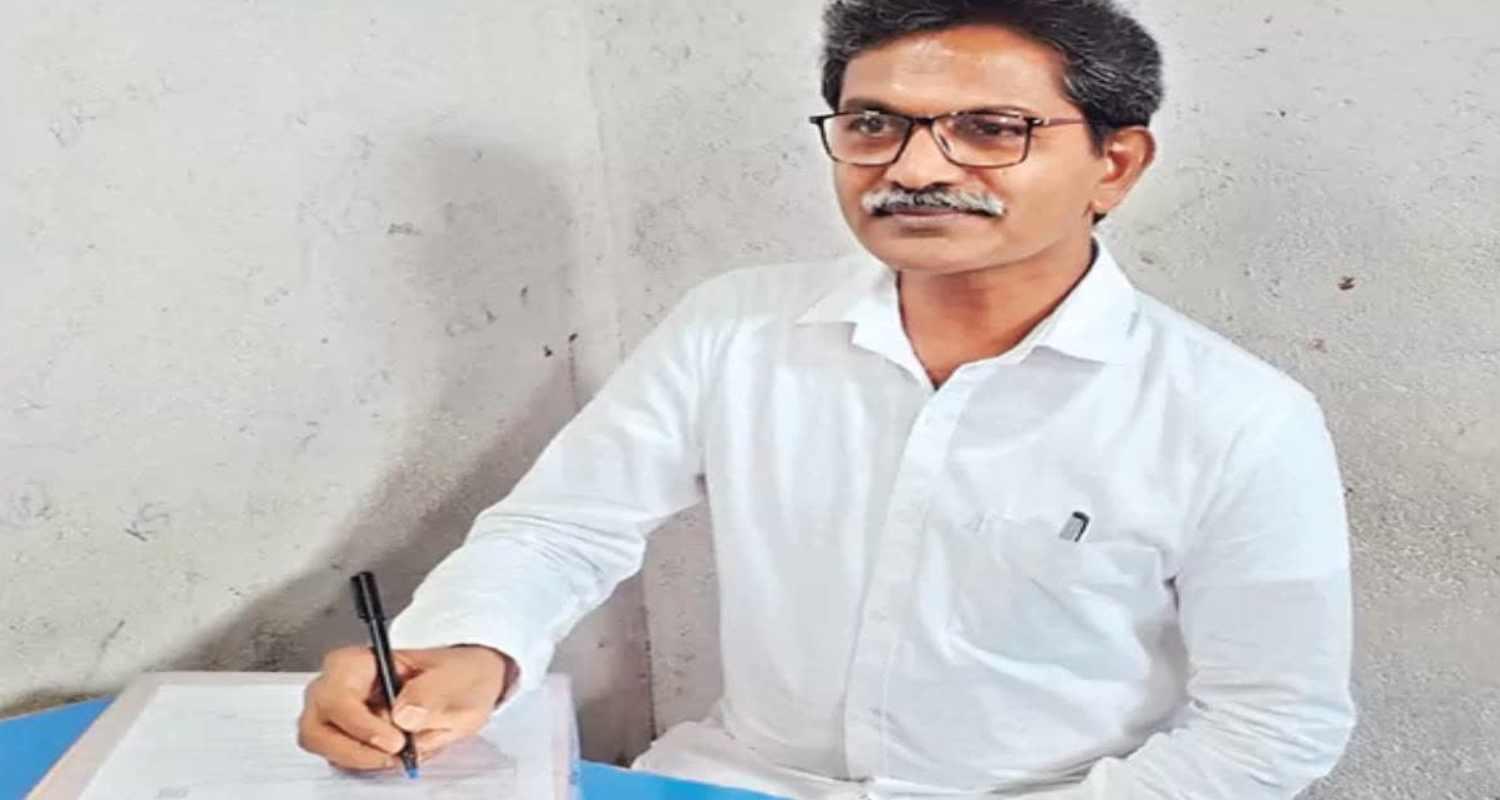
In an example of reintegration into mainstream society, former senior Maoist leader Thippiri Tirupati, also known as Devji, appeared for the second-year intermediate Telugu examination on Wednesday in Korutla town of Jagtial district. The 62-year-old, who once held key positions within the Maoist hierarchy, wrote the exam at an intermediate advanced supplementary examination centre set up in a private junior college.
A native of Korutla, Devji’s educational journey had been abruptly disrupted decades ago when he became involved in radical political movements. During the 1980s, while studying intermediate (MPC) at Korutla Government Junior College, Devji was drawn towards the People’s War movement, which had gained momentum in northern Telangana following the Jagtiala Jayatra. He subsequently went underground in 1984, leaving his studies incomplete.
Devji had joined the Radical Students’ Union and actively participated in its activities, including the boycott of the intermediate second-year Telugu examination at the time. Although he had cleared other subjects, his inability to pass this paper meant he never formally completed his intermediate education.
Following his surrender on February 22 this year, authorities granted him special permission to resume his studies and appear for the supplementary examination. Officials stated that the move is part of broader efforts to rehabilitate former extremists and encourage their return to normal life.
Sources indicate that Devji now intends to pursue a degree in law after completing his intermediate education, with the aim of addressing issues faced by marginalised communities.
Fluent in Hindi, Telugu, and Gondi, Devji operated under several aliases during his years in the Maoist movement, including Sanjeev, Sudarshan, and Kummudada. He began his journey as a unit member in Gadchiroli and rose through the ranks to become an area and divisional commander, eventually taking on significant responsibilities in the Dandakaranya region.
In 2001, he reportedly served as in charge of the Maoist Party’s Central Committee and Central Military Commission. He was also associated with the Central Regional Bureau and was a member of the Politburo.
According to police records, Devji played a role in several major attacks, including the 2003 assassination attempt on former Andhra Pradesh Chief Minister N. Chandrababu Naidu at Alipiri in Tirupati, and the 2010 Dantewada attack that resulted in the deaths of 74 CRPF personnel.
He had long featured on the most-wanted list of the National Investigation Agency, carrying a bounty of up to Rs 1 crore across Telangana and Chhattisgarh.
Officials attribute his surrender, along with that of other senior leaders such as Nambala Keshav Rao, to intensified counter-insurgency operations, including the Centre’s “Operation Kagar,” which has significantly weakened Maoist networks in recent years.
Authorities view Devji’s return to education as a symbolic moment, reflecting both the impact of sustained security operations and the possibilities of rehabilitation for those who choose to rejoin mainstream society.

 Follow us