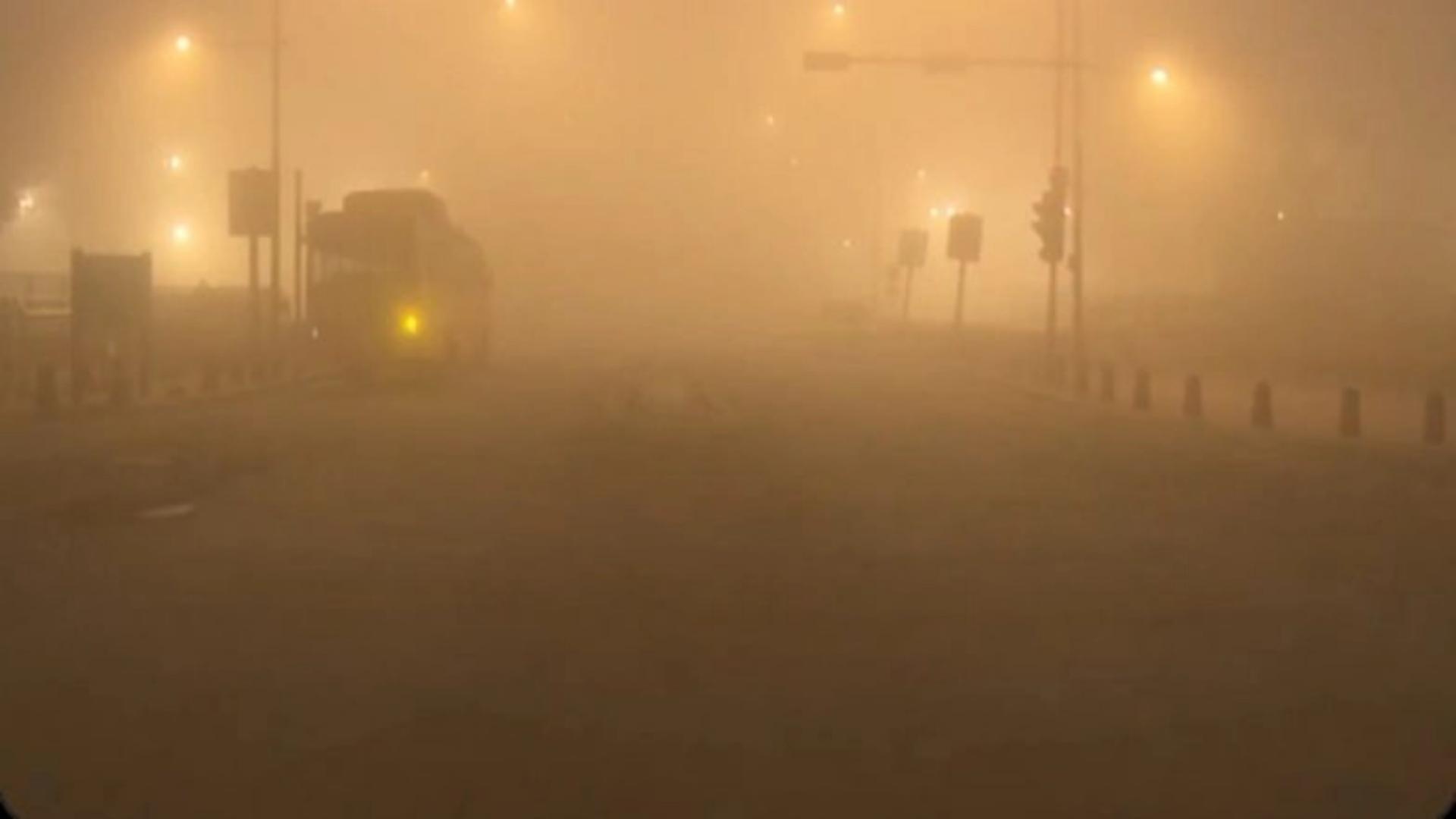
As pollution choked the national capital again after few days of relief intermittently, the Commission for Air Quality Management in NCR and adjoining Areas or CAQM on Friday invoked GRAP curbs. This was necessiated after the air quality showed an increasing trend of pollutants.
The air quality index (AQI) in Delhi, which was 343 at 4 PM on Thursday, rose to 354 at 4 PM on Friday, marking a sharp and swift increase, the officials said. Indian Meteorological Department (IMD) and the Indian Institute of Tropical Meteorology have forecast that the average AQI is expected to cross 400 in the upcoming days due to slow winds, stable atmosphere and a lack of diversion of pollutants
The CAQM has urged the citizens of NCR to follow the GRAP Citizen Charter and increase the use of public transport to avoid polluting activities. Residents of Delhi have been advised to wear masks, limit ventilation, and ensure extra precautions for children and the elderly. The CAQM will continue to closely monitor the situation and take further action as required.
Under Grap III, the restrictions which will be imposed in the Delhi-NCR afresh.All non-essential construction and demolition activities are prohibited.A blanket ban will be imposed on stone crushers, mining and other related activities in Delhi and other NCR areas.Restrictions are also imposed on diesel vehicles and older petrol vehicles to curb emissions.Polluting and non-compliant industrial units are ordered to shut down.The use of polluting fuels in power generation is also restricted wherever applicable.
"Keeping in view the prevailing trend of air quality, AQI forecasts and to prevent further deterioration, the CAQM sub-committee on GRAP (Graded Response Action Plan) today took the call to invoke all actions as envisaged under Stage-III of extant GRAP with immediate effect in the entire NCR as a proactive measure," the official said.
While GRAP 3 restrictions were revoked on January 2 after the air quality improved, several preventive and control measures under GRAP 1 and 2 continue across the NCR.GRAP, which is implemented in Delhi-NCR, categorises air quality into four stages -- 'poor' (AQI 201-300), 'very poor' (AQI 301-400), 'severe' (AQI 401-450) and 'severe plus' (AQI above 450).Unfavourable meteorological conditions, along with vehicular emissions, stubble burning, firecrackers and other local pollution sources often push air quality in Delhi-NCR to hazardous levels during the winter season.

 Follow us