After more than three decades, Gujarat has reclaimed its position on India’s tiger map. The National Tiger Conservation Authority (NTCA) has formally acknowledged the presence of a tiger in the Ratanmahal Wildlife Sanctuary in Dahod, reinstating Gujarat as a tiger-present state for the 2026 All-India Tiger Estimation (AITE). The confirmation follows clear photographic evidence of a nearly four-year-old tiger that has established territory in the Ratanmahal–Madhya Pradesh landscape and has remained there since mid-February.
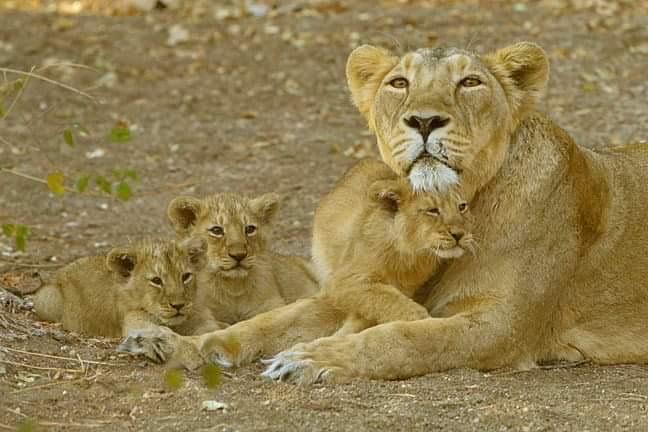
With this development, Gujarat becomes the only state in the country where three different types of big cats— lions, tigers and leopards coexist in their natural habitats— a rare ecological distinction. The state is already known worldwide as the last natural home of the Asiatic lion and supports a thriving leopard population across its forests and semi-arid landscapes.
Gujarat Deputy Chief Minister has called this a proud moment for conservation, vigilant forest teams and Gujarat’s thriving ecosystem.
The AITE 2026, one of the world’s largest wildlife population assessments, began last week in Indore. As part of the exercise, a dedicated camera-trap enumeration will now be carried out along the Gujarat–Madhya Pradesh border to document and monitor the Ratanmahal tiger. The NTCA has also issued directives to strengthen conservation measures in the sanctuary, including habitat protection, prey-base management and rigorous monitoring.
Officials involved in the census confirmed that the tiger has not yet been tagged. During the upcoming fieldwork, experts plan to deploy stripe-pattern recognition software and other tracking tools, while also training Gujarat forest personnel to use these systems. This will enable authorities to monitor the tiger’s movements both within the state and across interstate boundaries.
The confirmation marks a historic turnaround. Gujarat’s last official tiger census in 1989 recorded only pugmarks, without any visual confirmation. As a result, the state was excluded from the 1992 enumeration and removed from the list of tiger-range states. Since then, there had been only one verified sighting in 2019, but that tiger survived just 15 days. In contrast, the Ratanmahal tiger has demonstrated long-term site fidelity, with nearly ten months of continuous photographic and CCTV documentation— strong evidence of sustained habitation rather than a brief passage.
NTCA officials say the focus now is on ensuring the animal’s safety and long-term survival. Madhya Pradesh’s Alirajpur region, frequently visited by the tiger, will also be surveyed to assess whether a female tiger is present. Gujarat has sought NTCA’s guidance on upgrading Ratanmahal into a designated tiger reserve. Before any decision on introducing a tigress, authorities will evaluate the area’s prey population to determine whether it can support a stable breeding population.
The development holds immense ecological and symbolic significance for Gujarat. It highlights the state’s improving forest management practices and underlines the expanding range of tigers in central India. More importantly, it places Gujarat in a unique conservation league: the only state in India where the lion, tiger and leopard all roam freely in the wild.
Also read: Lion strolls past devotees at Gujarat's Palitana Jain temple

 Follow us