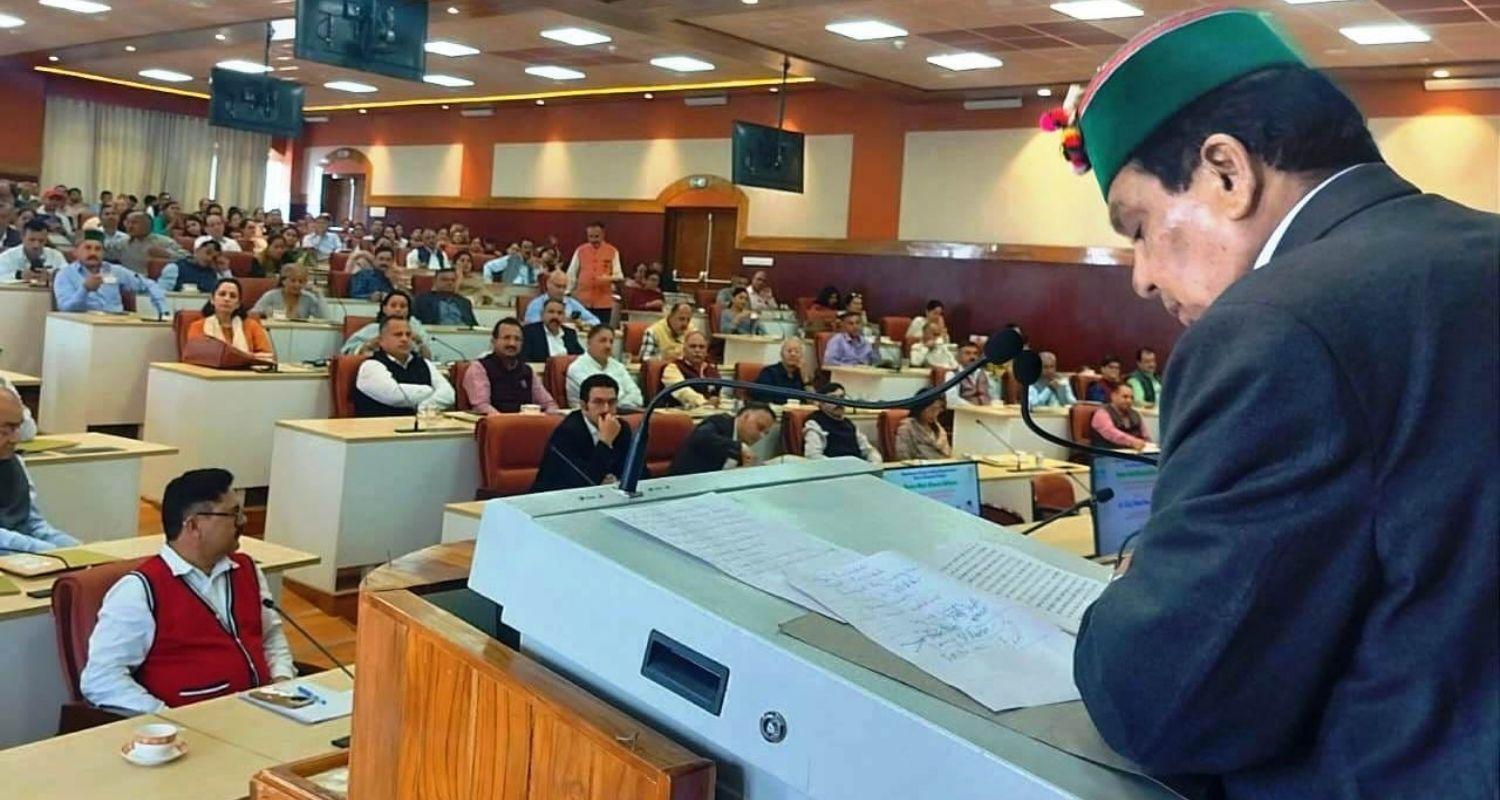
Health, Social Justice and Empowerment Minister Dr. (Col.) Dhani Ram Shandil on Tuesday chaired a one-day workshop for stakeholders on combating drug abuse and drug trafficking. He said the state government was taking effective measures to curb drug abuse and trafficking.
In his address, he said the government had adopted a zero-tolerance policy towards drugs, and strict laws had been passed in the Vidhan Sabha to prevent drug abuse. These laws include stringent provisions such as the death penalty, life imprisonment, heavy fines and confiscation of property.
He said the state government had launched the Anti-Chitta Walkathon from the historic Ridge in Shimla on November 15, 2025. The initiative was started with the objective of bringing together voices against chitta and turning the fight against it into a mass movement. Walkathons have also been organised in Dharamshala, Hamirpur and Bilaspur, with thousands of young people, women and representatives of various social organisations participating.
The minister added that commendable work was being carried out in the state under the National Drug De-Addiction Campaign. Under the campaign, approximately 18.5 lakh people across all districts were made aware of the dangers of drug abuse last year. This included children studying in 17,304 educational institutions.
He said Himachal Pradesh had become the first state in the country where, at the panchayat level, drug traffickers and drug users, particularly those involved with chitta, are identified and panchayats are categorised into different groups based on the number of such cases.
The minister said the PIT-NDPS Act was being strictly enforced in the state and property worth more than Rs 63 crore had so far been seized. During the tenure of the present state government, 5,642 cases have been registered and 8,250 offenders have been arrested.
He said four de-addiction and rehabilitation centres for men are operating in the districts of Kullu, Una, Hamirpur and Kangra, while the Red Cross Society, Kullu, operates one such centre for women. Recently, the 'Nav-Jeevan' Women's De-Addiction and Rehabilitation Centre was opened in Mashobra. It is the first women's de-addiction and rehabilitation centre in the state. The centre will not only provide treatment to women but also create opportunities for them to return to a dignified life.
He said the state government was also establishing a 100-bed, state-of-the-art de-addiction centre at Kotla Barog in Sirmaur district.
Shandil said drug abuse severely affected the overall development of people, particularly children. The involvement of children in the vicious cycle of addiction was a matter of serious concern. He said an addicted person often becomes compelled by the habit and that society should view such a person as someone suffering from an illness rather than stigmatising them. He emphasised that people suffering from drug addiction need proper treatment and guidance, and that the state government was making serious efforts in this direction.
He said Himachal Pradesh was known as 'Dev Bhoomi' and that its society had traditionally had a strong religious orientation. If young people today are choosing drug use instead of following their traditional spiritual and religious practices, it also raises questions about the values and upbringing being imparted to them by families and society.
The minister said bringing children back onto the right path, so that they can become ambassadors of the rich traditions of Dev Bhoomi, was a responsibility that must be shared by the state government, parents and society.
The Social Justice and Empowerment Minister said parents had a responsibility to ensure that their children lead a healthy lifestyle, develop good habits and become mentally strong. At the same time, parents should nurture their children's talents and instil good values in them so that they can become active participants in social development.
Secretary Social Justice and Empowerment C.P. Verma, Director e-Somsa Sumit Khimta, panchayat representatives, officials of non-governmental organisations, representatives of educational institutions, and senior officials of the central and state governments were present at the workshop.

 Follow us