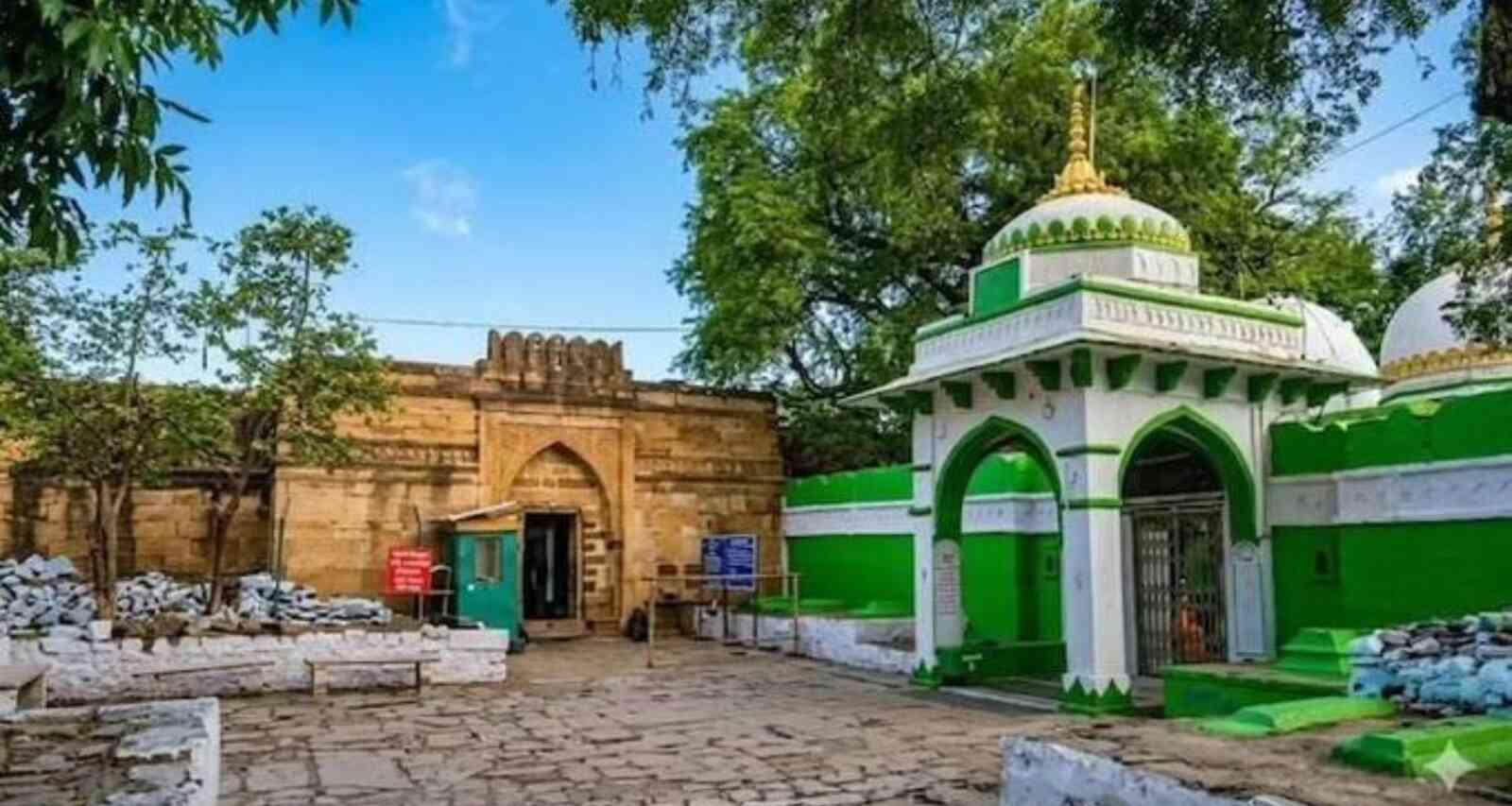
Hindu devotees gathered in large numbers at the Bhojshala complex in Madhya Pradesh’s Dhar on Sunday morning to conduct a grand religious ceremony, marking the beginning of daily rituals after the Archaeological Survey of India (ASI) lifted restrictions in compliance with a recent high court directive.
The ceremony began with the purification of the premises using Gangajal (holy water from the Ganges), accompanied by the chanting of Vedic mantras. Priests performed Navagraha Pujan to invoke auspiciousness and ensure the smooth completion of rituals.
A symbolic idol of Goddess Saraswati, also known as Vagdevi, was then installed in the sanctum sanctorum. Devotees decorated the idol, performed aarti, and offered prayers seeking peace and prosperity. The Yagyashala emerged as the focal point of the ceremony, where a specially constructed Yagna Kund was used for ritual offerings into the sacred fire.
In a significant moment, the Akhand Jyoti — which had been burning continuously since 2005 at a nearby temple — was ceremonially brought into the sanctum and installed with traditional rites and music, symbolising the devotees’ enduring faith and long wait for restoration.
Speaking at the event, Union Minister of State Savitri Thakur stated that the Bhojshala complex would be developed along the lines of Ram Mandir Ayodhya. She also reiterated efforts to retrieve the original Saraswati idol from the British Museum in London and reinstall it at the site, marking a symbolic commitment during the ceremony.
A large gathering witnessed the event, with a festive atmosphere prevailing in the region. Officials expect an even larger turnout during the evening prayer session.
The developments follow an order issued by the ASI on Saturday, allowing Hindu prayer at the site in accordance with the high court’s ruling. The court had recognised the disputed Bhojshala–Kamal Maula Mosque complex as an 11th-century Sanskrit learning centre and a temple dedicated to Goddess Saraswati.
Also read: Bhojshala case: MP HC refers to Ayodhya verdict's 10 principles

 Follow us