By Pranab Mondal
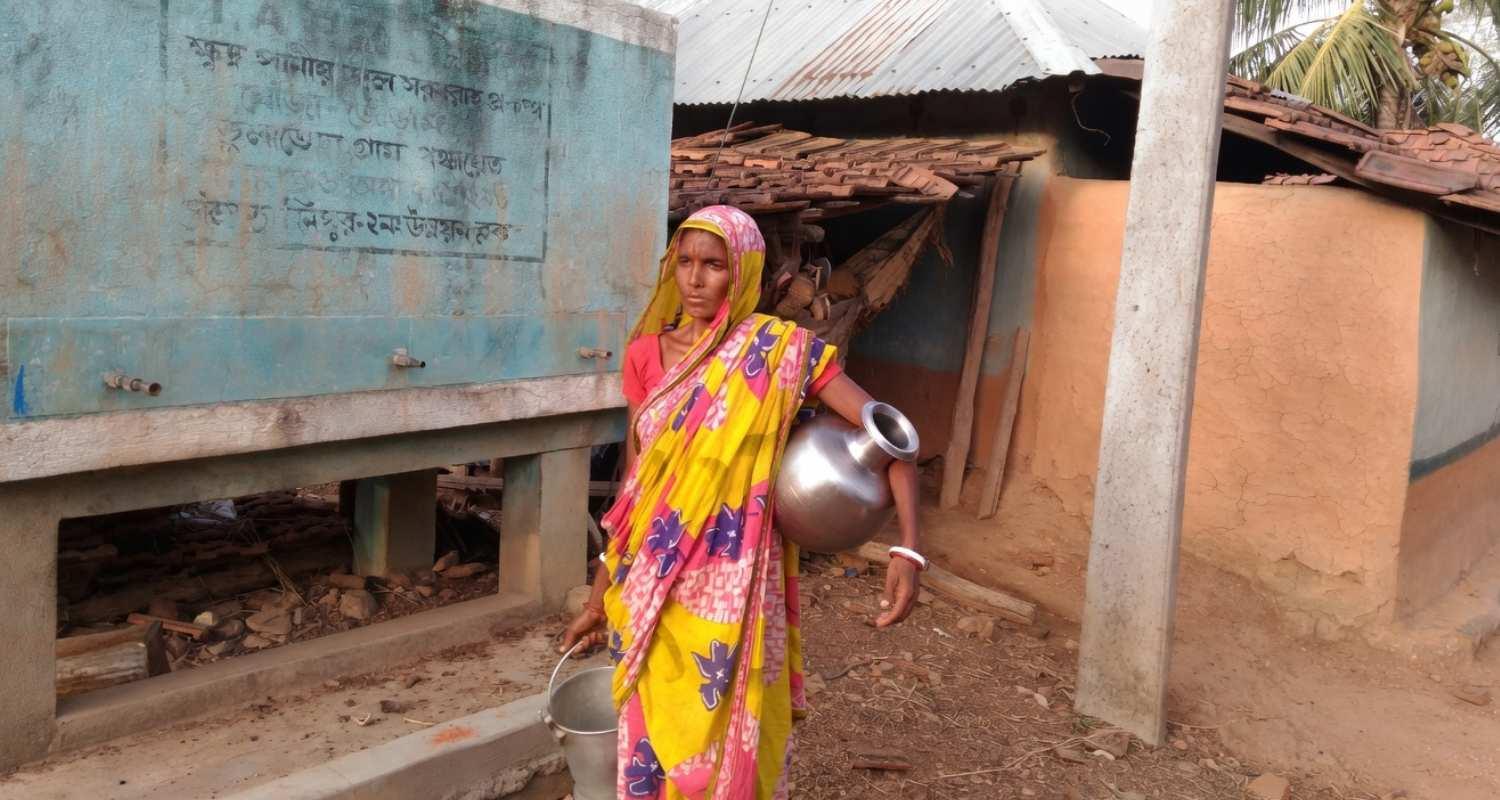
As West Bengal heads towards a crucial electoral contest, the remote tribal hamlet of Joram in Jhargram district presents a stark and unsettling portrait of deprivation—one that may quietly influence the outcome in the Binpur Assembly constituency. In this village of barely 40 households, survival itself is a daily struggle.
When Kartick Sabar’s 10-month-old child cries from hunger, the family often turns to ‘kurkut’—eggs of wild forest ants—or, on relatively better days, the roots of ‘sukanda’, a bulbous forest plant. For most residents, these are not delicacies but desperate substitutes for regular meals.
This is not a distant famine zone, but a village in the heart of southern Bengal—where, despite political churn, development has remained elusive. The land here is rocky and unyielding, with little to no irrigation support. As a result, agriculture is limited to a single annual paddy crop, offering employment for barely two months, in July during sowing and in December during harvest.
For the remainder of the year, villagers depend on the forest. Some spend days digging for edible roots; others risk painful encounters with aggressive ants while collecting ‘kurkut’ eggs, which are occasionally sold to traders supplying pisciculture projects. A kilogram fetches around Rs 50, 25, but the process is arduous and physically taxing.
“Look at my hands,” says Gurucharan Sabar, displaying swollen palms from repeated stings. “But if we don’t collect these eggs, how will we survive?”
Against this backdrop of economic distress, political undercurrents appear to be shifting. Binpur, once a Maoist stronghold that witnessed intense violence between 2008 and 2011, is now witnessing a different kind of churn—one driven by disillusionment. With over 80 per cent of its electorate comprising tribal and Other Backward Classes (OBCs), the constituency has historically seen these communities play a decisive role.
Sensing growing dissatisfaction, the ruling Trinamool Congress (TMC) has fielded Birbaha Hansda—a tribal leader and a cabinet minister—shifting her from neighbouring Jhargram to Binpur in an apparent attempt to consolidate support. However, on the ground, the response appears mixed at best.
“Like the Kurmis, we tribals don’t organise public rallies,” says Nitai Murmu, a local community leader. “But our elders have decided to support the BJP this time. From what I see, the TMC may lose here.”
The BJP has fielded Pranat Tudu, a candidate with a strong presence among tribal voters, and is banking on consolidating both tribal and OBC support.
Local Congress leader Subrata Bhattacharya offers a critical view of Hansda’s tenure. “She carries the legacy of her father, Naren Hansda, a respected leader. But as Forest Minister, she failed to meet expectations. There is a perception of distance from grassroots concerns,” he says.
Tudu, meanwhile, exudes confidence. “The ruling party’s candidate is not popular within her own community. This time, that dissatisfaction is working in our favour,” he claims.
Birbaha, however, remains resolute. “Jungle Mahal has consistently supported us since 2011. We are confident of winning again,” she says.
Yet in Joram, political promises have long worn thin. Villagers recount sporadic visits by leaders, including Chief Minister Mamata Banerjee during a past outreach programme, but say little has changed.
“They come, make promises, and leave,” says Srimati Sabar. “No one remembers us after elections.”
Others echo similar sentiments, alleging neglect by local representatives and a lack of sustained administrative attention.
As polling approaches, Joram’s story underscores a deeper reality: beyond rallies and rhetoric, it is the lived experiences of marginalised communities that often shape electoral outcomes. Whether this quiet discontent translates into a decisive political shift in Binpur remains to be seen—but the signs of disenchantment are unmistakable.

 Follow us