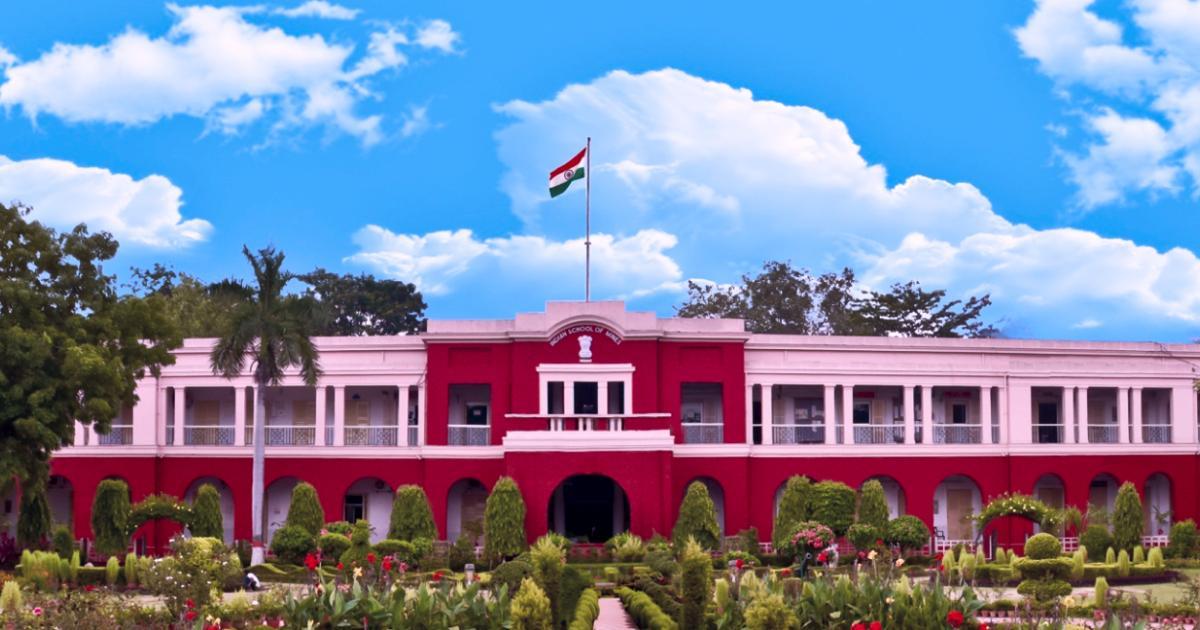
In a major development for India’s clean energy ambitions, researchers at Indian Institute of Technology (Indian School of Mines) Dhanbad have developed a low-cost and efficient electrode material that could reduce the cost of green hydrogen production by 400 to 500 times.
The breakthrough aligns with the Centre’s National Green Hydrogen Mission, which aims to produce five million tonnes of green hydrogen annually by 2030.
Green hydrogen, generated through water splitting using renewable energy, is considered crucial for cutting emissions in sectors such as steel, fertilisers, petroleum refining and chemicals.
The research was led by Dr SK Riyajuddin of the Department of Physics, along with scholars Priyadarshani Tamang and Rumana Sultana Parvin. The team sought to address one of the biggest challenges in hydrogen production— the high cost of catalysts.
At present, precious metals like platinum and ruthenium are widely used, making the process expensive and limiting scalability.
To provide a cost-effective alternative, the researchers developed a novel catalyst by integrating molybdenum disulfide and vanadium sulphide with reduced graphene oxide.
The material relies on earth-abundant elements such as molybdenum, vanadium, sulphur and carbon, making it economically viable for large-scale use. The team said the catalyst shows strong synergistic effects, reducing the energy required for electrochemical water splitting and enabling more efficient hydrogen production.
In a demonstration, the researchers successfully produced hydrogen using a commercially available silicon solar cell integrated with a water electrolyser system, describing it as a solar-driven “artificial photosynthesis” model.
The findings, published in the international journal Small (Wiley, 2026), are expected to strengthen India’s clean energy transition.
Also read: ‘Kunki’ elephants deployed in Jharkhand



 Follow us