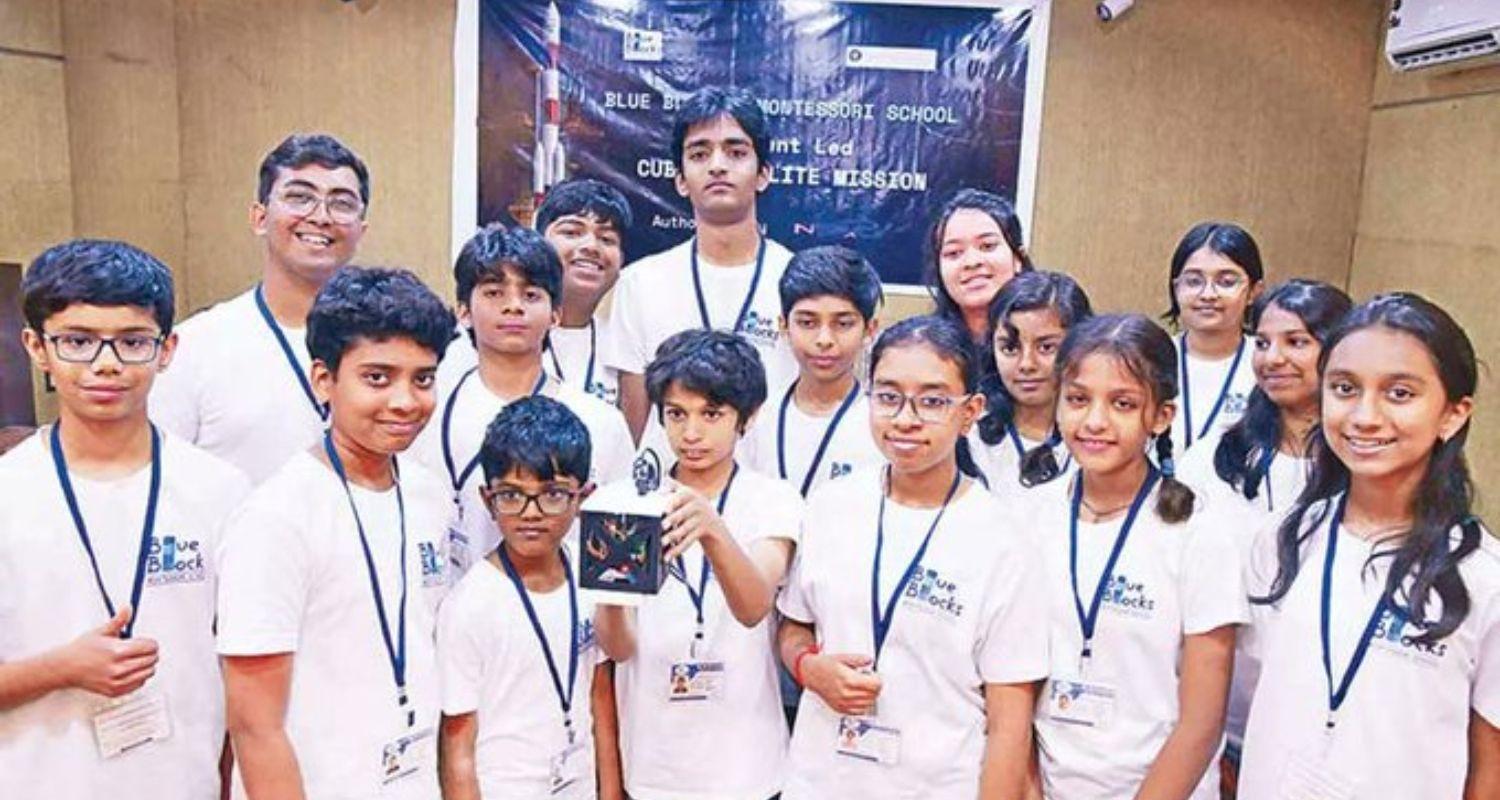
Maria Montessori’s "scientific pedagogy" is about to go into orbit. This Sunday, January 12, when ISRO’s PSLV–C62 roars into the sky from Sriharikota, it will be carrying a CubeSat that wasn't built by seasoned scientists or university grads, but by 17 middle-schoolers from Hyderabad.
This mission is a massive first for India. While CubeSats are common enough in the tech world, this is the first time school students have independently handled the entire process— from engineering and coding to final assembly of a flight-ready satellite. Representing Blue Blocks Montessori School in Gachibowli, these students worked from the ground up, using real sensors and firmware rather than off-the-shelf kits.
During a press briefing at the MediaPlus auditorium on Thursday, the young innovators explained that the project followed the "structural autonomy" method developed by the Blue Blocks Micro Research Institute. The satellite, which has been formally cleared by IN-SPACE, will head to an altitude of 450 km. Once there, it’s expected to spend the next six to eight months beaming back raw data on weather, temperature, and humidity.
The level of involvement is deep— two team members, Sanjay and Sanshray, have even been cleared to sit in ISRO’s machine control room during the launch. To make sure everything was technically sound, the group collaborated with scientists from the satellite-tech company "Take Me 2 Space," but the heavy lifting of design and assembly remained with the kids.
The project is the brainchild of school co-founders Pavan Goyal and Muneera Husain. Inspired by India’s lunar success in 2023, they built a curriculum that puts 7th graders in front of 3D printers, drone tech, and electronics. For this team — which includes students like Sreshta, Umme Hani, and Ranveer — the mission isn't just about space; it’s a tribute to the vision of APJ Abdul Kalam, whose teachings on resilience and leadership guided them through the technical hurdles.
Also read: Kavitha to float her own party in Telangana

 Follow us