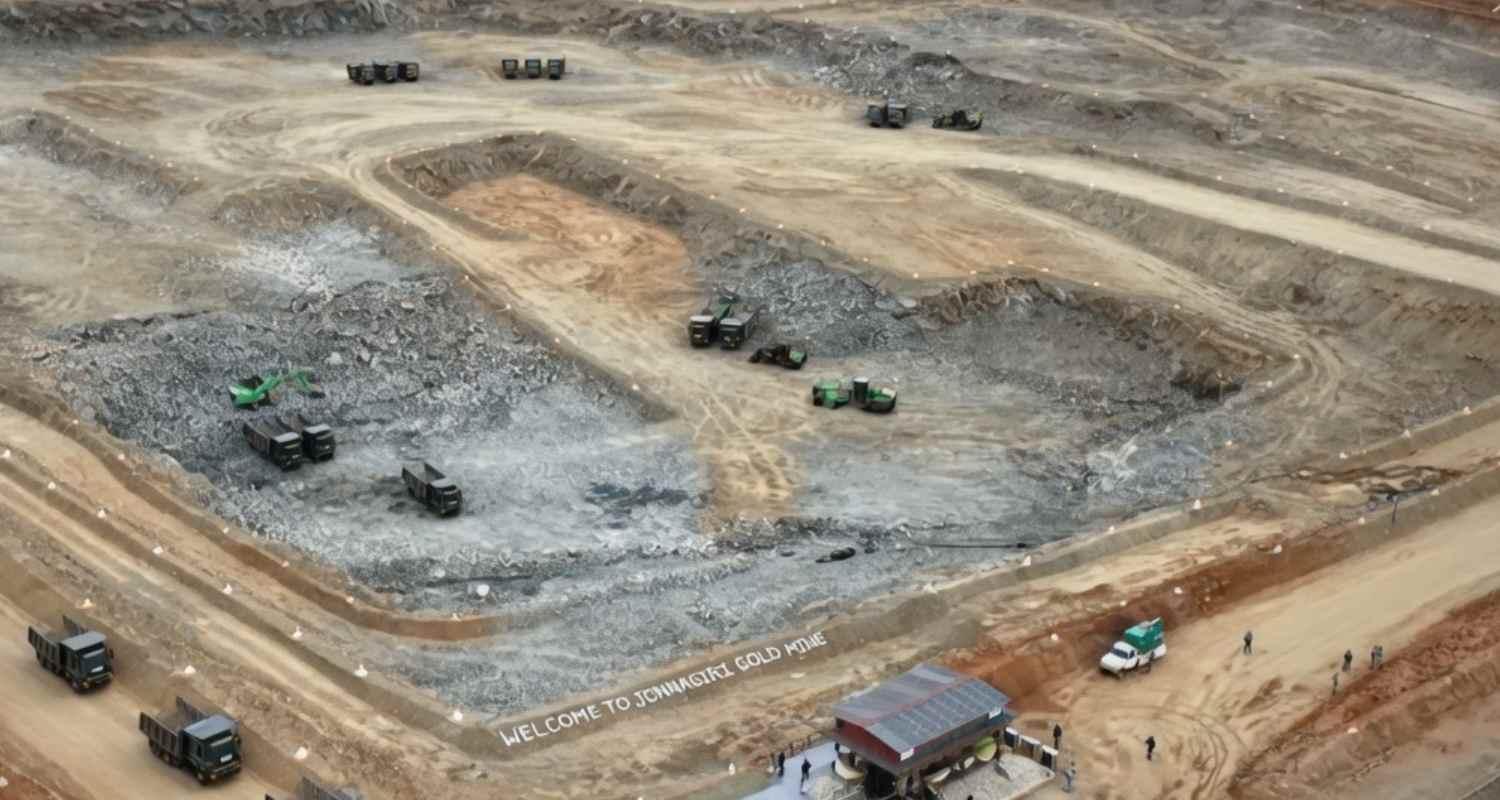
In a landmark development in the mining sector, India’s first private integrated gold mining and processing project was launched in the Kurnool district of Andhra Pradesh. The chief minister, N Chandrababu Naidu, inaugurated the Rs 405 crore project developed by two private firms — Thriveni Earthmovers of Tamil Nadu and Geomysore Services of Karnataka, the latter in partnership with Deccan Gold Mines Limited.
The mine is expected to produce around 2,000 kg of gold over the next two years, with output of 0.6-0.8 tonnes likely in the current year. The state government has allotted 1,500 acres for the project, with mining activities starting on 600 acres in the first phase, and expansion planned in later stages.
The project is spread across approximately 598 hectares, covering the villages of Jonnagiri, Erragudi, and Pagidirayi in Tuggali mandal. It is the first private sector gold mine with an integrated processing facility in the country in 70 years. Apart from inaugurating the project, the chief minister laid the foundation stone for its second expansion unit and flagged off heavy vehicles transporting gold-bearing ore for processing.
Until now, India's only operational gold mines were located at Kolar and Hutti in Karnataka, both established during the British era. While the Hutti mine continues to be operated by a Karnataka government enterprise, mining at Kolar was suspended long ago. Kolar produced an estimated 800–900 tonnes of gold over 120 years, with shafts sinking to 3.2 km — among the deepest in the world — before its ore thinned and the mine was abandoned.
Unlike the deep underground workings at Kolar Gold Fields, Jonnagiri is being developed as an open-pit mine, extracting ore through surface excavation. The project is expected to create around 700 jobs, and Andhra Pradesh will earn a 4% royalty on production — roughly Rs 57 crore at 400 kg of output, rising to about Rs 144 crore once production hits 900 kg.
Despite being one of the world's biggest gold consumers, India never had a large-scale gold mining capacity.It currently imports between 700 and 1,000 tonnes of gold each year, making it the country's second-largest import after crude oil.
"Starting with 400 kilograms, we aim to eventually reach 50 metric tonnes of annual gold production, thereby conserving foreign exchange reserves and generating substantial employment for local youth," the chief minister said.
Lloyds Metals and Energy, Chairman and Managing Director of B Prabhakaran, called the project a testament to the Atmanirbhar Bharat vision. "For decades, India has been one of the world's largest consumers of gold while remaining heavily dependent on imports. Today, we are demonstrating that India can discover, develop, and operate world-class gold mining assets at a commercial scale," he said.

 Follow us