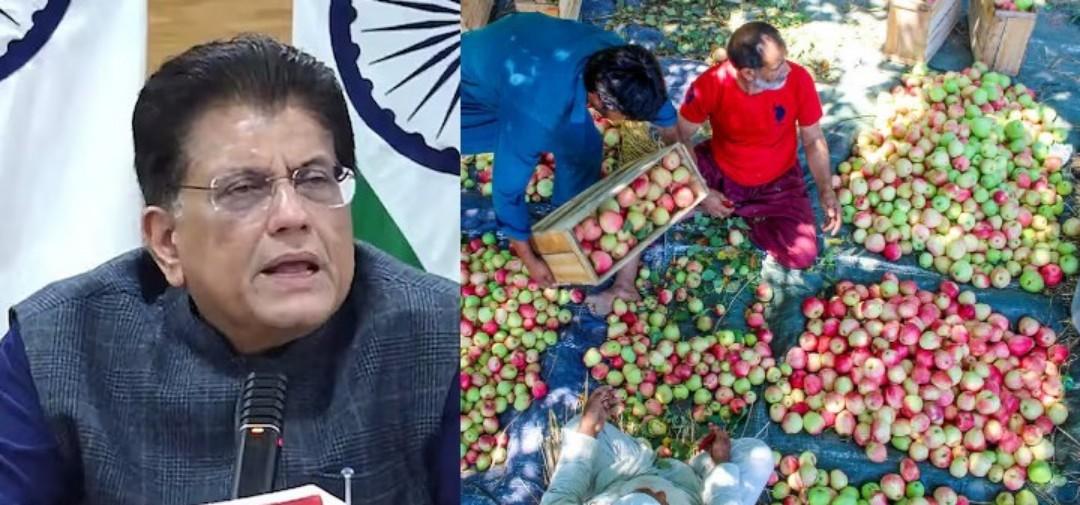
Members of the Peoples Democratic Party (PDP) on Sunday claimed that the India-US trade deal would spell doom for the economy of Jammu and Kashmir if no tariff is imposed on the import of agricultural and horticultural goods from the United States.
Apple-growers across India’s Himalayan belt, from Himachal Pradesh to Jammu and Kashmir, fearing losses, have also expressed deep concern over the India–United States interim trade framework and said it could severely impact their livelihoods.
“They have not thought of the impact of the India-US trade deal on the horticulture sector of Jammu and Kashmir. There will be zero tariffs on agriculture products imported from the US. What will happen to the apple and walnut produced in Jammu and Kashmir?” PDP spokesman Mohammad Iqbal Trumboo asked.
Commenting on the budget for Jammu and Kashmir presented by Chief Minister Omar Abdullah, the PDP leader said it failed to provide solutions for the issues plaguing the people of Jammu and Kashmir. “There is nothing in this budget to address unemployment, which is a major issue in Jammu and Kashmir,” he said.
Citing examples, Trumboo said the Jammu and Kashmir government was bearing losses to the tune of Rs 72 crore per year on account of operating electric buses under Smart City project.
Farmers’ unions warned that increased imports of apples and other fruits from the United States, as part of the proposed trade arrangements, could financially devastate local growers. Harish Chauhan, convener of the Samyukt Kisan Manch—a collective of more than two dozen farmers’ organisations—described the development as a major blow to India’s apple economy.
Leaders are drawing parallels with India’s earlier free trade agreements with the European Union and New Zealand. Under these FTAs, import duties on apples and other fruits were reduced from around 50 per cent to as low as 20–25 per cent. Farmers argued that these reductions have already hurt domestic producers and that similar concessions under the India–US framework could worsen the situation.
Fayaz Ahmad Malik, Fruit Association President Sopore, said apples are India’s most widely sold fruit, and any further reduction in import duties would make imported apples significantly cheaper. He warned that Indian farmers cannot compete with growers from countries like the United States or New Zealand, where production costs are lower and government support is higher. According to him, imported apples could become ₹15–20 per kilogram cheaper in Indian markets, undercutting domestic produce.

 Follow us